 By Yauvanika Chopra
The road to the Dehradun airport in Jolly Grant is lined with milestones. One location name which appears frequently on these direction signs is that of the village Thano. But unlike the other names on direction signs, which are mostly decorated only with the inevitable marks of nature and time, the markers for Thano tend to attract one very specific addition: for at least four years around COVID (and possibly still), “Thano” milestones have had an extra “S” spray-painted at the end. There must have been several efforts to clean them up, but just as often I have found that this specific simple graffiti – one extra S at the end of Thano – makes itself visible again.
The new word that results from this is “THANOS” and the likely reference is to a Malthusian warlord with the same name from the Marvel cinematic universe. To some others, this word could perhaps link further to an archetypal principle which Freud contrasted against the life drive of Eros. To many, this little addition is dismissed as nonsense; “THANOS” could seem like another randomly recurring act of vandalism, or lack of administrative attention, or perhaps only registers as a note in the eternal complaint against the irreverence of young people. Every perspective is valid within its own context. But the gap between perspectives, and the fact that different generations read this text entirely differently, is a timely reminder to build bridges of conversation.
Intergenerational dialogue has always been a keyword in the Mission Statement of the Valley of Words. Anyone who has visited the Festival knows this to be true, because it is a rotating (and frequently returning) crew of young volunteers from various local universities who run the ITC Madhuban venue over the course of the VoW weekend. They are capable, organized, engaged — and seeing the topics that spark dialogue in them has been one of the animating threads of conceptualizing Thano(S) as a distinct vertical. Although another belief of the VoW Mission Statement is to listen well – even to what may not seem immediately interesting – it can be difficult to force attention when topics being discussed are too far outside the realm of the familiar. Our volunteers come together from all across Dehradun and the villages that border it, from Garhwal and Jaunsar and further. A resonance of the local is as intrinsic as the global recognition of an Avengers film, and each engenders constructive conversation in different but linked synthesis. What if we could prioritize not only dialogue across generations, but also across disciplines, on matters of common interest?
Last year, as a preliminary effort, we thought of two panel discussions. One focused on the food industry from farm to fine dining tables on the culture and business of food, featuring Shruti Gupta (of Coco and Monsoon and the Dehradun Food Literature Festival), Yojana Khanduri Chaudhary (Himalayan Rasoi), and Nupur Agarwal (KIWI Kisan Window) in conversation with Roopa Soni (Why Is the World Going Crazy About Millets?).
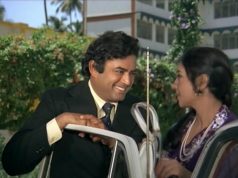
The other, titled “Action! Script! Direction!: Garhwali Cinema Today” featured Garhwal Post’s own Satish Sharma in conversation with actor Rashmi Nautiyal (Kholi Ka Ganesh, among other films), along with Siddharth Sharma and Rishabh Kumar (Ghaprol). The session videos for both are available on VoW’s YouTube channel for those who would like to revisit them.
This year, Siddharth Sharma along with his co-director Sumit Sharma will be returning to VoW with Rishabh Kumar for a screening of their Garhwali short film Danda: The Mountain on Saturday, November 28th at 4.45 p.m. This will be followed by a conversation moderated by Professor Aditi Bisht, with Dr Surekha Dangwal as Chair. Given that the filmmakers are themselves recent alumni of Doon University, this session will explore the institutional potential of cinematic universes from our mountain state. For those interested in film, we will also be screening Lutz Stautner and El Flamingo’s award-winning documentary short Crying Glacier, which follows composer Ludwig Berger recording the inner sounds of Switzerland’s melting Morteratsch Glacier, on Saturday morning, at 10 a.m. This will be followed by a session on Climate Change and Gen Z featuring Smriti Singh and Omkar Dhanke in conversation with Dr Rajendra Dobhal, with Dr BR Arora as Chair, as part of the RS Tolia Forum for Sustainability collaboration with the Chintan Research Foundation.
The first Thano(S) session in 2026 is this Friday, November 27, at 5.30 p.m., called “Tourist, Traveller, Seeker”. Initially called “Sustainable Travel”, and then “Slow Tourism”, this final title comes from Lokesh Ohri’s Ambles Across Godland. The session poster (designed by Baljeet Kaur) features various birds in homage to those excellent pilgrims. The four people on the panel are also thoughtful wanderers: Shivya Nath is a slow traveller whose book Rootless and Restless finds home in the world, Raman Kumar runs a citizen science programme tracing avian migration patterns, Vicky Rawat works towards eco-consciousness in Uttarakhand, and Ira Chauhan is a vivid force of conscience in Dehradun.
The second Thano(S) session is called “Civic Sense”, on Sunday, November 29th, at 3 p.m. Namami Bansal (IAS officer and former Municipal Commissioner of Dehradun) will join Anoop Nautiyal (of the Social Development for Communities Foundation), and Nidhi Sharma (from Waste Warriors) along with lawyer and public policy enthusiast Samarth Khanna in what is sure to be a wide-ranging discourse on citizenship, administration, and our united hopes for Uttarakhand.
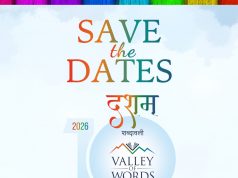
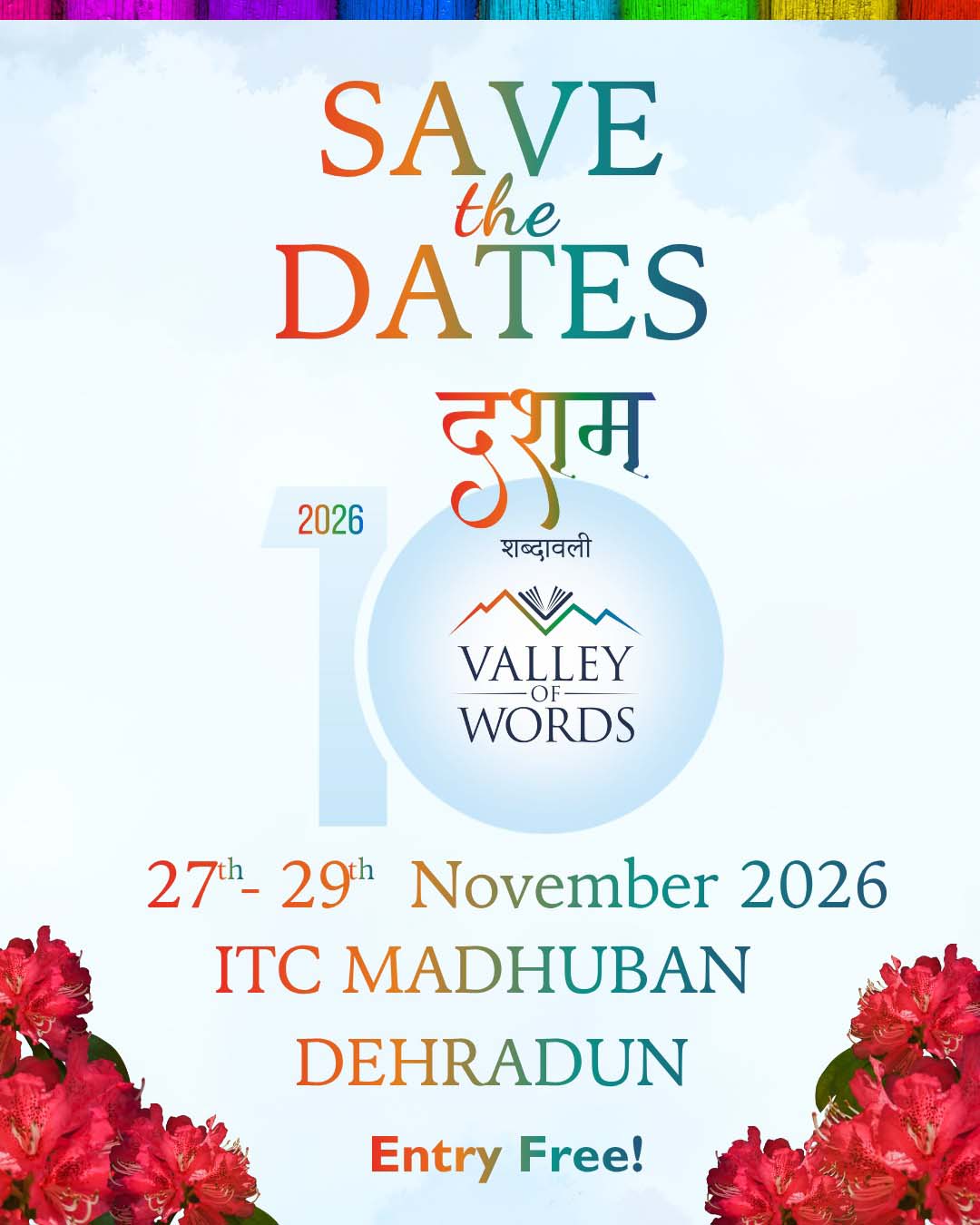
We lack much of the vocabulary needed to communicate the differences in how we see the worlds around us — but conversations of this type can hopefully become steady streams in the currents around us. On the path towards community that VoW aims to foster, one important milestone is our upcoming Dasham decennial celebration of ten years. Perhaps, if all goes well and another decade becomes possible, someday we will be able to better understand the graffiti artists of Thano — and all the paradoxical perspectives represented by them and us, through bridges of Words in our Valley.