 By Dr Kripa Nautiyal
While doing my field work for my doctoral thesis (now released as a book by the Governor of Uttarakhand, titled “Beyond Polyandry: Changing Profile of an Ethnic Himalayan Tribe”), in Jaunsar Bawar area 4 years ago, I came across a number of respondents, who through oral traditions, informed about a number of rocks, stones, caves, having foot/hand prints of Pandavas, etc., in the area. This unexplored area could be a treasure of information for archaeology and may throw light on a wealth of information about the pre-historic era.
The Jaunsar Bawar region, strategically located in the Dehradun district of Uttarakhand, represents one of India’s most archaeologically and culturally significant tribal belts. As one of the five tribal areas shortlisted for detailed research under the ICHR project, this region offers unprecedented opportunities for multidisciplinary historical research spanning from prehistoric times to the medieval period. The area’s unique geographical position at the confluence of the Indo-Gangetic plains and the Himalayan foothills has made it a cultural crossroads, preserving remarkable traces of ancient civilisations, linguistic traditions, and socio-cultural practices.
The Jaunsar Bawar region contains extensive prehistoric rock art sites that remain largely undocumented and understudied. These rock engravings, caves, potentially date from the Mesolithic to the early historic periods. The motifs include hunting scenes, geometric patterns, human figures, and animal representations that could provide crucial insights into the prehistoric settlement patterns, religious beliefs, and daily life of early inhabitants.
Particularly significant are the rock carvings and petroglyphs that local oral traditions associate with the Pandavas’ presence in the region. These markings, found at various sites throughout Jaunsar Bawar, are interpreted by local communities as signs or symbols left by the epic heroes during their exile. While requiring scientific analysis to determine their actual antiquity, these rock engravings represent an important intersection of archaeological evidence and living cultural memory. The preservation of these paintings and carvings in the region’s favourable climatic conditions offers unique opportunities for comparative studies with other Himalayan rock art traditions and could establish important chronological sequences for prehistoric cultures in the region.
The strategic location of Jaunsar Bawar along ancient trans-Himalayan trade routes connecting the Indo-Gangetic plains with Tibet and Central Asia has left indelible marks on the region’s cultural landscape. Archaeological evidence suggests the existence of multiple ancient pathways that facilitated not only trade in goods like salt, wool, and precious stones but also the exchange of ideas, technologies, and cultural practices. These routes may require systematic documentation and analysis to understand their role in shaping the region’s historical development.
Kentum Language Traces
One of the most remarkable aspects of Jaunsar Bawar’s cultural heritage is the presence of what appear to be Kentum language elements in the local dialects. This linguistic phenomenon is of extraordinary significance as it suggests possible connections to Indo-European language families that predate the typical Satem languages of the Indian subcontinent. The preservation of certain phonetic patterns, vocabulary, and grammatical structures that show Kentum characteristics could revolutionise our understanding of early Indo-European migrations and linguistic evolution in the Himalayan region. Comprehensive linguistic documentation and analysis could provide crucial data for comparative Indo-European studies and shed light on ancient population movements.
The region exhibits remarkable continuity with Vedic traditions, evident in ritual practices, social organisation, and cosmological beliefs that appear to have ancient roots. The local customs, festivals, and religious practices often mirror descriptions found in Vedic literature, suggesting that the area may have served as a repository of archaic traditions. The study of these living traditions could provide valuable insights into the practical application of Vedic knowledge systems and their evolution over millennia.
The Jaunsar Bawar region holds profound significance in the Mahabharata tradition, with numerous sites bearing testimony to the Pandavas’ presence during their exile period. Lakhamandal, one of the most important archaeological sites in the region, is traditionally identified as the ancient Lakshagriha (House of Lac) where the Kauravas attempted to eliminate the Pandavas. The site contains extensive ruins of ancient structures, including what appears to be a large complex that could correspond to the epic narrative. Archaeological evidence at Lakhamandal includes ancient stone structures, caves and architectural remains that suggest significant historical occupation. Shri Baru Dutt Bhatt, a respected resident of Lakhamandal area, also supports the idea of detailed research on the subject.
The oral traditions of the region are replete with references to the Pandavas’ sojourn, with specific locations identified as places where they rested, performed rituals, or left their marks. “Bairat Khai” near Chakrata is one such site besides Lakhamandal, Hanol and others. These traditions are supported by petroglyphs and rock carvings found at various sites that local communities interpret as signs left by the epic heroes. The integration of epic narratives with local geography creates a unique cultural landscape where mythology and history intersect.
Hanol, revered as the abode of Lord Mahasu (the principal Deity of the region), represents another crucial link to the epic tradition. The temple complex and surrounding areas contain inscriptions, architectural features, and ritual practices that appear to connect the local religious traditions with broader Hindu epic narratives. The cult of Mahasu, itself, may represent a regional adaptation of epic-period religious practices, requiring detailed study of its iconography, ritual traditions, and textual references.
The material culture of Jaunsar Bawar includes jewellery, ornaments, and decorative items that show striking similarities to descriptions found in epic literature, particularly the Mahabharata and Ramayana. The traditional jewellery patterns, metalworking techniques, and decorative motifs appear to preserve ancient design traditions that could be traced back to the epic age. These artifacts require systematic cataloguing, analysis, and dating to establish their antiquity and cultural significance.
The traditional attire and lifestyle practices of the Jaunsar Bawar communities exhibit features that seem to echo ancient Indian cultural patterns described in classical literature. The weaving techniques, fabric patterns, social customs, and domestic practices preserve elements that may have ancient origins, offering insights into the continuity and evolution of Indian cultural traditions in isolated Himalayan communities.
The region contains various inscriptions in different scripts and languages that span several centuries. Of particular significance is the Chitrashila, locally known as the Asoka Pillar, which represents one of the most important epigraphic monuments in the region. This stone pillar, bearing ancient inscriptions, is traditionally attributed to the Mauryan period and potentially represents evidence of Asoka’s administrative reach into the Himalayan foothills. The pillar requires comprehensive epigraphic analysis to determine its exact dating, the nature of its inscriptions, and its historical significance in understanding Mauryan administrative and religious policies in the region.
Other epigraphic records, found on temple walls, rock surfaces, and metal objects, provide crucial historical documentation of local dynasties, religious practices, land grants, and social structures. Many of these inscriptions remain undeciphered or inadequately studied, representing a significant gap in our understanding of the region’s historical development. The integration of the Chitrashila with other epigraphic evidence could provide a more complete picture of the region’s administrative and cultural history from ancient times.
Scattered finds of ancient coins from various periods suggest the region’s integration into broader economic networks. The numismatic evidence could provide important data about trade relationships, political affiliations, and economic systems that operated in the area. Systematic collection and analysis of this material could reveal the extent of the region’s participation in ancient Indian commercial routes.
The architectural heritage of Jaunsar Bawar includes temples and structures that exhibit unique stylistic features blending Himalayan and plains architectural traditions. The iconographic programs, sculptural decorations, and architectural techniques employed in these structures require detailed documentation and analysis to understand their place in the broader context of Indian temple architecture and religious art.
The traditional knowledge systems preserved in the region, including Saancha Gyan (traditional wisdom), Mashan Jagana (talking to the soul of dead people) represent important repositories of ancient scientific, medical, and philosophical knowledge. These oral traditions encompass astronomy, cosmological science, mathematics, medicine, agriculture, and metallurgy, potentially preserving knowledge systems that have ancient roots.
The rich oral literary tradition of the region includes epic narratives, folk tales, genealogical accounts, and mythological stories that may preserve historical memories spanning centuries. These folk narratives often contain references to historical events, ancient kingdoms, and cultural practices that could provide valuable supplements to written historical records.
The musical traditions of Jaunsar Bawar, including the Harul dance-drama performances, represent sophisticated artistic expressions that may have ancient origins. These performances often enact mythological themes, historical events, and seasonal celebrations, preserving cultural memories and aesthetic traditions that require systematic documentation and analysis.
The ritual performances and ceremonial traditions, including “Machh Maun”, represent complex religious and cultural practices that integrate music, dance, drama, and religious observance. These traditions offer insights into ancient Indian performance culture and religious practices.
The comprehensive study of Jaunsar Bawar requires an interdisciplinary approach incorporating archaeology, linguistics, anthropology, art history, musicology, and religious studies. The research should focus on:
- Systematic documentation and analysis of prehistoric rock art sites.
- Comprehensive linguistic survey and analysis of Kentum language elements.
- Archaeological excavation and survey of ancient sites and trade routes.
- Detailed study of material culture and its connections to epic literature, including Pandava-related sites.
- Epigraphic and numismatic analysis of inscriptional and monetary evidence, with special focus on the Chitrashila.
- Ethnographic documentation of traditional knowledge systems and cultural practices.
- Analysis of architectural and iconographic traditions, particularly at Hanol, Bairatkhai and Lakhamandal.
- Recording and analysis of oral literary and musical traditions, especially those relating to epic narratives.
The Jaunsar Bawar tribal belt represents a unique archaeological and cultural landscape that offers extraordinary opportunities for advancing our understanding of Indian history, culture, and civilisation. The region’s potential to contribute new knowledge about prehistoric settlements, ancient trade networks, linguistic evolution, and cultural continuity makes it an ideal candidate for intensive research under the ICHR project. The multifaceted nature of the region’s heritage requires sustained, systematic, and interdisciplinary research efforts that could yield significant contributions to Indian historical scholarship and our understanding of Himalayan cultural traditions.
The preservation and study of this remarkable cultural heritage is not only academically important but also crucial for maintaining the cultural identity and traditional knowledge systems of the indigenous communities. The proposed research would serve both scholarly and community interests while contributing to the broader understanding of India’s diverse cultural landscape and historical development.
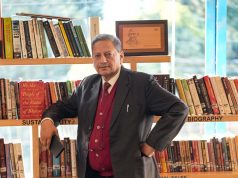
(Dr Kripa R Nautiyal is a Defence and Strategic expert turned Anthropologist. He has a PhD Degree in Cultural Anthropology and a number of his articles on various subjects have been published in International Journals and newspapers.)