U’khand draws a blank in Swachh Survekshan 2024–25 Awards
Garhwal Post Bureau
Dehradun, 17 Jul: Even after the completion of 10 years of the Swachh Bharat Mission, Uttarakhand has failed to secure a single spot in any major award category of the Swachh Survekshan 2024–25, the nationwide cleanliness survey conducted by the Union Ministry of Housing and Urban Affairs. The results were announced today at Vigyan Bhawan, New Delhi.
While Lalkuan has been acknowledged under the “Promising Swachh Shehar of State/UT” category, Dehradun based environmental action and advocacy group SDC Foundation, has critically noted that this recognition is part of a format that has selected one city per state, making it a token representation rather than a competitive recognition based on comparative performance.
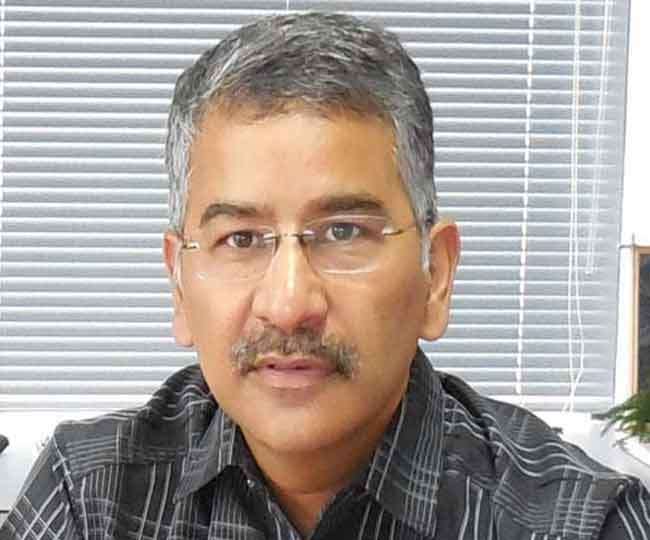
“This is a moment of deep reflection. Other states such as Madhya Pradesh, Uttar Pradesh, Maharashtra, Gujarat, and Chhattisgarh continue to dominate the national rankings year after year, while Uttarakhand remains completely absent,” said Anoop Nautiyal, founder of SDC Foundation. He added that this is not the failure of any one city but the consistent collective outcome of systemic apathy and lack of political and administrative priority in Uttarakhand towards waste management.
The Swachh Survekshan 2024–25 award categories recognised the best-performing cities across five population segments with cities with over 10 lakh population to those with under 20,000 residents. While cities like Indore, Surat, Noida, Chandigarh, Lucknow, Ujjain, Mysuru, Ambikapur, Tirupati, Lonavla and many others continue to lead by example, Uttarakhand’s cities like Dehradun, Haridwar, Roorkee, Rishikesh, Haldwani and others have not featured in any of the national award rankings.
SDC Foundation, which has been analysing Swachh Survekshan results from an Uttarakhand lens for the past several years, reiterated its recommendations for long-term and structural improvements. “We have repeatedly stressed that token efforts and photo-ops will lead Uttarakhand nowhere,” said Anoop Nautiyal. “If our larger cities, those in the 3 to 10 lakh population category continue to perform poorly year after year and fail, why can’t the state make a serious attempt to develop at least one clean model town in the smaller categories of 50,00 to 3 lakh, 20,000 to 50,000, or even below 20,000 population categories?”
To address this crisis of coordination and accountability, Anoop Nautiyal renewed his call for the establishment of a dedicated Waste Management Commission (WMC) for Uttarakhand. “Holistic waste management is not the mandate of a single department. It cuts across the Urban Local Bodies, Urban Development, Panchayati Raj, Forest, Tourism, Peyjal Nigam, Jal Sansthan, and the Pollution Control Board amongst others. In addition, six different waste management rules were notified by the Government of India in 2016 covering plastic, solid, e-waste, biomedical, hazardous, and construction & demolition waste,” he explained.
He said that the current governance setup involving Committees, Chief Secretaries, Commissioners, DMs, ULBs, and a maze of officials is unable to systemically manage all six waste streams on a daily basis across 95 blocks in 13 districts and 53,000+ sq. km of Uttarakhand.
With an estimated 8 to 10 crore pilgrims and tourists visiting the state annually, a number expected to rise in the coming years, the waste management challenge will only intensify. “If Uttarakhand can form a Migration Commission, then why not a Waste Management Commission?” he asked.
Anoop Nautiyal emphasised that such a Commission should be independent and not a dumping ground for political appointees or overworked bureaucrats. Instead, it must be headed by a domain expert empowered with authority, budget, and rank equivalent to a Cabinet or State Minister.
“Waste management is not a side issue. It is one of the most urgent, complex and high-impact sectors for an environmentally sensitive state like Uttarakhand. Unless we overhaul our systems and bring in sweeping institutional reforms, our cities and villages will continue to miss the national benchmarks and our residents will continue to pay the price of political apathy, poor health, degraded environment, and missed economic opportunities,” he concluded.