 By Arun Kumar Singhal
This piece reflects on how advancements in the new age have significantly enhanced the accuracy and success of space missions compared to earlier times—though it remains an ongoing exercise in learning and perfecting. With cutting-edge technology, sophisticated data analysis, and precision engineering, today’s explorations are reaching milestones that once belonged only to science fiction. Yet, these modern triumphs are deeply rooted in the tireless efforts and visionary groundwork of scientists from decades past. The breakthroughs we celebrate today are built upon the bold experiments, failures, and discoveries of the past—forming a continuum of curiosity, perseverance, and innovation.
You may wonder why I’m writing about this. Well, it’s not to delve into the technicalities of space science—that’s best left to the experts. Rather, this is a nostalgic reflection, sparked by a memory of a space-related incident that may seem laughable now, but back then, it gripped the world with fear. Many of you may not even have been born when it happened, but it remains an unforgettable chapter in the story of space exploration—and perhaps a curious addition to your information kitty.
I was recently flipping through the pages of an old journal I had written during my school days, and it brought back vivid memories of a time when the world looked skyward with both wonder and worry. I had intended to share this on 11 July —the date most relevant to this piece—but, thanks to life’s ever-persistent interruptions, I could only complete it today. Still, I hope the lines below offer you something interesting—and perhaps even a little amusing—to reflect on.
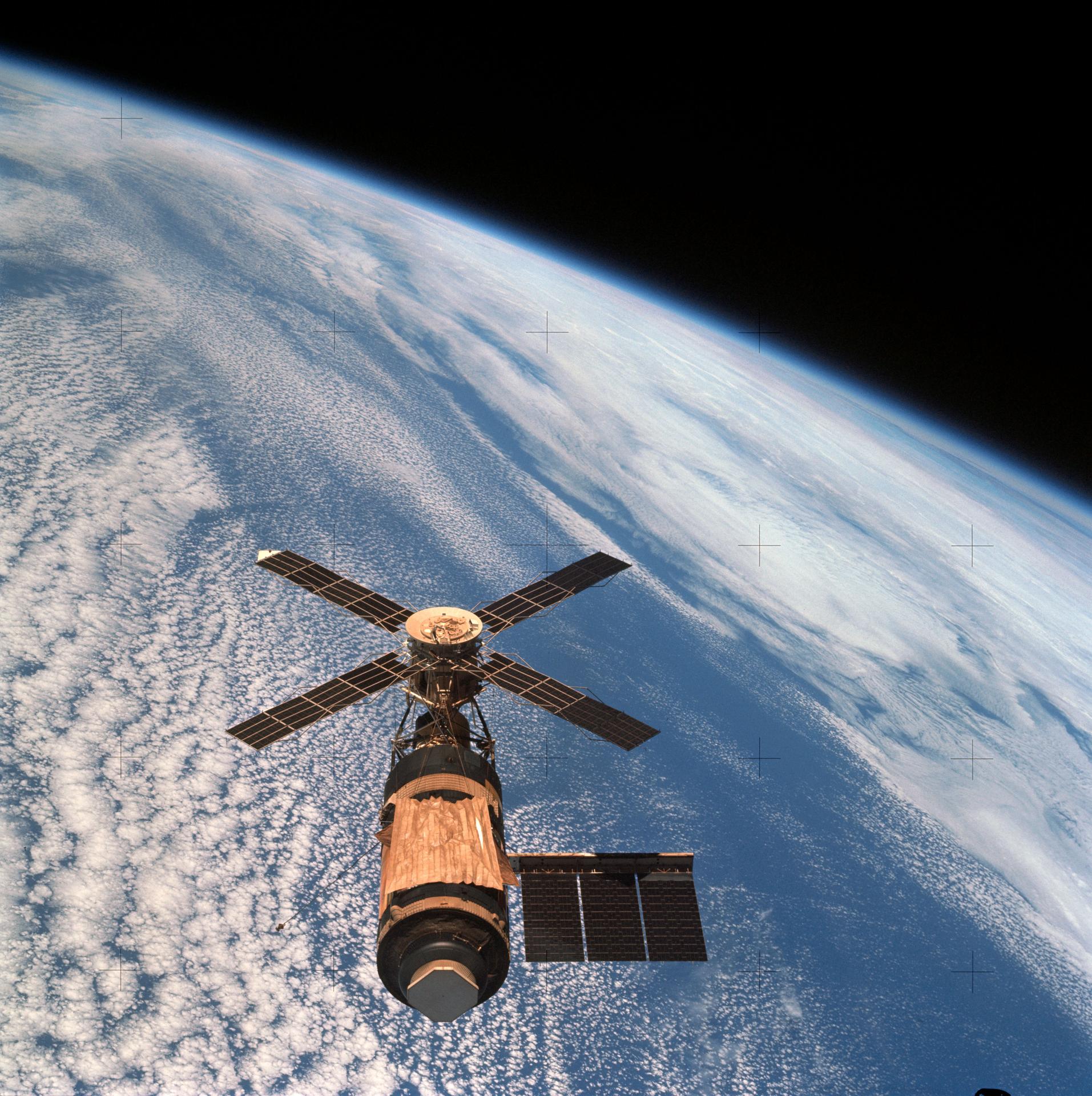
It was 11 July 1979 when the world witnessed a dramatic chapter in the history of space exploration. Skylab—the first space station launched by the United States—made its uncontrolled re-entry into Earth’s atmosphere. As it broke apart, no one knew exactly where the debris would land.
As Skylab’s fiery descent approached, the world watched with a cocktail of awe, fear, and disbelief. It was, after all, the first time in history that a 75-ton man-made object (if my school-day notes still hold weight!) was plummeting back to Earth without guidance. Headlines screamed uncertainty. Families cancelled vacations. Schools drafted emergency drills. And in classic human fashion, satire joined the chaos—radio jockeys cracked jokes, cartoonists drew helmet-wearing civilians, and nervous laughter became a coping mechanism during the brief but intense countdown to impact.
In India, the fear reached epic proportions. The noise was unusually loud—not from the skies but from rumours traveling twice the speed of the falling station. The usual Indian style of street-corner analysis kicked in, and everyone became an expert. Not via WhatsApp University (which didn’t exist back then), but through good old-fashioned hearsay and half-baked knowledge dished out generously to all.
Businesses ran Skylab-themed sales—never waste a crisis, right? Newspapers warned of possible impacts in populated areas, temples held special prayers, and astrologers scrambled to predict outcomes—all of which, of course, turned out to be delightfully inaccurate as I remember.
The government, while closely monitoring NASA reports, had little more to offer than cautious reassurance. Fortunately, no debris fell on Indian soil. But the episode left us with a peculiar blend of relief, laughter, and the realisation of how wildly unprepared we were for space-related surprises.
With no clear prediction of where the debris might fall, millions of people around the globe—from the United States to Australia, Europe, and India—held their breath. They finally sighed in relief when Skylab broke apart over the Indian Ocean and Western Australia—with no injuries reported.
Though the incident was a blend of anxiety and, eventually, amusement, Skylab’s fall marked a turning point in space policy. It exposed the real risks of uncontrolled re-entries and underscored the need for planned deorbiting strategies. The lessons learned shaped the design of future missions, especially in managing spacecraft at the end of their operational lives.
Today, Skylab is remembered not just as a technological milestone, but also as a cautionary tale—a reminder that space exploration, while inspiring, comes with responsibility and risk. More than four decades later, the story of Skylab still captures the imagination. As we move deeper into a new space age, Skylab reminds us that what goes up must one day come down—and how we manage that return truly matters.
I hope this piece serves as a meaningful reminder for those who lived through that era—and an intriguing glimpse into history for Millennials, Gen Y, Gen Z, and beyond.
(Arun Kumar Singhal, a resident of Doon, engages in social service and is a passionate environmental enthusiast. He has also been an author and writer in the field of energy and environmental issues for over three decades.)