 By Ganesh Saili
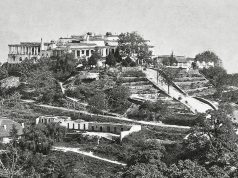
For years, I have grappled with this conundrum. It defies an easy solution. Where in Mussoorie did Maharaja Duleep Singh spend two summers of his life in 1852 and 1853? Was it Whytbank Castle? Or could it have been Castle Hill Estate? This has been the proverbial monkey on my back. Looking across the gorge from our home, the outlines of a house atop a hill appear, though veiled by a frieze of deodar trees. Although Landour teems with legal and illegal structures, coupled with an overabundance of human beings, this place remains seemingly untouched by human hands. For the past hundred years, Castle Hill and its hundred and eighty-two acres have existed cheek-by-jowl with Landour’s bustling lanes, with not an inch of space encroached upon.
The tale of Woodcroft and Green Mount begins with master mariner George Bladen Taylor, who levelled the ground to give us Taylor’s flat (also called Survey Field), where we have our hockey, football, and cricket tournaments.
Pic Courtesy: Internet.
How could Frederick E Wilson or Rajah Wilson of Hursil avoid getting into the act? He bought the place in 1840 after one of our banks crashed. Litigation followed, but his logging left him with no time, and he asked his friend, Henry Vansittart, the Superintendent of the Doon, to watch his interests. Apparently, his friend did such a good job that he ended up owning the estate ‘for a song’.
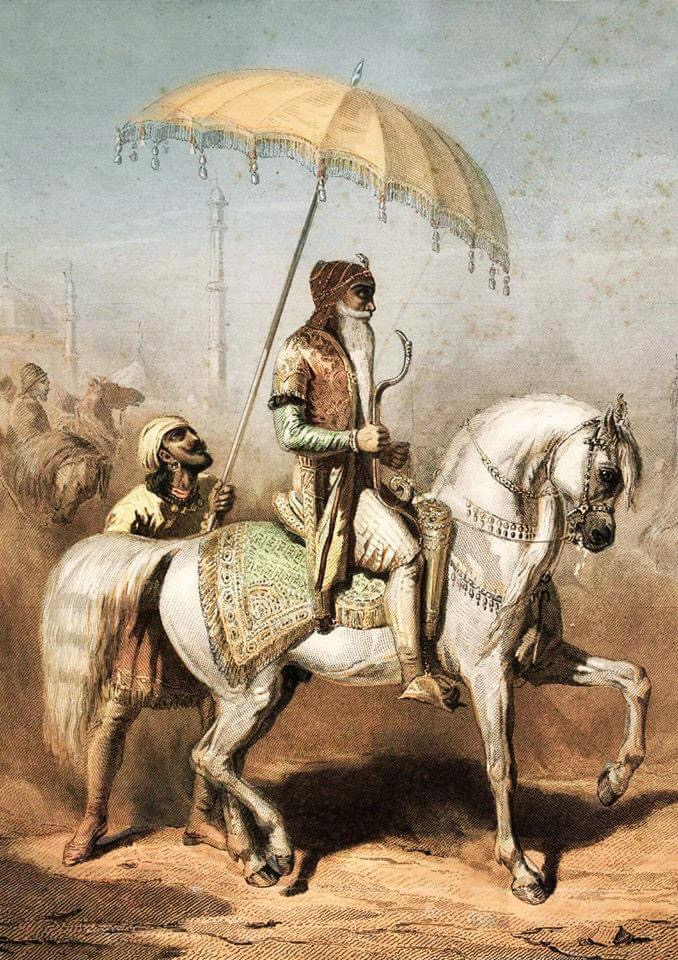
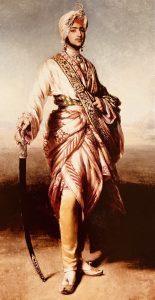
By 1850, according to our old guides, this place was deemed suitable for the maharaja’s residence. This is where the not-so-honourable John Company sequestered him from the blistering heat of Futtehgarh, effectively cutting him off from his old associates. His minder, John Logan, taught him the ruler’s ways. The British rulers were anxious to keep him isolated, lest he turn into a rallying point for the Sikh troopers loyal to his late father, the last Sikh king of the Lahore Durbar, Maharaja Ranjeet Singh.
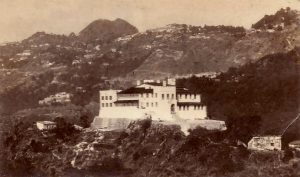
Pic courtesy: Author’s Collection
Logan had lectures delivered by qualified teachers, drawn from the officers working here, on topics like astronomy, fine arts, meteorology, philosophy, natural history, theology, bees, comets, chemistry, history of India, zoology of the Himalaya and peculiarities of the English language.
He writes: ‘I am glad to say that the Maharaja enjoys his residence in the hills greatly. I have availed myself of the opportunity of getting a drawing-master to give him lessons, and he makes good progress. He now speaks English with fluency and much more correctly, and with better pronunciation… He takes great pleasure in the society of English boys, of whom a few come every Saturday from Maddock’s school to join him at play. As His Highness’s residence is at some distance from Mussoorie, he lives a quiet and retired life.
‘I have been able to clear a sufficient level of space for a playground on the Manor House Estate, to admit of his playing cricket, which he takes great delight in.’ But by October, they had bundled him off to England, and the Survey of India acquired the estate, including eight houses: Dunedin, Dunedin Cottage, St Rogue, Hazeldene, Craignish, Abbotsford, and Melrose.
A pile of stones at the southern tip of the estate is the only reminder of the old All Saints Church. Faced with a drop in the number of parishioners, permission for dismantling the church was sought, which was granted by the Bishop of Lucknow, and the pulpit and other fittings were sent to the Hindustani Church.
The release of John Logan’s diaries throws a spanner in the works, which led some to believe that the Maharaja might have been housed in nearby Whytbank Castle. Meanwhile, the British robbed him of the Kohinoor diamond, annexed his kingdom, plundered his wealth and cheated him. What recompense can there be for a life stolen?
So there, in a nutshell, lies the conundrum: Where had he stayed – Castle Hill Estate or Whytbank Castle?
As I write, I know that though it seems like this monkey might be off my back, the merry sounds of the circus continue to ring in my ears.
And this much I know: the last word on this matter has not yet been spoken.
(Ganesh Saili, born and home-grown in the hills, belongs to those select few whose words are illustrated by their own pictures. Author of two dozen books, some translated into twenty languages, his work has found renown worldwide.)