 By: Ganesh Saili
When he left home in America, he had heard tales of how we were promoting our family planning schemes by giving out free transistor radios to those getting a vasectomy. Nothing had prepared the young filmmaker Raymond Steiner for the sight that greeted him as he stepped out of Bombay airport; whichever way he turned, folks were glued to their transistor radios. Raymond remembers: ‘For a minute, I thought to myself, ‘These poor chaps! They’ve done it to them all!’
Little did he know, the craze for one-day cricket had just begun, and cricket commentaries had everyone glued to their sets. For 1975, it was a bold but innovative step. Little did anyone know that this ODI format was set to become the biggest thing ever in the game’s history.
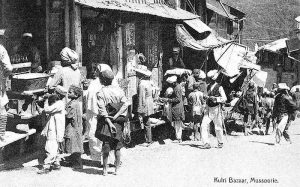
Talking of radios, below our home lived Davis Charles, the High Priest of Tinkerers, who would often be lost to the world, fiddling with the valves on someone’s radio in a corner of Saran Lal Kapoor’s typewriter repair shop. That was precisely where our ‘Pilot’ radio awaited his ministrations. Even as kids, we learned to slap it a few times to have it stutter with, ‘This is All India Radio. Here’s the news read by Melville De’Mello or Surojit Sen’, or in chaste Hindi, there is always ‘Yeh Akash Vani hai. Abh aap Devki Nandan Pandey sey Samachar suniye’
Of course, Davis insisted on your leaving behind the battered blue license as proof of ownership. In 1935 the only radio in the State of Tehri-Garhwal was owned by the ruler, Rajah Nagendra Shah. Everyone else was forbidden to hear or see one until a certain Gulzari Lal Aswal wanted to get one. He applied for a license, which was reluctantly granted. He walked to this hill station, taking four days to get here. He chose one with a wind charger that made for better reception. Afterwards, it malfunctioned, and he found that the only reliable mechanic was Banwari Lal, who had to be carried in a palanquin to Tehri on a journey that took six days.
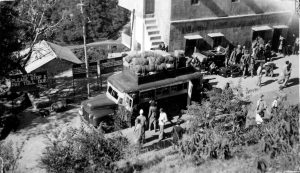
While in college in 1969, I hung around Maplewood Cottage, and one day, I asked the then-young author Ruskin Bond how to improve my pronunciation.
‘Listen to the BBC radio whenever you can,’ he suggested. I did, but my accent remains a cross between mid-Atlantic and Chutney Mary.
And who’s to blame? As Angie Baby said: ‘It’s so nice to be insane no one asks you to explain the radio by your side!’
Easier still was going around the Upper Chakkar. In the 1960s, as one went past Seaforth Lodge, one heard music, though the Ramans had no radio; instead, they had a radiogram belting out songs from 45 rpm records like ‘Itsy-bitsy teeny-weeny yellow polka red bikini!’
In Mussoorie, Mr. Lord lived out the last days of his life fixing broken things: blenders, juicers, mixers, and radios. They lay scattered around him, overflowing onto his workbench, which doubled as a dining table in the little shack that had been given to him by kind courtesy of the nuns of the nearby church.
‘Man,’ he said to me, ‘I saw a blob of white at the edge of the table. I thought, ‘Why waste butter?’ I spread it all over my last piece of toast, not knowing that it was Fevicol! And boy, was I sick!’ He laughed away the memory.
One day, the sole of his foot came off. He just tied it up with his handkerchief! Those were the days of GPs, and given time, the foot healed.
When it came time to cross the Golden Bridge, he left without a murmur. I attended the funeral, my first Catholic one. My strongest memory of the event is the sweet, citrusy, and slightly piney aroma of frankincense mingling with the rich, smoky scent of myrrh that pervaded the church, from the censer dangling from the priest’s hands.
I think Mr. Lord would have approved, or at least have thrown a bouquet off his coffin into the crowd to see who would be next to follow him to the hereafter.
Ganesh Saili, born and home-grown in the hills, belongs to those select few whose words are illustrated by their pictures. As the author of two dozen books, some translated into twenty languages, his work has found recognition worldwide.