The Books on My Shelves
By Madhu Gurung
Walking into a book shop for me, a kid who grew up in the ‘70s – ‘80s, is like walking into a mind space where you and the books exist like treasures to be picked up. I have always believed that books talk to you, nudge you, make you dream, or set you on a path of promise and possibility.
One such book that changed my path and got me into writing was Amitav Ghosh’s “The Glass Palace”. Gifted to me in Myanmar way back in 2000. We were living in Myanmar then – the country on which the book is based. It helped me map this historical novel intimately from ground zero and made me love Myanmar forever. The book spans a century from the Third Anglo Burmese war and the fall of the Konbaung dynasty in Mandalay, through the Second World War to the late 20th Century.
What left its mark was the story of Thibaw Min, Burma’s final monarch exiled from Mandalay to Ratnagiri in India along with his family. How their life spans out is the story. Long after I finished reading, I wondered what happened to Thibaw Min’s wife, Queen Supayalat, after his death in Ratnagiri. I read and looked up reference books. Much to my delight I learnt that she returned to Burma and died in Yangon at the age of 66. The year was 1925. What she and the King Thibaw Min did not get in their lifetime, Queen Supayalat got in her death – a royal funeral by her people. She lies buried at Kandawmin Garden Mausolea near the Shwedagon Pagoda in Yangon.
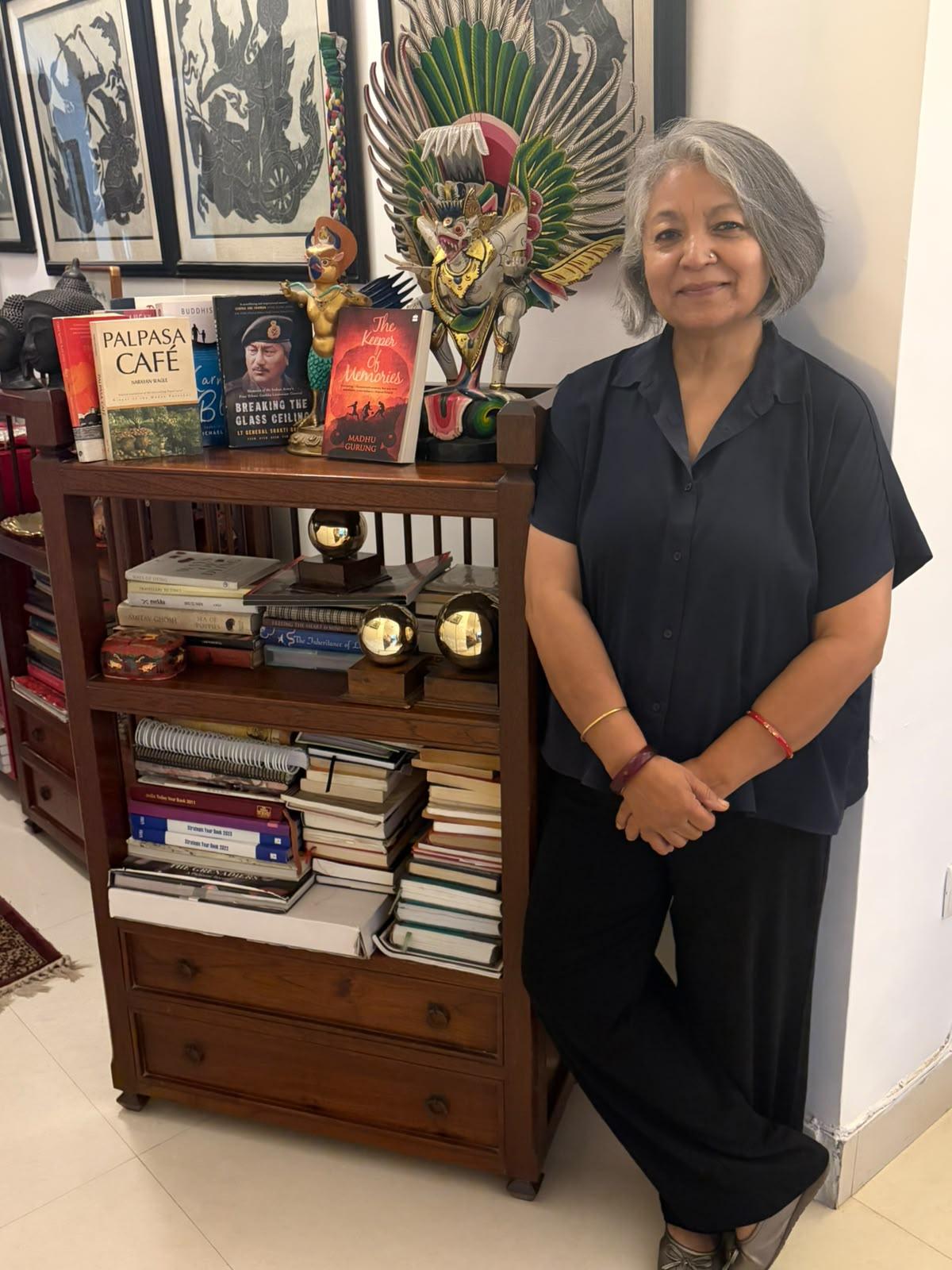
‘The Glass Palace’ affected me deeply. As a history buff it set me looking inwards at my family history. It resulted in my first book, “The Keeper of Memories” published by Harper Collins in 2016, a historical fiction on my Gorkha family’s roots and identity. The book much to my surprise went on to be short listed for the Shakti Bhat First Book Award. I didn’t win but it set me on the path to writing.
Reading was part of my growing up as an army child’s gypsy existence. Every three years we were uprooted to travel to a new place, new school and new friends. Every school had a library period. This instilled one habit – till today I cannot fall asleep without reading a book. It almost feels like telling yourself a story or touching a new milestone.
The other book that was a fun read was Murakami’s “What I talk about when I talk about running”. I don’t run but I had picked up the book based on its unusual title. It’s a slim book which is a collection of travelogue, reminiscence and memoir that covers his four-month preparation for the 2005 New York Marathon. What is admirable about Murakami was he sold his jazz bar in 1982 to devote himself to writing and running – two disciplines that reflect his life. The book is unusual as it’s enjoyable.
It led me to do a short story collection – “Tibet with My Eyes Closed” – the idea was to collect the stories of Tibetans – a collection of old people, many in the autumn of their lives and the only ones alive to have seen free Tibet. I felt their stories had to be told before it went with them. Once the book started, just like the colours of Tibetan prayer flags – blue, white, red, green and yellow, more stories of the young, born in exile in India joined to make it an emotional collection of stories of identity, belonging, hope, pain and remarkable perseverance of a people and a region that are at a risk of being forgotten.
After the book was released it made me more interested in reading works of Tibetan authors. One book I liked is “In love with the World: A Monk’s Journey Through the Bardos of Living and Dying”. It is a 2019 memoir written by the renowned Tibetan Buddhist master Yongey Mingyur Rinpoche in collaboration with Helen Tworkov. It is a memorable book. When he was 36 years old Mingyur Rinpoche secretly leaves his monastery in India and embarks on a four year wandering retreat. The book is an intimate account of the monk’s near death experience and the life time of wisdom he gains from it.
The next book “A Matter of Death and Life” is unusual as it is written by an internationally renowned psychiatrist Irvin Yalom and his wife, a feminist author Marilyn Yalom diagnosed with terminal cancer. What makes this book very remarkable is that it has been written by both husband and wife – alternating accounts of their last months together and Irwin’s initial months alone – as they investigate universal questions of intimacy, love, grief with candour and wisdom. It is raw, heartbreaking and wise. It is a book that makes you cry.
The other remarkable book is Loung Ung’s book “Lucky Child” – it’s a searing and redemptive story of life in America as a Cambodian genocide victim. Loung Ung becomes the lucky child to accompany her elder brother to America while her two surviving sisters and brother stay behind. It is a poignant memoir – a testament of human spirit and family bonds that are deeply stirring.
While writing this I wonder how much of the choices we make about books is what we are thinking. In 2021 when I started India’s first Nepali licensed community radio station, Radio Gham Chhaya in Dehradun, we decided to do 60 percent of our programmes in Nepali and 40 percent in Hindi. This year we have started a full-fledged Radio App with the same name. It can be heard globally. In the five years journey doing radio and writing I realised how little I know of Nepali writings, so currently I am reading two Nepali authors side by side – “Karnali Blues” by Buddhisagar, translated into English by Micheal Hutt. It is a touching account of father-son relationship. A son’s search for approval and a father’s small acts of kindness and forgiveness.
The other is the English translation of the book “Palpasa Café” by Narayan Wagle – winner of Madan Puraskar. It is a powerful anti-war story set amidst death and fear of the Maoist guerrilla war in Nepal.
Like the commas and full stops that make our writing whole, I have ‘easy reach’ books that allow me respite and renewal – Tintin, Asterisk and Obelisk and a range of folk tales from every place I travel.
Every book renews my belief in the magic of words.
(Madhu Gurung started her career as a journalist and has worked with several organisations including the BBC World Service Trust. Her first book ‘The Keeper of Memories’ was short listed for the Shakti Bhat First Book Award. ‘Tibet with my Eyes Closed’, a collection of Tibetan short stories, is her second book. In 2021, she founded and runs a community radio station – Radio Gham Chhaya in Dehradun. In 2026 February she launched the popular global radio App with the same name. She lives and works in Dehradun.)