By Our Staff Reporter
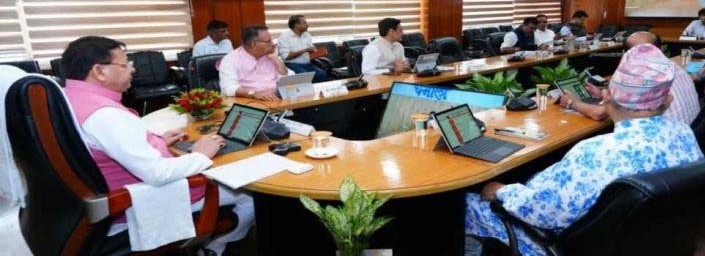
Dehradun, 28 May: In a historic move to harness its spiritual legacy and position itself as a global centre for wellness, the Uttarakhand Cabinet, under the leadership of Chief Minister Pushkar Singh Dhami, today accorded its approval to the Uttarakhand Yoga Policy 2025. Known as the cradle of India’s yogic and spiritual traditions, Uttarakhand has long been a destination for saints, sages, and seekers, with places like Rishikesh, Kausani, and Champawat serving as major yoga centres for decades. This new policy, the first of its kind in the country, aims to preserve this rich heritage while transforming Uttarakhand into an international hub for yoga and wellness.
The Uttarakhand Yoga Policy 2025 seeks to broaden the scope of yoga beyond just a spiritual or individual pursuit. The policy envisions yoga as a comprehensive tool for social, educational, economic, and tourism development. The government’s vision is clear: to establish Uttarakhand as a global capital for yoga and wellness. The policy will be implemented on multiple fronts. Uttarakhand will be promoted as an international destination for yoga and spirituality, with special emphasis on developing world-class yoga centres and hubs. Strict rules and guidelines will be framed for yoga institutions to maintain high standards. All yoga institutions will be required to register, and a dedicated online yoga platform will be launched for better access and information. Yoga will be integrated into school and college curricula, while extensive awareness campaigns will be conducted to popularise yoga among all age groups. Under this policy, the state will collaborate with national and international organisations to build capacity and encourage research in yoga, meditation, and naturopathy. Mindfulness and wellness programmes tailored for various age groups, genders, and communities will also be rolled out.
By 2030, the state aims to establish at least five new yoga hubs across Uttarakhand. By March 2026, yoga services will be available in all Ayush Health and Wellness Centres. Partnerships with 15 to 20 national and international organisations will be developed by March 2028. The policy also mandates 100 percent registration of all yoga institutions. International yoga conferences and promotional campaigns will be organised to boost yoga tourism. Financial incentives form a crucial part of the policy. In hill regions, new and expanding centres will receive grants of up to 50 percent of the project cost or a maximum of Rs 20 lakh. In the plains, the grant will be 25 percent of the project cost or up to Rs 10 lakh, with the annual grant limit capped at Rs 5 crore. Special priority and incentives will be given to centres developed in Jageshwar, Mukteshwar, Vyas Ghati, Tehri Lake, and Kolidek Lake, which have been identified as Yoga Hubs.
To encourage research in yoga, meditation, and naturopathy, grants of up to Rs 10 lakh per project will be provided, with a total allocation of Rs 1 crore for research during the policy period. Existing establishments such as homestays, resorts, hotels, schools, and colleges that run yoga centres will be eligible for reimbursement of Rs 250 per session for yoga instructors, up to 20 sessions per month per centre. The government will also establish a dedicated Directorate of Yoga and Naturopathy to oversee the implementation, regulation, grant distribution, and monitoring of all activities under the policy. This Directorate will include a Director, Joint Director, Deputy Director, Yoga Experts, Registrar, and other necessary staff. Its responsibilities will include quality assurance, registration and accreditation of yoga institutions, development of a rating system for yoga centres, and fostering national and international collaborations.
A high-level state committee will regularly review and monitor the policy’s progress. The government has earmarked an estimated Rs 35 crores for the next five years for successful implementation, including Rs 25 crores for yoga centres, Rs 1 crore for research, Rs 1.81 crores for teacher certification, and Rs 7.5 crores for supporting yoga sessions in existing institutions. The policy is expected to generate over 13,000 direct employment opportunities in the state. Around 2,500 yoga teachers will be certified by the Yoga Certification Board, and more than 10,000 yoga instructors are likely to find employment in homestays, hotels, and related establishments. The boost to yoga tourism will add a new dimension to the state’s economy, increase health awareness among the public, bring positive changes in yoga education, and raise Uttarakhand’s global profile in the field of yoga.
In a related development, the Cabinet has approved amendments to the Uttarakhand Service Sector Policy-2024, focusing on encouraging high-quality and balanced investment in the state’s hilly and less developed areas. Developed regions like Rishikesh and Dehradun Municipal Corporations, Mussoorie and Muni Ki Reti Municipal areas, and Nainital Tehsil have been excluded from the policy’s purview. New criteria have been introduced to attract quality investment in the education sector, including high rankings for colleges and universities, minimum student registrations, minimum course duration, and a cap of one project per area in a district for benefits. These changes are expected to ensure that investment and development are channelled to the regions that need them most.