Dehradun at a Crossroads:
 By Anup Badola
For generations, Dehradun and its sister town Mussoorie have been cherished destinations on the world tourist map, celebrated for their unique climate, scenic beauty, and tranquil atmosphere. However, a growing consensus among citizens and environmental experts suggests this inherent charm is under threat. A recent step by the government to register tourists and construct a ropeway from Purkul to tackle crowding in Mussoorie is a welcome step. But the fact is also that there is gradual decline of these unique characteristics over the years. What are the reasons?
Why Rethink Rispana Bindal Elevated Corridor?
The latest flashpoint in the debate between development and preservation is the proposed Rs 6,200 crore Rispana-Bindal Elevated Corridor (RBEC), a project that critics argue sacrifices the region’s ecological soul for a flawed and costly traffic solution. Prima facie it is evident that due consultation with the citizens of Dehradun or even Mussoorie has not been done, for whom it is vital. In the absence of SIA and EIA to maintain transparency, it is perceived by public that this project does not seem to have the desired feasibility and sustainable impact assessment socially and environmentally. Rather, experts indicate this project will have long term impact on inevitable hardening of the riverbanks and beds, destroying natural habitats and impeding groundwater recharge, altering their natural course and flow and potentially increasing the risk of flooding in certain areas. This may also increase stress on already fragile ecosystems of the rivers, impacting aquatic life and the surrounding flora and fauna. The project is seen as a direct contradiction to the earlier promises of cleaning and restoring the rivers to their natural state. Even for the much-hyped benefit of creating a high-speed road network to ease traffic flow within Dehradun is also questionable, as it further will create four bottlenecks in the city at Sai Temple, Raipur, Lalpul and Bindal Tiraha rather than decongest.
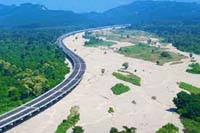
Do we really need these elevated corridors while government has already initiated four link roads from 1) Maldevta-Suakhili-Dhanaulti, Garhi Cantt-Kimadi-Hathipanv, 2) Sudhiwala-Premnagar-Ballupur Chowk- Rajpur Road, 3) Sahaspur-Selaqui-Shimla bypass-Rajpur Road and now 4) Suddowala-Doonga-Misrajpatti to Mussoorie along with the ropeway. That is for the already saturated carrying capacity of Mussoorie. These roads also impacted ecologically with mass tree felling for the road widening.
Are we concerned about Citizens? Dehradun and Mussoorie need decongestion within the city and development with ecological balance rather than experimentation for economic considerations.
The twin cities need an internal comprehensive mobility plan and not cosmetic solutions. The government has already envisaged the UKMRC-Comprehensive Mobility Plan 2024 and Rispana Rejuvenation Mission under Namami Ganga Mission, but it has been withdrawn or kept in abeyance. Can we think of reviving these two previously envisaged projects?
Need Comprehensive Mobility Plan:
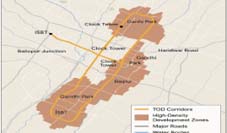
The UKMRC-Comprehensive Mobility Plan 2024 includes 1) Light Rail transit or Neo Metro (rubber-tyred, electric, runs on dedicated lanes) with high capacity spine, considering lack of demand or space for full metro, 2) Electric City Buses Intermediate feeders, 3) main road Feeder Services First/last mile from metro/bus stations, 4) Paratransit Modes Flexible access in low-density areas. This whole plan encourages mixed-use multi-modal development, also promoting Transit-Oriented Development (TOD) along major corridors. The plan also suggests 200–300 km of dedicated footpaths & cycle lanes, Pedestrian plazas near transit hubs and safe crossings and station access enhancements, BRT & feeder bus services and paratransit and e-rickshaw networks. By adopting this plan, we can achieve our goal. Shifting from private to public transport by improving accessibility and comfort, ensuring coverage across urban and peri-urban Dehradun areas and preparing the city for future integration into a regional mobility network (e.g. Rishikesh–Haridwar) is one approach. The whole plan as per report will cost approximately Rs 2450 crore.
Rejuvenate Rispana-Bindal not choke it with concrete:
The other concern is neglecting revival of Rispana and Bindal, which are tributaries of the Asan and Song Rivers, and drain the heart of the city. We have seen overflowing Rispana and Bindal in the recent rainy season causing them to swell dangerously and trigger flash floods in the city. These rivers are perennial streams not seasonal as conceived in RBEC project. On the same premise and at the request of state government, National Institute of Hydrology (NIH), Roorkee, in its report advocated rejuvenating Rispana and Bindal under Namami Gange Programme Rispana Mission project of Rs 63.75 crore. It was officially launched in 2018 by the then CM. It identified a significant width of the river in its upper catchment area, indicating its natural capacity to hold and convey water throughout the year. It pointed out the significant groundwater depletion in the Rispana catchment area, which has drastically reduced the baseflow into the river during lean seasons.
An associated concern is the depleting groundwater in the city. Around 90% water is sourced from ground water. As indicated in the Uttarakhand Integrated and Resilient Urban Development Assessment 2024 under ADB project submitted to GoUK, out of all the areas in Dehradun, Raipur zone has been declared to be the most prone to water scarcity. Other sensitive zones such as South Zone and North Zones indicate a water crisis in the near future.
Based on the Urban and Regional Development Plans Formulation and Implementation (URDPFI) standard, per capita demand of water in Dehradun is 135 litters per day and accordingly the normative demand would be of the order of 169.4 MLD, while the supply is 150.25 MLD and the transmission loss is 35.5%. There is significant inequity in water supply within the city, as per capita supply ranges from 170 lpcd to 150 lpcd in zones 35 and 11 (Nehru colony and Rajendra Nagar) to 65 lpcd in zones 18 and 5 (Panditwadi and Cement Town). It is estimated that the groundwater recharge has reduced from 80-90% of the precipitation excess in 1992 to only 45-70 % in 2022 as per consecutive reports.
Dehradun has lost its old-world charm of Venice like canal systems that were age-old groundwater recharging systems by converting them into piped canals for widening the inner roads. The significance of Maldevta and Rajpur canals in early 17th century and later East Canal and West Canal systems providing ample water to Dehradun city in 1900 is still in the mind of Doonites. Other canals developed were the Katapathar Canal, Bijapur Canal, Kalanga Canal, and Jakhan Canal, which are vital for ecological balance.
Furthermore, we have already seen Dehradun facing heat going to 42°C. The already converted concrete jungle with new concrete corridors will no wonder make Dehradun getter even warmer in the future. As per Zonal Development Plans, no construction is permitted in Water Body zones, as well as a buffer belt of at least 30m around the FTL27 and a 5m green area. This heavy concretisation in the heart of city will further aggravate problems.
In essence, while the original project Rispana Mission aimed to revive the rivers, the current RBEC elevated corridor project is seen by many as a plan that will sacrifice the rivers and the homes of vulnerable citizens for a traffic management solution, with its environmental and social costs being the central points of opposition. In a nutshell we need to rethink on RBEC project and revive two government conceived projects for the benefit of citizens of Doon and Mussoorie.
(Anup Badola is an independent writer, educationist and researcher and currently associated with Dehradun Citizens Forum. )