All Around the World with the Most Travelled Indian
 By Nitin Gairola
If there is one person who has brought the natural world into our lives, our homes & our minds, it is the legendry wildlife film maker, Sir David Attenborough. Since the 1950s he has been filming in the forests and deserts of the world and now at 99 he’s making some of his finest material that is being seen by millions around the world through Netflix and other OTT streaming platforms.
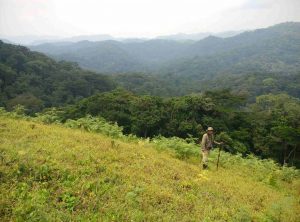
But, first, what is the natural world? During school, our atlases had maps that were either the political or the physical ones. As all know, the political world had the manmade countries with lines on the land, whereas the physical ones had Earth’s real features and topography, i.e., the features on the land such as mountains, plateaus, plains and the oceans, seas, rivers and lakes. Now, if you notice, the physical map either colour codes topographical elevation (mountains and plains) or shows water bodies (oceans, rivers, lakes, etc.). And while such physical maps do name a few prominent forests, deserts or grasslands (such as the Amazon, Sahara & others), they don’t quite mark their boundaries as we do with country borders, which are so well defined.
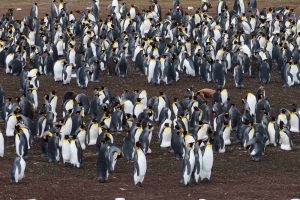
However, our atlases always had a third representation of each continent and the world which was not as prominent or detailed as the political or physical world. It was called the map of ‘natural vegetation’ or what we now know of as the ‘Biomes’ or the ‘Living Landscapes’ of Earth (Bio means life). This is the natural cover on top of our real physical surface, and it determines what life exists in a given place. So, for example, the natural cover of forests or deserts or grasslands can be over any physical elevation. You have tropical grasslands in the plains like the African Savannah and the montane grasslands like the Kazak steppe which are at a far greater altitude than the Savannah. But both are grasslands nonetheless and the same can apply to deserts, forest, tundra and ice biomes. Incidentally, one of the most comprehensive and detailed maps of the natural world that I have is an amazing foldout that I got in a National Geographic magazine which details out the major forests, grasslands, deserts and polar ice cover on Earth.
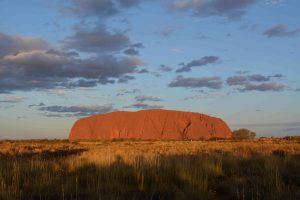
So, it is this natural world that has been popularised by David Attenborough. You will never see him at a place without life and the natural world is all about our ‘Biosphere’, or the zone where all life exists. It includes all ecosystems on Earth and their interactions with each other and that’s why there is ‘Bio’ in Biomes. Basically, the natural vegetation has life and the ones who depend on the vegetation and the habitats are also living, hence the natural world is the living world. It is the world of forests, deserts, grasslands, tundra, ice and marine ecosystems and includes the creatures that live in these regions. Since I was so fond of Earth science, geography and conservation of our natural habitats, I decided to visit this natural world as a tourist, on the path laid by the biggest voice of the voiceless creatures that roam these lands and waters.
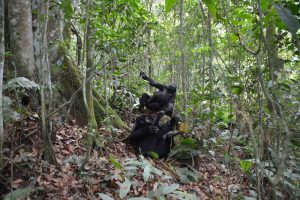
If you check Attenborough’s 2019 ‘Our Planet’ masterpiece, you will notice it has episodes named Forests, Jungles, From Deserts to Grasslands, Frozen Worlds, Fresh Water, Coastal Seas and The High Seas. His 2006 Planet Earth documentary also had similar episode names such as From Pole to Pole, Ice Worlds, Deserts, Jungles, Great Plains, Ocean Deep and a few others. The same has been followed in the 2016 Planet Earth II and the 2023 Planet Earth III series too. It is clearly a reflection of what his understanding of the planet actually is – That fundamentally it is made up of living landscapes and not just the lines on the map that we humans have drawn. It is strange that at times I have to explain the natural world since I am aiming to visit every such eco-region or biome on Earth, but I have no such troubles explaining my visiting the entire political world. So, when I say I want to visit every major country on Earth, it instantly hits a chord. But when I say I am about to complete visiting the entire natural world, I have to back it up by saying that it includes every forest, desert, grassland, tundra, ice and marine eco-region on Earth. It’s a bit of a hard sell since we are designed to believe that only countries make up the planet when it is these landscapes that make it up too and have been doing so for a lot, lot longer than all the nations of the world.
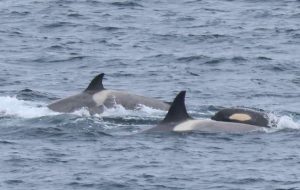
Over his timeframe of 99 years, David Attenborough has seen the natural world change most dramatically as well, and this is reflected in his clear stance towards the risks posed to us and to all wildlife due to man-made climate change and the huge loss of biodiversity that the world is witnessing right now. He, in fact, called his 2020 documentary (A Life on the Planet) a ‘witness statement’ with regard to our treatment of the planet over the past 80 odd years. A witness statement is one that is made by a person who was there to see an event (likely a crime), and that says all there is to say about what has happened so far on Earth.
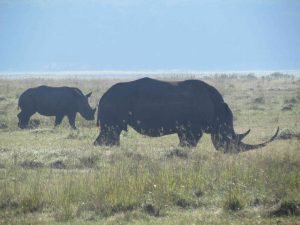
In fact, if not for the degradation of the natural world, it has otherwise been a wonderful age of abundance and relative peace for humans (since 1945, when World War II ended). It’s a pity it has not been done with nature but frankly against it. However, this is changing now too as we are hopefully entering a ‘green revolution’ in the way we do business and run the economy. But this green revolution also comes with a lot of ‘green-washing’ or in plain terms its ‘sustainability window-dressing’. And this is everywhere since we humans are also in the business of fooling each other every day. You will understand this when you see Attenborough’s ‘Breaking Boundaries’ documentary where he highlights the areas where we have moved from the green to the red zone in terms of the climate impact from our industrial actions. But many of us still have our heads in the sand like an ostrich (hint – a world leader with blonde hair).
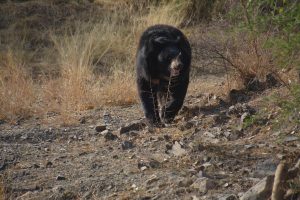
But forget large corporates and political leaders, there is a lot we can do too without doing much (doesn’t that sound just dandy?). For starters, we can just care and be more aware since by being aware we are already in the overall consciousness of large corporates and the political hierarchy. This just may induce them to take action towards a more sustainable future. Always remember that they are either in need of profits or power and neither of these can happen without us. If, on the other hand, we are indifferent towards the natural world, then be rest assured that no one powerful enough will take steps in that direction. You see, businesses and politics have short life spans – they don’t need to see too far into the future, but that ability is imperative for having a sensible perspective on where the natural world is heading.
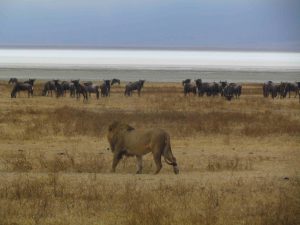
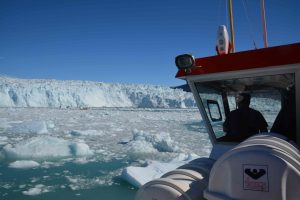
Through our words and our choices we can communicate so much. If we choose not to consume products that impact the environment adversely (such as palm oil foods & cosmetics, red meats, sweat shop clothes or dirty fuel energy), then we have already changed the world for the better. Businesses will chase profits and if they find profits in more sustainable products & services, then that’s where the money would flow. This consumer practicality has to go hand in hand with climate idealism, and it comes out clearly in the recent documentaries of David Attenborough. For me the choice I made as a consumer was to do tourism around nature & wildlife. Since then, my money went directly to the preservation of the last wild places on Earth. And isn’t it amazing that it didn’t take much effort to contribute to the biodiversity and climate cause. In fact, seeing the natural world has been the greatest joy.
Nitin Gairola is from Dehradun and has travelled the natural world more than almost any Indian ever. He has set world travel records certified by India Book of Records, has written for Lonely Planet, and holds National Geographic conservation certifications. He is also a senior corporate executive in an MNC and in his early days, used to be a published poet as well. More than anything else, he loves his Himalayan home. Reach him at: www.facebook.com/MostTravelledIndian/