GARHWAL POST | OPINION & POLICY
Uttarakhand hills cannot afford to borrow development templates designed for the plains. A new model rooted in ecology, spirituality, and community must be built for hills and a differentiated, yet mutually supporting model needs to be built for the plains.
 By Raj Shekhar Joshi | Former Vice
Chairman, SETU Aayog, Government
of Uttarakhand
Uttarakhand was created in 2000 with the promise of a development pathway rooted in its unique geography, culture, and aspirations. Twenty-six years later, the central challenge remains not merely one of infrastructure, but of defining a development model suited to the Himalayan context. Such a model must emerge from the mountains themselves shaped by ecological sensitivity, resilient communities, forests, and fragile glaciers that sustain millions downstream. The Himalayas are not simply a scenic backdrop to India’s growth; they are a young, seismically active, and hydrologically critical ecosystem. Development that ignores these realities is inherently unsustainable. Tragedies such as Kedarnath (2013), Chamoli (2021), and recurring landslides and cloudbursts underscore the consequences of development choices that have too often underestimated nature’s limits.
The Two Uttarakhands — and Why Both Matter
Uttarakhand’s development strategy must recognise a fundamental reality: it comprises two interdependent ecosystems. The hills cover 86% of the land but contribute only about one-third of the GDP, while the plains, just 14% of the territory, host over 60% of the population and most economic activity. Rather than viewing them as competing regions, the state needs an integrated Hills and Plains Strategy. The plains require revitalisation of manufacturing and agriculture through automobile, IT electronics, and renewable energy policies. The hills need investments in agriculture, allied sectors, sustainable tourism, the forest economy, and digitally enabled services. Both must progress together. There is a need to expand economic activity around urban management, waste management, health, education, FPOs, technology oriented governance, earthquake-oriented resilience among many other horizontal sectors.
Towards the Himalayan Model
Let me attempt to sketch the outlines of what a Himalayan model of socio-economic development must look like.
It is a model in which agriculture, horticulture, and animal husbandry should be considered Sanjeevani to reverse migration, strengthen the social systems through hill-adapted agriculture and irrigation systems to become the single largest employment generator in the state. Value addition to traditional crops through near harvest processing infrastructure and market linkages through strengthened FPOs is the key.
Ecological carrying capacity is the undeniable binding constraint, so infrastructure to be built with nature, not against it. Solution is to adopt smarter tourism strategy from volume-driven tourism to high-value, experience-driven, and sustainable tourism. The goal is not fewer tourists, but tourists who spend more, stay longer, damage less, and leave more in the hands of local communities.
The new economic model of Payment for Ecosystem Services frameworks highlights that natural systems generate economic value, and that their degradation is economic loss, even when no balance sheet reflects it. Forest economy is to be reimagined as a livelihood sector supported by Van Panchayats, not a preservation burden. Springs to be rejuvenated to restore the natural water ecosystem.
Governance needs to be strengthened, accountable and data-driven underpinned by enhancing state capabilities. This needs balancing with a bottom-up approach through district-groundedness, and panchayat-empowerment.
It is a model in which technology is a democratic tool. AI and GIS can serve the last village as much as the state capital. Disaster preparedness has to be anticipatory and foresight-driven. Health and education are redesigned for the mountain context, not retrofitted from the plains. The shift must be from reactive governance to predictive and preventive governance. In a geographically complex, ecologically fragile, and climatically vulnerable state, this is not a luxury. It is a survival imperative.
And it is a model in which spirituality is not ornamental but reflects the deep cultural and civilisational identity of Devbhumi. Its reverence for nature, its traditions of community governance, its spiritual anchoring is treated as the bedrock of a development philosophy, not a distraction from it.
This is not a utopian vision. The pilots exist. The evidence is accumulating. In my extensive conversations, many partners national and international, corporate and civil society, technical and traditional are eager to engage. What is required now is the political will to mainstream this model, the institutional courage to hold it steady against short-term pressures, and the humility to keep learning from the mountains themselves.
Uttarakhand’s development story is still being written. The chapter that matters most is the one that decides whether this state will become an example of how to grow with nature or another cautionary tale of what happens when you grow against it.
“Uttarakhand`s development model must be ecosystem-based, action-oriented, and driven by strategic intent. Collaboration is no longer optional, it is essential.”
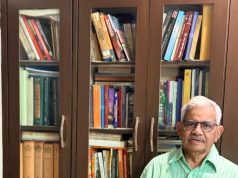
Raj Shekhar Joshi is former Vice Chairman of SETU Aayog (State Institute for Empowering and Transforming Uttarakhand), the apex policy think tank of the Government of Uttarakhand. An IIT graduate with deep roots in the hills of Uttarakhand and grassroots connect, he has graduated from corporate leadership to committed engagement in public policy, rural and urban development. Views expressed are personal.