 By ALOKE LAL
Sometime in the late 1970s, I had to catch a flight from Lucknow. As I reached the airport, the officer in charge of its security said to me, ‘Sir, Bharat Kumar is here in the lounge. Will you like to meet him?’ ‘Who is Bharat Kumar?’ I asked. ‘Sir, Manoj Kumar. Isn’t Bharat Kumar his other name?’
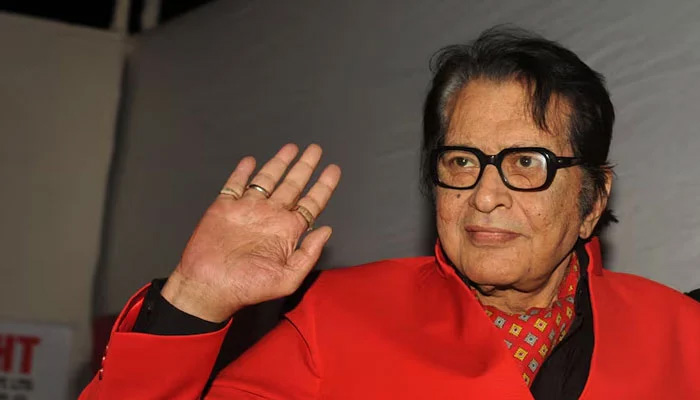
A series of films based on patriotic themes had put the stamp of Bharat on Manoj Kumar, the actor, producer and director of several Hindi movies, who died at the age of 87 on Friday in Mumbai.
He was relaxing with his eyes shut on an easy chair in the lounge, seemingly sleeping. I told the police officer that I did not want to disturb the star, but my whisper was enough to make him open his eyes and look at me. The officer introduced me to Kumar who showed the courtesy of getting up from his chair and extending a hand. As we shook hands, I looked at his handsome face and saw in his eyes a look that I associate with creative people – focused on my expression, as if trying to read my thoughts.
He offered the chair next to him for me to sit down. I was aware that I was sitting next to a celebrity and was finding it hard to keep my excitement under wraps. I was made comfortable by him as he said, ‘I have great respect for police officers. They are our protectors.’ I smiled in grateful acknowledgement of his kind words. While I was trying to think of the things that I could speak of to him, he asked me, ‘What attracted you to the police service? Were you driven by the urge to serve the country, or were there other factors as well?’
‘Yes, indeed, public servants get the opportunity to serve the people, and that was one of the factors which played a part in my decision to opt for the police,’ I said.
‘I have dedicated myself to films that showcase our glorious country. They give a lot of satisfaction to me,’ he said.
‘I have had the pleasure to see your films like Upkar and Purab Aur Pashchim. They are highly inspiring. Are you planning any more works on the theme?’
‘Yes, I am working on a project which is based on the fight for Independence from the British rule in a small state sometime in the 19th century.’
‘That is very interesting. What will be the cast?’
‘I am excited because I am going to direct my lifetime idol, Dilip Sahab in the lead role.’
‘I know you are a great fan of the thespian. Tell me more about it.’
‘I will not share more about the film, but yes, it is a fact that I am a diehard fan of Dilip Sahab.’ After a brief pause, he added, ‘In fact, I am an actor largely because I was inspired by him. You must be aware that Dilip Sahab’s real name is Yusuf Khan, and Dilip Kumar was a name given to him by Devika Rani. I changed my name too, like Dilip Sahab. My real name is Harikrishan Giri Goswami. I knew that with such a name I will never succeed in the film world.’ He laughed out loud.
‘In my coming film, Dilip Sahab is playing the pivotal role. Only he can carry it off, his intensity and histrionics are unmatched. He is the Abhinay Samrat. I have no hesitation in saying that I study his acting method very closely to learn from him. Other actors may not say it, but there are many who are surviving just by imitating him.’ He added, ‘In fact, after the partition of the country, when I was struggling to start a career for myself, I was drawn to the film industry because I wanted to be like him.’
In an Instagram post penned on Manoj Kumar’s passing, Dilip Kumar’s wife Saira Banu has said, ‘Manoj ji had the deepest admiration for our Sahib. The bond they shared was beautiful… There is a most endearing memory I often recall. During the making of Aadmi, Manoj ji, quite unknowingly, began copying Sahib’s mannerisms. Sahib, with a twinkle in his eye, said to him, “Yaar, tu meri tarah shots kar le, main kuchh aur tariqa nikalta hoon!” Oh, how we laughed. It was a moment filled with such warmth and camaraderie.’
***
Manoj Kumar was not active as a creator of films for over twenty-five years after the box office failure of his film Jai Hind (1999). For his services to the film industry, he was presented the Lifetime Achievement Award by Filmfare (1999), Padma Shree (1992) and the Dada Saheb Phalke Award (2015).
He will be fondly remembered for songs like ‘Bharat Ka Rahne Wala Hoon, Bharat Ki Baat Batata Hoon’ and ‘Mere Desh Ki dhart Sona’.
(The writer is a former Director-General of Police and best-selling author.)