 By KB Jad
Quite often, I wonder, is a succession plan just about filling vacant positions?
In one of my fruitful and educative interactions with an eminent educationist and former Doon School faculty, with rich experience of 25 years in that trendsetting school and presently Group Advisor Education, Aditya Birla Group, Dr S Ganguli, out of curiosity about his career path, I asked him how he reached such a senior position without being the Head of a School…
His comprehensive and clear explanation solved all the riddles. First, he made it crystal clear that succession planning is more than filling a gap; it’s a strategic process of identifying and developing future leaders to ensure continuity and stability. Then, he explained to me how the glorious public schools of the past would train their masters to be future leaders. When we talk about trendsetting schools, it is not possible to miss out The Doon school, Dehradun, which has a glorious history of more than 90 years. He believes that it was the training and grooming at The Doon School that, without being a Principal, he could lead 26 schools across 14 states, as the Chief Education Officer of Aditya Birla Group. When he was elevated to the position of Group Advisor, Education, the number was 54.
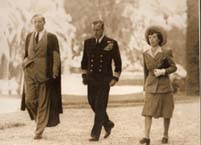
According to him, “Keeping a school growing and improving isn’t just about what happens each day; it relies a lot on thinking ahead and planning carefully for unexpected and inevitable changes.” The concept of initiating English Public Schools in India was envisioned by Satish Ranjan Das, an eminent lawyer from Calcutta who wanted quality education to be imparted to Indian students as well on Indian soil
Dr Ganguli added that taking the vision of establishing a Public School of international repute in Dehradun, Arthur E Foot, a Science Master at Eton, was engaged as the Headmaster. He was assisted by two English assistant masters, John Martyn and Jack Gibson from Harrow and Wellingborough, respectively. They were not only able administrators, but architects of culture.
Perhaps, this is how the seeds of grooming and succession were sown. The tradition of carefully identifying and preparing Masters to step into key roles and leadership positions when necessary. This proactive approach ensured that the school not only maintained the smooth operations but also protected and took forward the rich tradition and culture of the school, even in unforeseen challenges. With this strong practice and policy, the baton smoothly passed on from Arthur Foot to John Martyn and the tradition continued….
Recalling his fond memories, Dr Ganguli shared that, in Public Schools of the past, Masters would join the school in their early twenties. They would start their family by mid-thirties and then decide to stay on till their children completed the education, and by that time, they would be in their late forties. Unknowingly they would get groomed and well baked to take up the reins of any prestigious institute. Many senior faculty from The Doon and other public schools like Mayo College, Scindia School and Sanawar, etc., headed various prestigious schools successfully, leaving a lasting mark.
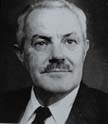
To name a few stalwarts – Jack Gibson headed the prestigious Mayo College, Ajmer. SP Sahi, Dr SD Singh and AN Dar made an impact as successful leaders in The Scindia School, Gwalior. Deen Dayal, a senior member of The Doon School, pioneered Delhi Public School, Mathura Road. All the best practices of the school were replicated in DPS, Mathura Road, as well as RK Puram.
BJ Pitre was the founder Principal of Bharatiya Vidya Bhavan’s Vidyaashram, Jaipur. It will not be out of place to mention that everybody took a bit of The Doon School with them, wherever they moved.
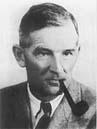
Talking about Public Schools, it is impossible not to mention Welham Girls’ School, Dehradun, one of the most prestigious schools for girls. The school has its own history of leadership practices. Founder Principal Grace Mary Linnel groomed Saroj Srivastava to take over as the Principal. Another stalwart, Jamila Singh established Mayo College Girls’ School, Ajmer. Under her charismatic leadership, the school touched unbelievable heights. To sum up, it won’t be wrong to say that the old-time public schools were nurseries of grooming and shaping leaders.
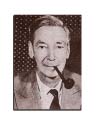
When asked about the process of grooming in such schools, his response was quite interesting and simple, “We didn’t have so called Capacity Building Programmes through lectures or power point presentations …. Our capacity building was hands on, our mentors would make us go through the grind by giving us multiple exposures to different roles, experiences, assignments, leadership trainings, and mentoring. This would help us to take on future leadership roles confidently and competently. During my tenure at The Doon School, my role was not confined to an academic faculty, my roles were multiple, ranging from supervising sports, looking after the estate, coordinating Founders’ Day, taking care of mountaineering equipment, looking after the book store, doing the duties of Bursar, conducting exams of ICSE and ISC in various schools of Dehradun and the list continues. He added, “Being a House Tutor and House Master for 11 years stood me in good stead. No wonder, some of the best institutes give a lot of weightage to being a House Master in a prestigious school like The Doon School. The experience stood by me while handling more than 55 schools in the Aditya Birla Group. This is how the leaders would groom the masters, we would enjoy performing all these duties, without expecting any monetary gain, in return, which, sadly enough is a common practice these days.”

With pain, Dr Ganguli laments short termism in the present-day teachers. They treat schools as stepping stones for chasing titles and better packages resulting in half-baked experiences and weakening the institutions’ leadership bench. They fail to make an impact like the leaders of yesteryears.
He strongly feels that the USP of Public School leaders, particularly from UK and other European countries, was their passion for sports and other adventurous activities like Trekking, Mountaineering, Swimming, etc., and how they left that legacy. These were not simply extracurricular activities, but leadership labs. This would not only provide them holistic education but also skill them for a lifetime. He fondly recalled how he escorted students on some of the most difficult treks so that they learnt how to rough it out with a bare minimum support system, and develop Management skills like Leadership, Teamwork, Decision Making, Resilience, Conflict Management, etc. Unfortunately, such activities are dying fast. Mostly, the outings are confined to places of tourism like Agra, Manali, Shimla, etc., with all five-star amenities.
In recent years, we have witnessed an unpredictable change in the education landscape. The public schools with glorious pasts are losing their sheen. The age-old practices and values are dwindling fast, commercialisation and consumerism have taken over. The crisis of value-based and effective leadership is clearly visible, hence, the dent in the process of succession planning as well. Most of the leaders fail to spot people with potential, not only for leadership but in other roles within the institution. They, at times, fail to practice diversity, equality, and inclusivity, when it comes to succession planning, which is crucial for any school.
When asked about his concern about the current scenario, Ganguli expressed his apprehension about the future of schools, if immediate steps are not taken. Some of the disturbing thoughts he shared were … Where are we headed? Is there concern about receding values? The increasing commercialisation of education. Lack of commitment among teachers and, most importantly, the acute drought of good teachers.
Schools and educators across the country need to introspect before it is too late.
Dr Ganguli strongly believes that, in a public school, the Head of the School plays a vital role in shaping the institution’s vision, culture, and day-to-day operations. Without a clear and unbiased succession plan, schools risk facing operational disruptions and most importantly uncertainty among staff, students and parents. He further added that a succession plan is not just finding a replacement … it’s about maintaining continuity, ensuring leadership readiness and fostering future leaders.The time has come, when we need to look back and move forward….
(KB Jad is Principal, Parvati Radhakishen Fomra School, Aditya Birla Group Schools, Mathura, UP.)