By Dr Dipikka Kapoor
Dharali, Uttarkashi, 8 Aug: When disaster struck the peaceful village of Dharali in Uttarkashi district in the form of a sudden cloudburst, it brought devastation — homes were swept away, lives were lost, and the mighty mountains reminded everyone of nature’s unpredictable power.
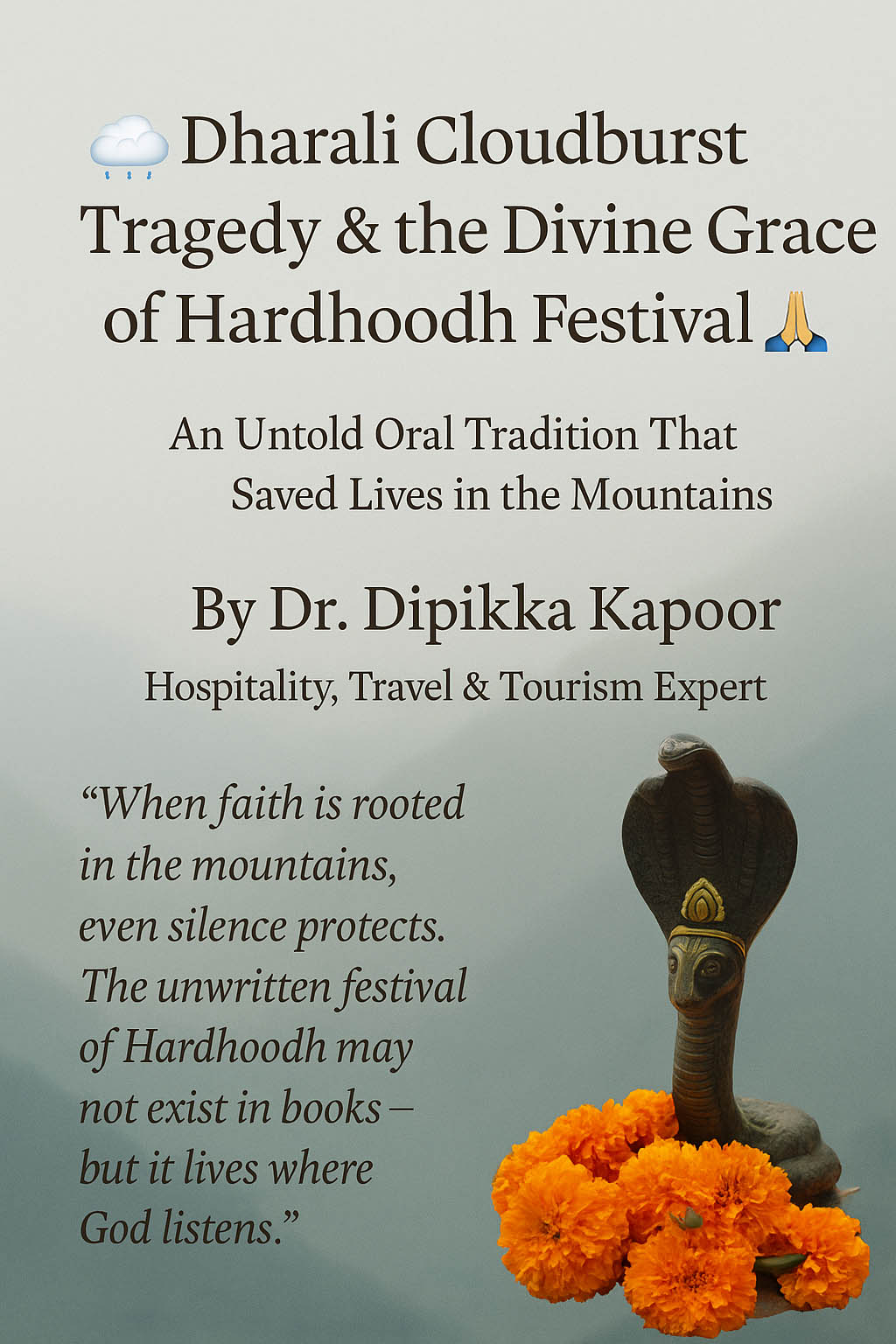
Yet, amid the sorrow, a miracle unfolded — many villagers were away from home, safely attending an ancient, lesser-known ritual called the Hardhoodh Festival, observed at a nearby temple dedicated to Nag Devta, the Serpent God of the mountains.
This age-old tradition, celebrated by the people of Dharali, Bhatwari, and Dhaali, is not documented in textbooks, not featured in tourism brochures, and not marked by fanfare or headlines. Hardhoodh lives in the oral landscape — passed down through generations, whispered through memory, and practiced with quiet devotion. It is enacted not out of ritual obligation, but from an instinctive harmony with nature and seasonal rhythms.
“This isn’t a festival that is announced or publicised. It is felt,” shares a local elder. “Our ancestors observed it with faith — and we continue to follow it, even if no one outside our region knows its name.”
Ironically, it was this very observance that spared numerous lives. While their homes faced the full force of the cloudburst, the people were away — immersed in ritual and prayer, invoking the blessings of Nag Devta. Some call it divine timing, others believe it was the will of God — but for those who survived, it was nothing short of a sacred intervention.
The Hardhoodh Festival, usually observed in the monsoon months, is a mountain-specific custom. There are no large processions or commercial displays — only heartfelt offerings, age-old chants, and deep respect for the protective spirits of the hills.
In a time where many traditions are being lost to modernity, this tragic event has shed light on why living traditions matter — even if they are not written down. They are living, breathing parts of the land — intimately tied to survival, identity, and the invisible threads of protection.
As Uttarkashi mourns its losses and begins the long road to recovery, the story of Hardhoodh offers not only a lesson in cultural preservation, but a testimony to the power of faith, memory, and the unseen guardians of the mountains.
Heartfelt condolences to the bereaved families, and prayers for strength to all who survived — perhaps saved by the timeless grace of Nag Devta and the sacred rhythm of Hardhoodh.