All Around the World with the Most Travelled Indian
 By Nitin Gairola
After having physically visited the major mountain ranges of every continent (including Antarctica), I can confidently say there is no place like home and, here, by home I mean the Hindu Kush Himalayan eco-system that rests right above us too in Uttarakhand. This area includes the Himalayas, the Hindu Kush, Karakoram and the Parmirs and these young mountain chains (caused by the collision of the Indian plate with the Asian one) are the sources of 10 major glacial rivers. They also hold the largest snow and ice freshwater deposits in the world, outside of the 2 poles, i.e. the Arctic and the Antarctic. That’s why this part of the world goes by many names such as the ‘Water Tower of Asia’ and the ‘World’s 3rd Pole’. And this is the reason why it is disproportionately affected by climate change.

The Hindu Kush Himalayas, also called HKH, supply water to 210 million people who live in them and also to another 1.3 billion living downstream on the river basins. These mountains are the source of fresh drinking water, of food (via irrigation), of energy (via hydropower) and of various other ecosystem services. To put it in perspective, the HKH impacts over 18% of the world population and the impact can be both positive and negative. We sadly saw the climate related ill effects on 5 August ‘25 in the Dharali-Harsil region of Uttarakhand and that’s what got me to pen down this piece. I anyway wanted to write about mountains of the world and felt it was important to give a scientific angle to these most awe inspiring but dangerous biomes of the world.
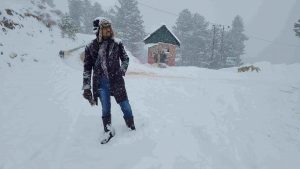
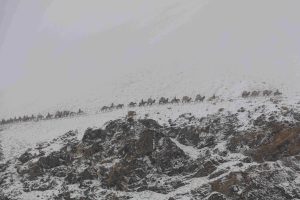
Being the storehouses of frozen water, having the steep slopes as they do (gradients) and being both creators & victims of extreme weather (monsoons), it is little wonder why the mountains are so sensitive to climate change. Here the change is not geologically slow or invisible as is the case with many natural processes. Instead, it can be quick, visible, vicious, and utterly unforgiving.
Today the average atmospheric carbon (CO2) concentration levels have moved from 300 parts per million (ppm) in 1970s to 425 ppm in 2024 and this has had a corresponding increase in global average temperatures. This CO2 emission increase is primarily due to mankind’s addiction to fossil fuels and our land use changes (turning forests to farms) and the most visible impact of this climate changes comes to our mountains first. It can be said that they are the barometer of the world’s climatic health and let us remember that it is not just academia, but this climatic health directly impacts 18% of the world’s population.
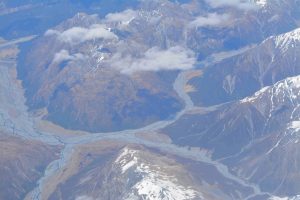
The ancient glaciers are melting faster than ever before, and we have decadal time-lapse images of many glaciers to prove their accelerated & unprecedented retreat. It becomes all too noticeable when we have Glacial Lake Outburst Floods (GLOFs) as was the likely cause of the Dharali-Harsil tragedy. So, I am stating for the record that it was not due to a ‘cloudburst’ which by definition needs more than 100 mm of rain within 1 hour over a 10*10 km area. In Dharali-Harsil region there was only 2.7 mm rain over 8 hours. So, the real cause was likely a GLOF event wherein devastating floods are caused by a massive discharge of water from a lake that gets its water from a mountain glacier. It happens when the glacial lake bursts due to excessive rainfall that takes place (say) during winter months and causes accelerated de-glaciation (i.e. more water) through the summers. All this is due to a relatively warmer & moist climate year around. We had similar floods in 2013 in Kedarnath and in 2021 in Chamoli.
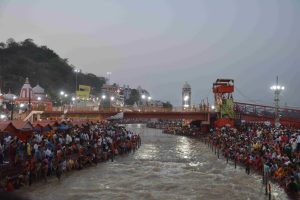
And even if there is little one can do about the climate (in the short term), the best we can practically do is to not have rampant and unchecked development in such ecologically trigger sensitive areas, such as steep slopes bereft of vegetation i.e. no obstructions for water and debris. In this case the Kheer Ganga River just decided to follow its old course post the glacial lake outburst and not take its usual new route. So those (with short term memories) who had built their buildings on this now dry old route had to pay the price and face the fickle river’s furious flow. That is why putting the blame on an act of God is not right, since we are supposed to act with nature, not against it. Doing so, as we did, is naturally very unwise. Had these new hotels, shops and roads been made in the safe zone, none of this would have happened. So, today, Dharali village’s older settlements in the safe areas are unharmed and the new ones on the river’s earlier course are buried under debris and concrete.
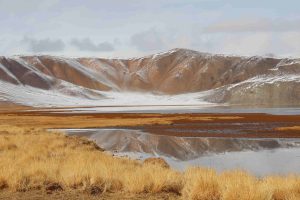
It is now well understood by climate scientists and by many in the public as well that glaciers instead of melting steadily are susceptible to feedbacks in which initial melting leads to greater melting and the ice decreases exponentially, not arithmetically year on year. One major feedback loop in alpine or mountain glaciers is that the exposed dark rocks (after the ice recedes) absorb more sunlight, thereby heating the area further and thus hastening the melt. This is called a self-reinforcing feedback loop. The strange part is that when such warming accelerates, it initially brings a bounty, as rivers are full and the nearby plains are fertile, but then they start drying out. Around 70% of our Ganga River is made of glacial fresh water in the summer months and is the most important river in India, providing sustenance to 600 million people and is also a source of faith.
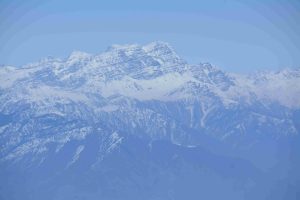
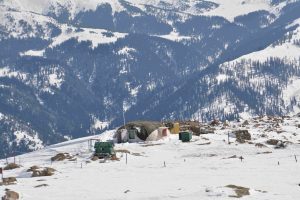
Besides the Ganga, the 9 other rivers that emanate from the Hindu Kush Himalayas are the Indus, Amu Darya, Tarim, Brahmaputra, Irrawaddy, Salween, Mekong, Yangtze and the Yellow River. As you would have noticed, this is a cross-border risk, i.e., the climate actions in one country can impact the lives of people in the neighbouring countries. Actually, today, the actions of ours anywhere on the planet can impact the lives of those who live in and around the mountains. A lot is at stake in the Water Tower of Asia and the World’s 3rd Pole. We, in Uttarakhand, are in the midst of it and can bring about some real change through our actions. And if that doesn’t provide any inspiration for climate action, then I don’t know what will.
Nitin Gairola is from Dehradun and has travelled the natural world more than almost any Indian ever. He has set world travel records certified by India Book of Records, has written for Lonely Planet, and holds National Geographic conservation certifications. He is also a senior corporate executive in an MNC and in his early days, used to be a published poet as well. More than anything else, he loves his Himalayan home. Reach him at: www.facebook.com/MostTravelledIndian/