 By ANIL RATURI, retd IPS
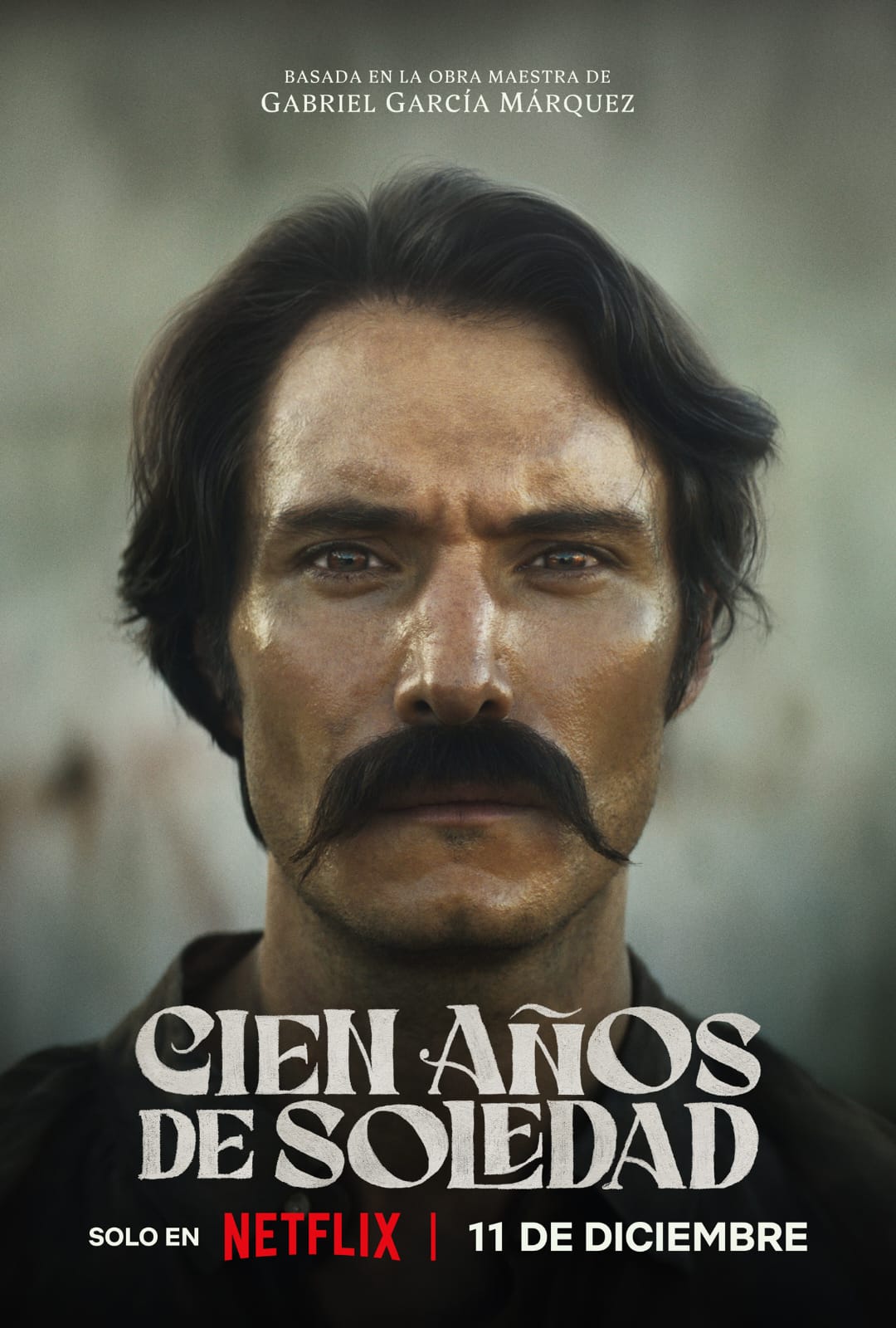
I recently happened to see the serial “One Hundred Years of Solitude” (Season1) on the Netflix OTT platform. The first season has eight episodes.
I learnt that the Season-2 will have another eight episodes that will complete the epic story.
It is based on the iconic Spanish novel of the same name (first published in 1967), authored by the Colombian Nobel laureate, Gabriel Maria Marquez.
It is said that many film producers had approached Marquez during his lifetime to procure the rights of the book for the celluloid screen. However, the author had been reluctant as he was apprehensive that a film running for a couple of hours would not be able to do justice to his work. He remained contented in that-the book was alive in the imagination of his readers!
After Marquez’s death, his sons Gonzalo García Barcha and Rodrigo García Barcha agreed to sell the rights to Netflix.
In order to ensure that the production was faithful to the book, both the sons became executive producers of the Netflix series.
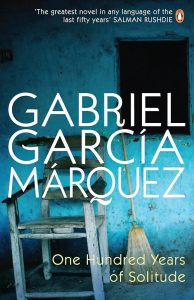
Marquez’s masterpiece of “magical realism” is an intensely complex work for any filmmaker to successfully capture.
Salman Rushdie called the book,
‘The greatest novel in any language of the last fifty years” and Pablo Neruda called it “the greatest revelation in the Spanish language since Don Quixote of Cervantes.”
William Kennedy deemed it “the first piece of literature since the Book of Genesis that should be required reading for the entire human race.”
Harold Bloom, on the other hand, felt the novel to be “rammed full of life beyond the capacity of any single reader to absorb.”
In 1970, Paul West of The Washington Post had the following to say about this great work, “This extraordinary novel obliterates the family tree in a prose jungle of overwhelming magnificence. Above all, García Márquez (via his translator) feeds the mind’s eye non-stop, so much so that you soon begin to feel that never has what we superficially call the surface of life had so many corrugations and configurations, so much bewilderingly impacted detail, or men, so many grandiose movements and tics, so many bizarre stances and airs.”
The story is about José Arcadio Buendía and seven generations of his family. He married his first cousin Úrsula Iguarán with whom he founded a fictional, Utopian town of “Macondo” in 19th century Colombia.
The town’s moorings are akin to Rousseau’s “noble” state of nature. This idyllic “stateless” place is soon overwhelmed by external forces such as gypsies, government, technology, politics, religion, etc., leading to successive civil wars. In between, the human failings of lust, incest, jealousy, vengeance, etc., play out a macabre saga of violence and destruction.
The author’s use of “magical realism” as a literary tool makes the unreal seem real!
Linear time and space are distilled into cyclic time. Memory of characters fades, and prophecies of events to come in their lives become common place!
The entire work becomes an allegory for the inability of humans to learn from the past, leading to history tragically repeating itself!
“Solitude” becomes a symbol of man’s hubris, selfishness, and lack of compassion.
The universal appeal of the tale is such that though the story is about fictional characters in Colombia, the compelling artwork could well be seen as the history of entire mankind!
The Marquez family had insisted that the series adaptation should be Spanish and Colombian. The producers have respected the sentiments of the author and his family.
The Netflix series begins with the now famous opening lines that end the novel, “Many years later, as he faced the firing squad, Colonel Aureliano Buendia was to remember that distant afternoon when his father took him to discover ice.”
Those who are interested in the myriad colours of life should watch this series, or better still, should read the monumental book “One Hundred Years of Solitude!”
(Anil Raturi is an IPS officer who retired as the DGP of the state).