Seminar held on Indian Knowledge traditions near Biharigarh
Garhwal Post Bureau
HARIDWAR/SAHARANPUR, 19 Sep: At a national seminar focused on Indian knowledge traditions, Vice-Chancellor of Maa Shakumbhari University Vimla Y, said Indian thought and values can play a central role in resolving global crises. She emphasised that traditions such as Vasudhaiva Kutumbakam, Sarve Bhavantu Sukhinah, Lokmangal, coexistence and duty consciousness offer humanity a moral and balanced direction in times of turmoil.
The seminar, jointly organised by the Departments of Public Administration and Political Science of Maa Shakumbhari University, Saharanpur, and the Department of Political Science of Chaman Lal Autonomous College, Haridwar, was held on the theme ‘Indian Knowledge Tradition and Contemporary Global Crises’: Possibilities of Solutions Based on Ethical Values’ with ICCR funding. Vimla said Indian knowledge is not merely a legacy of the past but a holistic vision for the present and future.
Keynote speaker Prof Brijendra Pandey dwelt on the integrative nature of Indian thought, which links the individual to the nature, the society and the universe. He said values such as truth, non‑violence, coexistence, compassion and welfare are vital foundations for addressing global challenges. He added that Indian tradition embodies a unity that strengthens diversity rather than suppressing it.
In the valedictory session, former professor of Central University Motihari, Prof Sanjeev Kumar Sharma underlined the global relevance of Indian knowledge traditions, stressing the inseparable bond between knowledge and conduct. He said values like Vasudhaiva Kutumbakam, Lokasangrah and Sarvajan Hitaya can provide a humane perspective to a divided and crisis‑ridden world. He called for integrating ethical values of Indian thought into modern education, policy‑making and social life.
Registrar Kamal Krishna said that the moral and human values inherent in Indian traditions must be linked to contemporary education and research, adding that academic collaboration between the two institutions will be strengthened through MoUs covering joint research, seminars and knowledge exchange. Treasurer of Chaman Lal College Atul Harit said that such events energise academic dialogue and provide students, researchers and the teachers with opportunities to understand diverse dimensions of Indian knowledge traditions in modern contexts.
Principal of Chaman Lal College, Dr Sushil Upadhyay said that the world is facing multiple crises, including the wars, and stressed upon the need to understand and apply Indian ethical and human values in practice. Controller of Examinations Dr Rajiv Kumar said Indian tradition regards knowledge as inseparable from life and conduct, with education aimed not only at intellectual growth but also at moral awareness, character building and social responsibility. Academic Coordinator Dr Vinod Kumar said the theme is highly relevant to the global scenario and noted that research papers presented explored ethical, social, cultural and contemporary aspects of Indian knowledge traditions.
Seminar convenor Vijay Pratap Singh said that the principles of harmony, restraint, tolerance, coexistence and welfare are crucial in the face of wars, environmental crises, social inequality, moral decline and erosion of human sensitivity. Organising secretary Neeshu Kumar said that the aim is to bring Indian knowledge traditions into academic discourse as a vision for addressing present global challenges rather than viewing them solely as a legacy of the past.
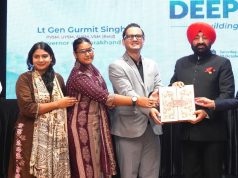
Teachers, researchers and participants from several states presented their papers during the technical sessions, and a book edited by Neeshu Kumar and Vijay Pratap Singh was also released during the inaugural session.