Garhwal Post Bureau
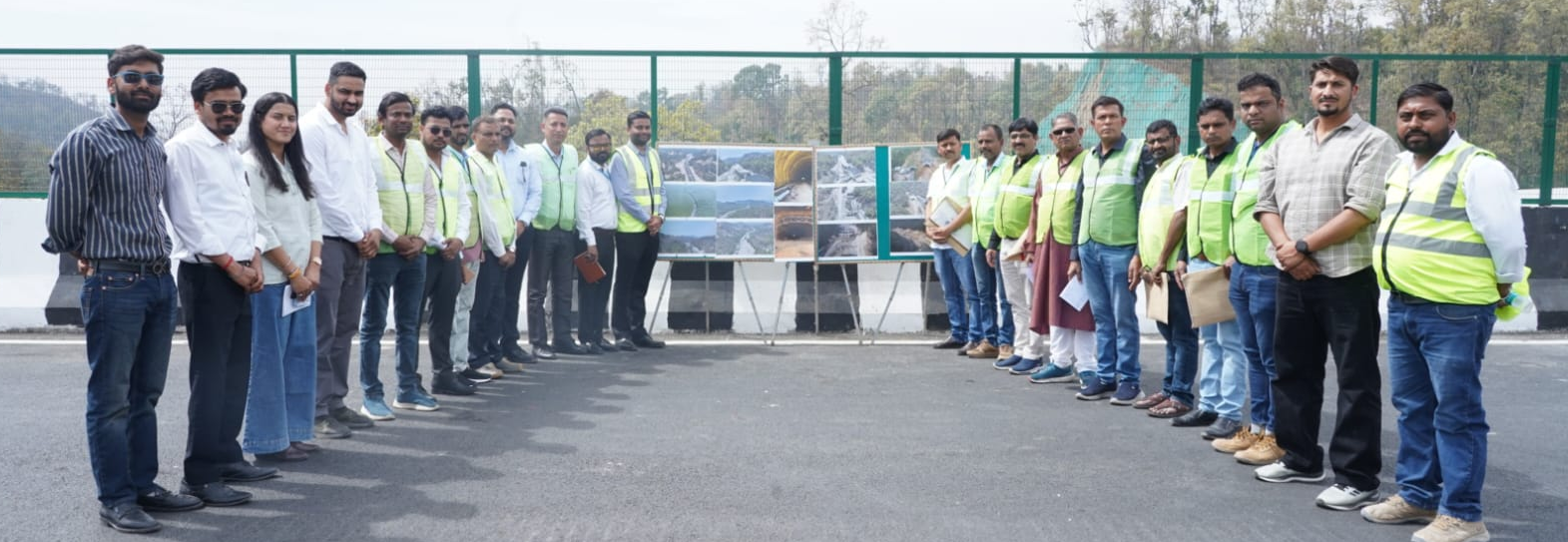
Dehradun, 16 Mar: Members of the media delegation from Odisha, currently visiting Uttarakhand, yesterday visited the Delhi–Saharanpur–Dehradun Expressway project to observe how modern highway infrastructure is being developed in India. This Expressway is being constructed with a strong emphasis on sustainability and wildlife protection. The visit offered the delegation a closer understanding of how large-scale connectivity projects are being designed and executed while maintaining a balance between development needs and ecological conservation.
The delegation was received by Saurabh Singh, Project Director of the Project Implementation Unit (PIU), Vasant Vihar, who briefed the visiting journalists on the progress of the expressway and its importance in strengthening regional connectivity. During the interaction, he also added that, once completed, the expressway would significantly reduce travel time between Delhi and Dehradun while also improving overall transport efficiency across the region.
The officials also informed the delegation that special care has been taken in stretches of the highway that pass through environmentally sensitive zones in the vicinity of Rajaji National Park. Innovative engineering solutions have been incorporated into the design of the project to ensure the safety of wildlife and to preserve the natural movement of animals across the forest landscape.
During the visit, Ajay Lingwal, Sub-Divisional Officer (SDO) of the Rajaji National Forest Range, along with Sumit Singh, Site Engineer with National Highways Authority of India, interacted with the members of the delegation and elaborated on the wildlife conservation measures that have been integrated into the project. These measures include the construction of dedicated wildlife underpasses, eco-bridges and natural corridors to enable wild animals to cross the highway safely without disturbing their habitat or migratory routes.
The visiting journalists were informed that such features are planned and executed following detailed ecological studies and are increasingly becoming an important component of infrastructure development in forested and ecologically sensitive regions. It was also emphasised that these interventions not only facilitate safe movement of wildlife but also help in preventing road accidents involving animals while maintaining the ecological continuity of the landscape.
Members of the media delegation appreciated the careful planning and execution of the project and observed that the expressway represents a progressive approach towards sustainable connectivity, where infrastructure development goes hand in hand with environmental stewardship and biodiversity protection.
The visit provided the delegation with valuable exposure to the manner in which major infrastructure projects in India are adopting innovative and responsible practices to safeguard biodiversity while simultaneously enhancing connectivity and economic development.
The delegation comprises nine senior journalists and editors representing different media organisations from the state. Earlier, this delegation also visited FRI, the under-construction, Rishikesh-Karnaprayag Railway Project, THDC, etc.