Dialogue before Decisions
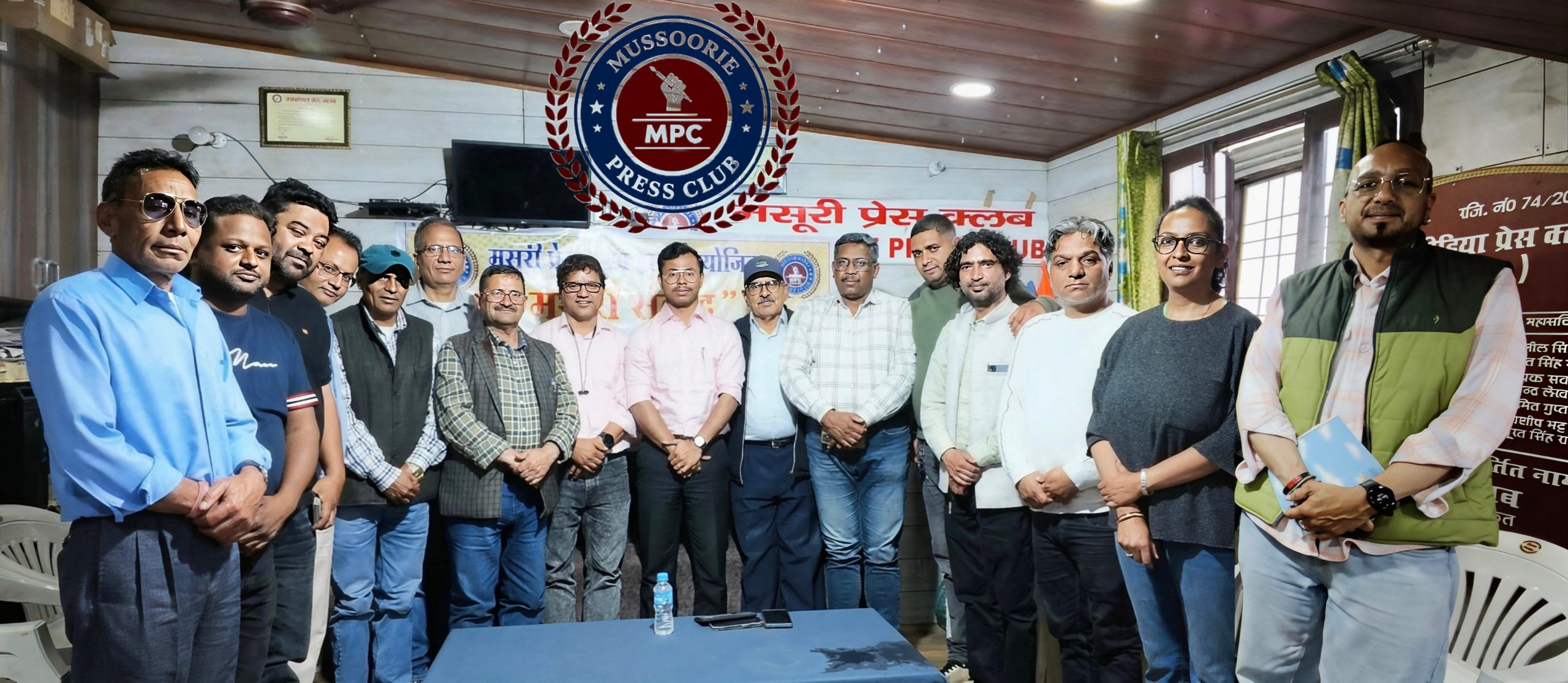
Journalists and media professionals engage with SDM Rahul Anand on noise pollution, healthcare, traffic, tourism, governance and the future of Mussoorie.
 By Rajat Aikant Sharma
Mussoorie, fondly known as Queen of the Hills, has always stood at the crossroads of nature, heritage and tourism. But, today, it also finds itself grappling with challenges ranging from traffic congestion and parking shortages to noise pollution, healthcare, illegal construction and increasing pressure on its fragile infrastructure. Addressing these concerns was the objective of ‘Mussoorie Samvaad’, an interactive programme organised by the Mussoorie Press Club, where SDM and Joint Magistrate Rahul Anand engaged in an extensive dialogue with journalists and media professionals.
Held under the leadership of Press Club President Sunil Silwal and General Secretary Surat Singh Rawat, the programme witnessed active participation from members of the Press Club who raised questions on issues directly affecting residents and visitors alike. Unlike a routine press briefing, the discussion evolved into an open exchange on governance, accountability and the long-term vision for Mussoorie.
Noise Pollution: Preserving the Silence of the Hills
Journalists highlighted complaints regarding loud music from hotels, bars, pubs, cafés, restaurants and DJs, as well as open-air parties being organised in forested areas around the town. The issue of persistent and unnecessary vehicle honking on Mall Road, including during late-night hours, was also raised.
Referring to recent judicial directions regarding stricter enforcement of noise pollution norms, SDM Rahul Anand stated that the administration is committed to ensuring compliance with the law. He informed the gathering that a certified decibel meter would soon be available so that sound levels can be measured scientifically rather than relying solely on subjective complaints.
Importantly, he clarified that enforcement is not restricted to violations after 10 p.m. Citizens who believe noise levels exceed the prescribed limits need not wait until night to seek action. Complaints can be lodged immediately through Dial 112, the SDM Office, or the Executive Officer of Nagar Palika Parishad, Mussoorie, following the enforcement mechanism emphasised in judicial proceedings.
For a hill station whose greatest attraction has always been its serenity, protecting silence is not merely an environmental obligation—it is central to preserving Mussoorie’s identity.
Healthcare: A Growing Town Needs Stronger Medical Infrastructure
Healthcare also emerged as an important area of concern. Journalists pointed out that while Mussoorie welcomes lakhs of tourists every year, its healthcare infrastructure continues to remain under pressure, particularly during peak tourist seasons and emergencies.
The need for strengthening hospital facilities, improving emergency medical services and ensuring timely healthcare for both residents and visitors formed an important part of the discussion. As tourism continues to expand, healthcare will remain one of the critical pillars supporting the town’s sustainable future.
Revenue Administration: Patwari and Tehsil Services
Questions were also raised regarding Patwari circles, revenue administration and Tehsil-related public grievances. The discussion focused on making revenue services more accessible and ensuring quicker resolution of issues affecting local residents.
The interaction reflected the fact that governance in a hill town extends far beyond tourism and includes efficient delivery of routine public services.
Carrying Capacity: Planning Beyond Restrictions
The issue of Mussoorie’s carrying capacity received detailed attention.
Rahul Anand explained that discussions on carrying capacity stem from earlier scientific studies and subsequent legal proceedings before the National Green Tribunal and the High Court. The administration is presently preparing its response while simultaneously examining long-term planning measures.
Rather than viewing carrying capacity solely through the lens of restricting tourist arrivals, he emphasised the importance of expanding infrastructure—better roads, improved traffic circulation, enhanced parking facilities, reliable water supply and stronger civic services.
The administration also informed the media that GIS mapping of the entire Mussoorie region is underway, enabling better monitoring of construction activities and assisting authorities in scientific urban planning.
Parking and Traffic Management
Traffic congestion continues to remain one of Mussoorie’s most persistent challenges.
The SDM stated that nearly 810 proposals have been received for pocket parking and neighbourhood parking facilities, which, subject to policy approvals, could substantially increase parking capacity across the town.
Discussions also explored better traffic management on Mall Road. Instead of imposing blanket restrictions, emphasis was placed on cooperation between the administration, hotel associations and tourists. Encouraging visitors to keep their vehicles parked during peak hours and experience Mussoorie on foot was suggested as a practical and sustainable solution.
The administration also indicated that discussions on tourist registration and visitor management systems continue as part of broader efforts to balance tourism with civic infrastructure.
Illegal Construction and Encroachments
Questions regarding illegal construction and encroachments also featured prominently.
The administration stated that continuous action is being taken wherever violations are identified. GIS technology is expected to strengthen monitoring while ensuring greater transparency.
The SDM also acknowledged that certain cases involve rehabilitation concerns and human rights considerations alongside court directives, requiring a balanced approach while implementing the law.
Campaign Against Drugs
Responding to concerns regarding narcotics, Rahul Anand announced that the administration intends to launch a focused campaign against drug supply networks operating in and around Mussoorie.
Rather than concentrating only on users, the administration plans to identify and act against those responsible for supplying narcotic substances, particularly where young people are being targeted.
Protecting the town’s youth, he observed, remains one of the administration’s important responsibilities.
Journalism as a Partner in Public Interest
One of the defining features of Mussoorie Samvaad was the quality of questions raised by journalists. Issues relating to noise pollution, healthcare, hospitals, Patwari and Tehsil services, traffic, parking, tourism, illegal construction, carrying capacity, civic administration and environmental protection reflected genuine public concerns rather than political rhetoric.
The interaction reaffirmed the important role of local journalism in connecting citizens with governance. Constructive questioning not only informs the public but also strengthens administrative accountability.
A Conversation worth Continuing
Hill stations are often measured by tourist arrivals, hotel occupancy and economic activity. Yet their true character is shaped by quieter indicators—the ease with which a resident can access healthcare, the confidence that public grievances receive timely attention, the peace of an evening walk free from blaring horns, and the assurance that development respects the landscape it seeks to benefit.
Mussoorie Samvaad was more than an interaction between the administration and the media. It reflected a shared understanding that the future of Mussoorie cannot be secured through enforcement alone. It requires informed dialogue, responsible governance, active journalism and public participation.
For, in the mountains, lasting change rarely arrives with noise. It begins with people willing to listen, ask difficult questions and work together towards preserving the unique character of the Queen of the Hills.
(Rajat Aikant Sharma is a writer and photojournalist exploring culture, history, and human stories. Beyond print, he creates digital content, posters, and social campaigns that extend his editorial voice into the world of influencer engagement and brand storytelling.)