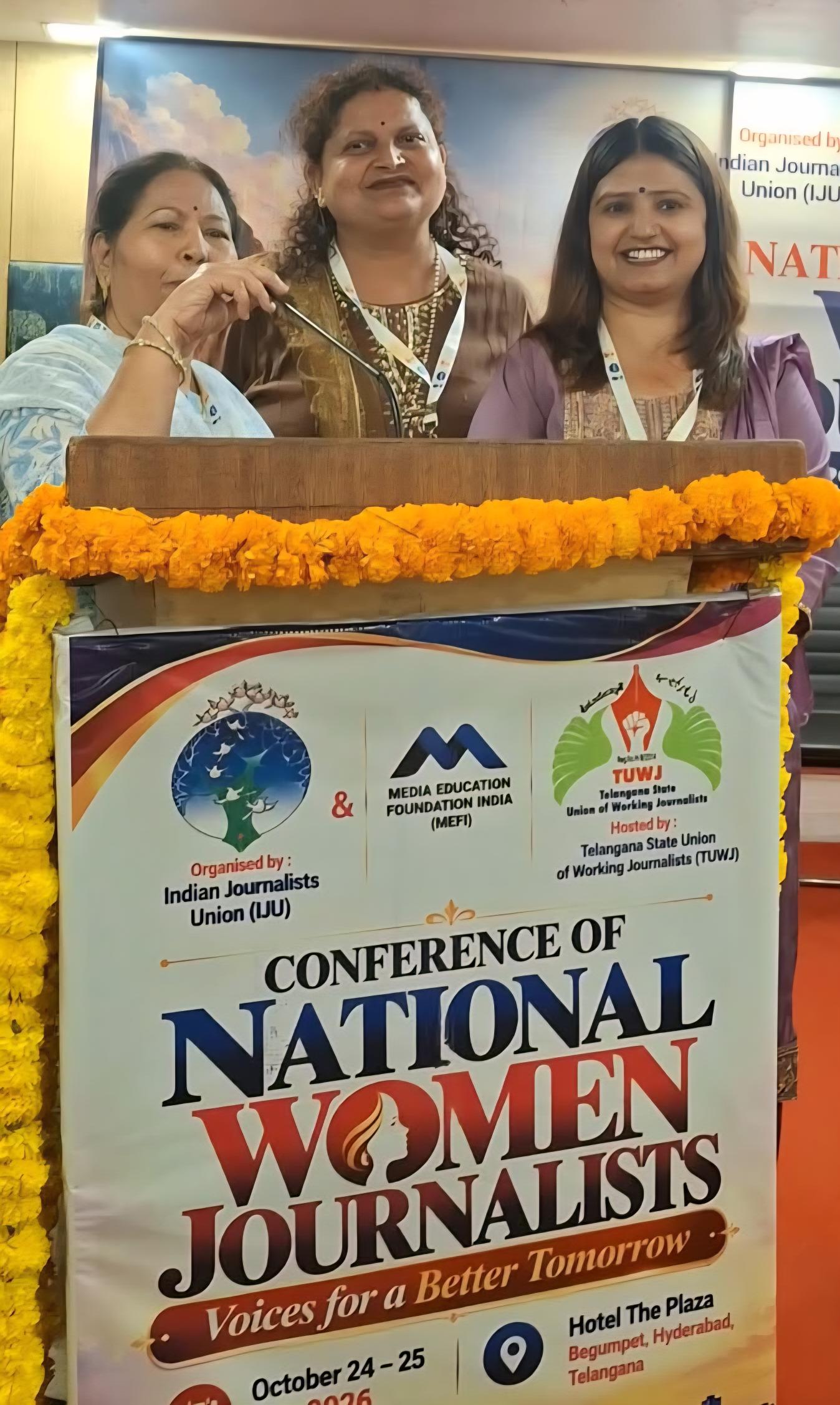
By Lalita Baluni on returning from Hyderabad
Dehradun, 29 Oct: A delegation of women journalists from Dehradun has returned from Hyderabad with renewed energy and a stronger resolve after participating in a two-day national conference of women journalists. Uttarakhand was represented at the conference by two women journalists, Jyoti Bhatt Dhyani and Raksha Sharma.
The conference provided an opportunity to closely understand the growing participation of women in the media, the challenges they face and their courageous experiences. Returning from the conference, one thing is clear: women journalists are not merely reporting the news; they are changing society’s mindset. From challenges in the field to struggles in newsrooms, their voices are being heard on every front.
Listening to courageous women journalists from across the country share their experiences at the conference was an inspiring experience. Their determination to stand by the truth despite adverse circumstances was a powerful reminder of the strength of the pen.
The conference was organised at Hotel Tourism Plaza in Hyderabad, with the Indian Journalists Union (IJU) and the Telangana Union of Working Journalists playing a significant role. The event provided a common platform for women journalists from across the country to raise their concerns and share their experiences.
During the inaugural session, Telangana’s Minister for Panchayat Raj, Women and Child Welfare, Dansari Anasuya spoke candidly, asserting that every woman has the right to ask questions, express disagreement and live with dignity. She expressed concern over the safety and professional rights of women journalists, emphasising that no woman should be intimidated, threatened or subjected to retaliation for performing her duties.
Ayesha Khanam, Chairperson of the Karnataka Media Academy, recalled her experiences covering the movement for the formation of Telangana as a separate state. She emphasised that women journalists must establish their own place in the profession and actively defend their rights.
Police Commissioner Sumathi highlighted the importance of democracy, leadership and professionalism in journalism. She called upon women journalists to take on leadership roles, report fearlessly and respect diverse viewpoints.
During the two-day national conference, participants raised several important demands, including equal pay, strict implementation of legislation aimed at preventing sexual harassment at the workplace, and protection against online harassment.
Following discussions on workplace discrimination, professional safety and institutional challenges, several resolutions were passed urging the Central and State Governments, police authorities and media organisations to ensure the safety, dignity and equality of women journalists.
The conference called for the mandatory implementation of the Sexual Harassment of Women at Workplace (Prevention, Prohibition and Redressal) Act, 2013, across all media organisations. It emphasised the need to strengthen Internal Committees and include qualified external gender experts to ensure effective grievance redressal. A proposal was also put forward to establish independent cells at the national and state levels to address the safety concerns of women journalists and facilitate access to justice.
The conference condemned reports of alleged harassment of women journalists during public demonstrations in Delhi and incidents in September in which police personnel allegedly assaulted women ground reporters at a police station. The participants demanded independent investigations into these incidents, the suspension of the police personnel concerned wherever warranted, and prosecution of those found guilty.
Women journalists also stressed the need for a comprehensive legal framework to protect them against threats and intimidation from political leaders, corporate entities and criminal groups. They demanded dedicated police cells to address journalists’ complaints and government-funded legal assistance for journalists facing physical threats or retaliatory litigation.
The conference expressed serious concern over cyberstalking, the public disclosure of private information, manipulation of photographs and the circulation of deepfake content targeting women journalists. Participants called for specialised cybercrime units to investigate such cases and ensure prompt action against offenders.
Media organisations were urged to provide women journalists with cybersecurity tools, digital threat-monitoring systems and technical assistance. Particular emphasis was placed on the safety of women engaged in digital and investigative journalism, given the growing risks associated with online reporting.
Women journalists from several states and regions, including Delhi, Haryana, Punjab, Rajasthan, Ladakh, Kashmir, Tamil Nadu, Odisha, Kerala, West Bengal, Uttar Pradesh, Maharashtra, Andhra Pradesh, Telangana, Bihar and Jharkhand, participated enthusiastically in the conference.
The conference concluded with a renewed commitment to strengthening the position of women in journalism, ensuring their professional independence and dignity, and creating a safer and more equitable working environment across the media industry.