By Our Staff Reporter
Dehradun, 16 Apr: The National Disaster Management Authority (NDMA), in concert with the Uttarakhand State Disaster Management Authority (USDMA), has planned to conduct a comprehensive mock drill on 24 April regarding disaster mitigation in view of the coming Char Dham Yatra. Designed to assess and fortify disaster preparedness mechanisms across the state, particularly in the hills, this simulation seeks to bring together all relevant stakeholders under a unified response framework.
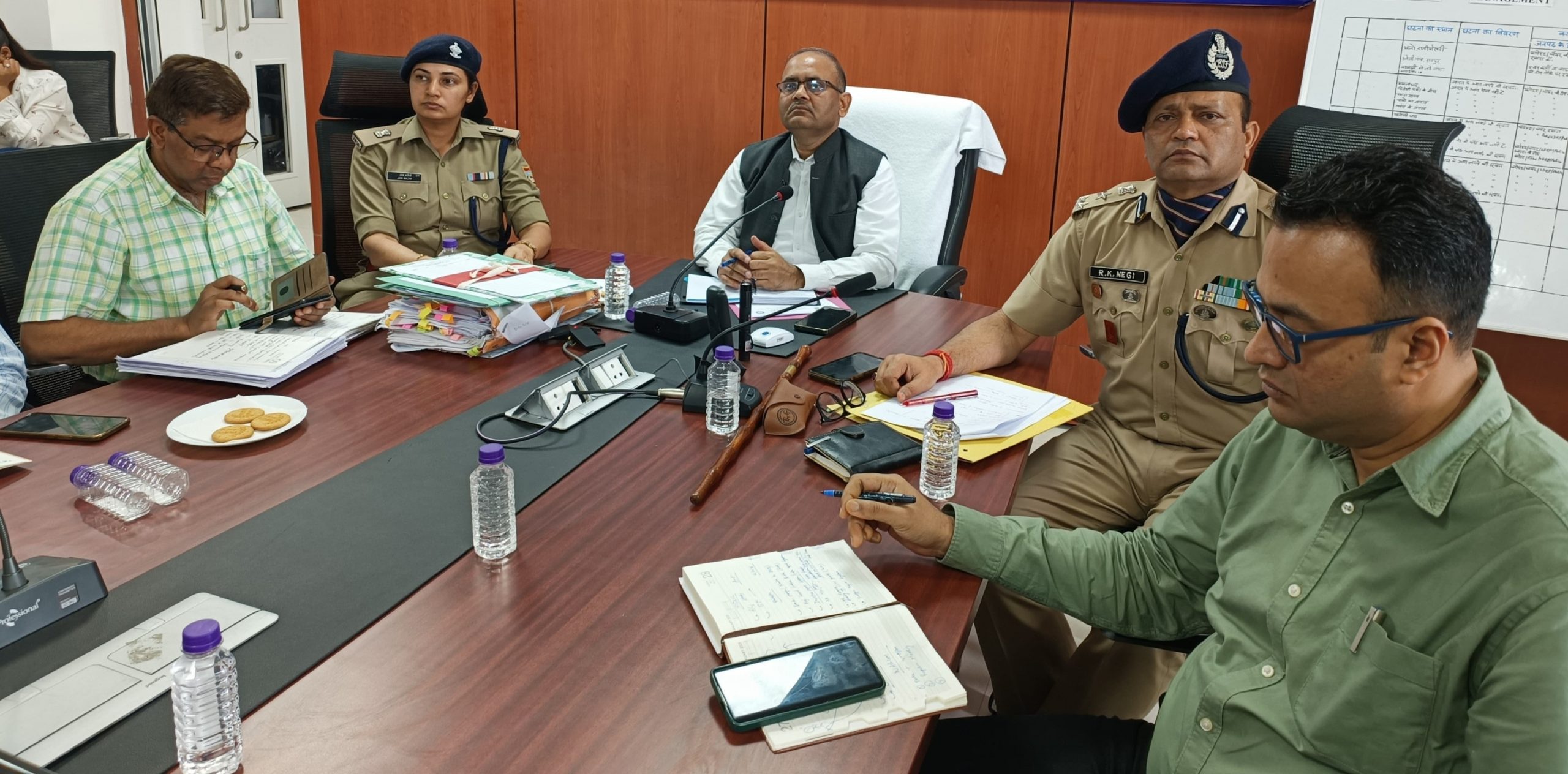
Presiding over an orientation and coordination conference held in Dehradun, today, Maj General Sudhir Bahl (Retd), who is a senior Consultant to NDMA, emphasised the importance of inter-departmental coordination in disaster response. He observed that disaster management is not the solitary responsibility of any one individual or department. It is only through collective participation that an effective and timely response can be ensured. He also explained that the forthcoming mock drill would be conducted under the Incident Response System (IRS), a structured framework that clearly delineates duties and responsibilities of each department and officer involved.
He shared that the IRS enables swift evaluation of incidents, facilitates efficient dissemination of information, and ensures optimal utilisation of resources during crises. Officers from all districts associated with the Char Dham route, as well as representatives from police, SDRF, NDRF, fire services, and civil administration, attended the conference. These officials would participate in the drill, both as the responders and the observers, while the State Emergency Operations Centre at USDMA would serve as the central command point.
Senior administrative officers, including Secretary, Disaster Management and Rehabilitation, Vinod Kumar Suman, DIG, Implementation, Rajkumar Negi, Finance Controller Abhishek Kumar Anand, Joint CEO Mohammad Obaidullah Ansari, SP Jaya Baluni, ULMMC Director Shantanu Sarkar, along with officials from the armed forces, paramilitary units, and technical experts from U-Prepare, participated in the event.
Bahl also emphasised the necessity of resource and risk mapping in mountainous regions through GIS technology. He stressed the importance of identifying essential assets and vulnerable zones to enable rapid and targeted disaster responses. He also outlined practical guidelines for ensuring the safe conduct of the Yatra, urging a thorough assessment of accommodation capacity in hotels and dharamshalas to shelter pilgrims during emergencies. He also stressed upon the importance of timely dissemination of weather alerts, continuous updates on road conditions, landslide-prone zones, and other hazards. Additionally, he recommended establishing alternative communication systems, including satellite-based technologies, in regions with poor mobile network coverage to ensure uninterrupted connectivity during crises.
In the meeting, Secretary Vinod Kumar Suman asserted that the Disaster Management Department is fully prepared under the guidance of Chief Minister Pushkar Singh Dhami. He observed that the Char Dham Yatra holds immense spiritual, cultural, and economic significance for the state. All departments have made diligent preparations. Through the mock drill scheduled on 24 April, the systems in place will be tested and corrective steps taken wherever needed to ensure the Yatra is conducted without hindrance.
The drill will simulate various disaster scenarios, including road accidents, helicopter crashes, earthquakes, fires in hotels and dharamshalas, stampedes along the narrow pilgrimage paths, landslides, lightning strikes, flash floods, and avalanches. It will also assess the capability of local administration to coordinate with central forces like the Indian Air Force, Army, ITBP, NDRF, and paramilitary agencies, and evaluate how efficiently resources can be mobilised under stress.
Bahl praised the effectiveness of the Incident Response System (IRS) in ensuring systematic and robust disaster management.