By: Ganesh Saili
Playing truant from school, four of us, fourteen-year-olds: Anmol, Dhruv, Prem, and I—whistled the Colonel Bogey March across the Mall. It was the theme song of that iconic war film, The Longest Day. Upsetting the old biddies walking along the Mall, who glared at us, disgusted by our stomping with our shoe studs showering sparks off the road.
A ten-anna ticket gave us a front-row view of the Normandy landings of the Second World War, where the Germans, led by Field Marshal Erwin Rommel, failed to predict the coming assault. On D-Day, he packed up early to take a pair of shoes as a present for his wife’s 50th birthday. Meanwhile, Hitler overslept in his lair; who would dare disturb the Führer?
On the other side, the Allied troops were exhorted by Robert Mitchum: ‘There are two kinds of men on this beach: the dead and those who are about to die. Let’s get the hell out of here!’
But there is no bringing back the past. Nowadays, going past Hakman’s Grand Hotel, only the memory of that soulful whistling lingers with me. Like so many good things, our cinema halls, too, wouldn’t last. In the dank darkness, the part-time projectionist liberally squirted grease in the cogs of the rickety projector, short-circuiting the wiring and almost setting the whole place ablaze. It was the beginning of the end. One after another, the hill station’s other cinema halls closed their shutters, but only the Majestic limped along. It became Vasu, then the Ritz, before finally turning into a multiplex christened the Carnival. Our days of wine and roses, of love and fresh air, were over. Only memories would survive.

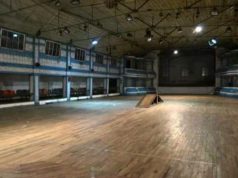
On the first floor was Hakman’s Grand Hotel, which was famous for its fun and frolic, games, and laughter. It was a favourite destination of the not-so-rich or the yet-to-be-famous. We took to hanging around the old roadside railings for a glimpse of the cabaret artist. When Mr. Hakman reached the finishing line, he was buried in the small Jewish section of the cemetery on Camel’s Back. Later, his widow continued to run a tight ship: a whip in one hand and Cleo, her cropped-ear Great Dane, in the other. At dawn, she would receive the fish (packed in salt and ice) that came from distant Karachi.
Our ‘tryst-with-destiny’ moment saw the Hakman’s family leave for Germany, having sold the hotel to Begum Zaheeda Khatun, who in turn leased it to Delhi’s famous brothers (also owners of the famous Ambassador Hotel), Mr Ram Prasad and his younger brother, Surendra Prasad. Our beauty contests began at the Charleville when Nutan became the first Miss Mussoorie. When later-day stag dancers and freebies outnumbered paying guests, it sounded the death rattle of those famous pageants.

Moth-eaten and tattered, the Hakman’s Grand Hotel was sub-leased to the businessman Nimmi Hoon, who brought along Capt. Jack Nichols, a genial jeweller’s assistant from Calcutta. He was another one among the many scattered seeds of the Empire left behind. He was white, blonde and blue-eyed, and his nicotine-stained fingers were a testimony to his smoking too much. Trouble was his cats, that swarmed all over the hotel, and no matter which way you turned, you were scared of tripping on one.
I don’t think our Captain was up to the serious task of managing a hotel. No one took him seriously, till on a winter’s night, he passed on, smothered, some say, in his sleep,by his purring felines.
Whatever happened to whistling in the dark? You may wonder. Time took its toll, and life happened. Anmol emigrated to Australia and retired as the master of the Sydney Railway Station; Dhruv loved flying and joined the Air Force, while Prem’s tinkering skills made him an engineer.
And I? With everyone gone, someone had to mind the store. So, I stayed on to scribble and try to keep this magic alive.
‘Wake up, Ganesh!’ chides a friend, Anand Negi, ‘It’s the age of smartphones and tablets!’
The digital age was supposed to be the end of the warmth of lovers holding hands in the dark. Not so. Some things do last forever.
Ganesh Saili, born and home-grown in the hills, belongs to those select few whose words are illustrated by their pictures. Author of two dozen books, some translated into twenty languages, his work has garnered worldwide renown.