Garhwal Post Bureau
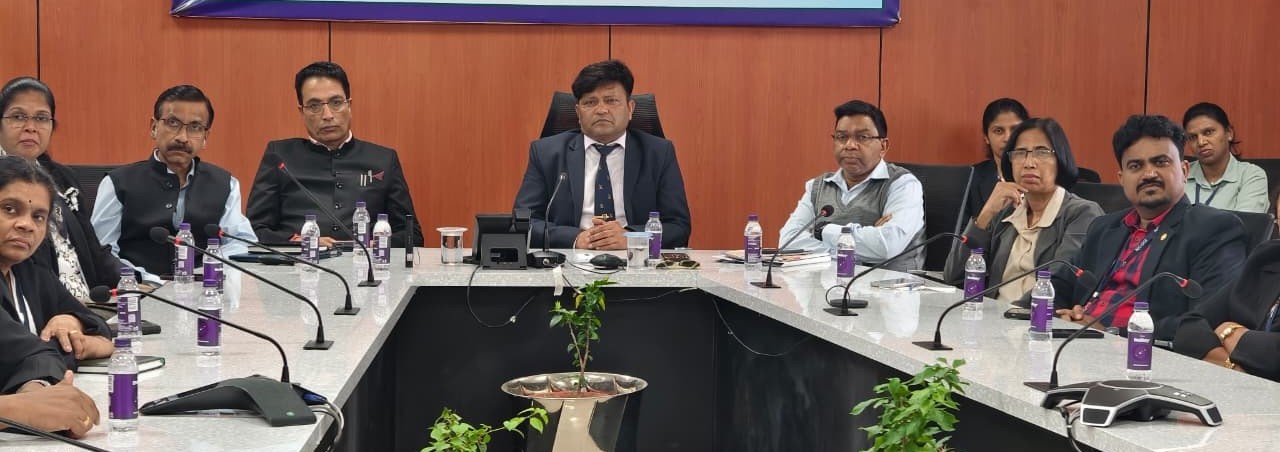
Dehradun, 17 Mar: A delegation of 40 civil service officers from Sri Lanka visited the Uttarakhand State Disaster Management Authority (USDMA) here today under the aegis of the National Centre for Good Governance to study the State’s disaster management framework, institutional mechanisms and technological interventions.
During the visit, Additional Chief Executive Officer (Implementation) and DIG Rajkumar Negi briefed the delegation on USDMA’s functioning and explained how relief and rescue operations are executed swiftly during emergencies. He elaborated on the role of State and District Emergency Operations Centres, warning dissemination systems, alert protocols and the use of technology in disaster response. The delegation was also informed about the efforts to ensure community participation in disaster risk reduction and mechanisms to deliver critical information to the last mile.
The officials provided an overview of the Incident Response System, disaster preparedness measures, emergency response strategies and post-disaster rehabilitation and reconstruction processes to the visiting delegates. The coordination between USDMA and the National Disaster Management Authority was also highlighted.
Scientist Rohit Thapliyal from the India Meteorological Department delivered a detailed presentation on weather forecasting and multi-layered warning systems. He explained that meteorological data is gathered using advanced technologies such as satellite-based observation systems, Doppler weather radars, automatic weather stations, rain gauges and forecasting models. He emphasised that real-time integration of data enables accurate forecasting and highlighted the importance of location-specific forecasts in mountainous regions.
Director of Uttarakhand Landslide Mitigation and Management Centre, Shantanu Sarkar outlined scientific and institutional efforts for landslide risk reduction, noting that landslides are a major hazard in Uttarakhand. He said landslide susceptibility mapping and risk zonation are being undertaken, supported by technologies such as remote sensing, Geographic Information Systems, drone surveys, LiDAR and real-time monitoring. Early warning systems are also being installed at vulnerable locations to provide alerts based on rainfall, soil moisture and slope movement.
In view of the fact that Sri Lanka also faces disasters caused by heavy rainfall and landslides, the visiting officers showed keen interest in Uttarakhand’s technological models, early warning systems and community-based approaches, and discussed their possible application in their country.
Secretary, Disaster Management and Rehabilitation, Vinod Kumar Suman said such international engagements facilitate exchange of knowledge, experience and best practices, strengthen institutional capacity and help develop a coordinated global approach to disaster risk reduction.
Associate Professor AP Singh of the National Centre for Good Governance stated that the institution, established in 2014, plays a key role in governance reforms and capacity building and has trained over 5,500 civil servants from 52 countries. He added that under an agreement with Sri Lanka, a specialised programme on disaster management is being conducted, as part of which the study visit has been organised.