By Kulbhushan Kain
वक्त के मेहमान थे सब, आए और चलते गए,
एक वो थे जो गए भी, तो यहीं रह गए।
(All were guests of time; they came and went. But one went, and yet stayed right here.)
Some departures are announced in official orders. Some are marked by ceremonies, speeches and bouquets. And then there are departures that leave you unexpectedly bereft, because somewhere along the way, without you quite realising it, a person has found a place in your heart. Lieutenant General Gurmit Singh (Retd) is one such person.
The Governor of Uttarakhand is leaving after five years of distinguished service to the state. I had not imagined his departure would affect me quite so deeply. Perhaps the best way to explain why, is to tell you about a moment when he stopped in an aisle, in the middle of a crowd, simply to ask me how I was.
Over a long career in schools, I have met many Governors. It came with the job. As a principal, I invited them to my school as chief guests. As an educator, I received awards at their hands. But I also learnt, as most people in India do, that high office keeps its distance. Those who occupy it are busy, surrounded and hurried along by their schedules. A school principal wanting five minutes of their time was, quite understandably, remote on the list. I never took it personally. That was how things were, and over the years it became a mindset.
But the Honorable Gurmit Singh turned out to be a Governor with a difference.
Educationists judge the fineness of a human being differently from others. We look for small things: how a person listens, how he treats those who can do nothing for them. When someone I trust called him a fine man, I knew I was about to meet someone worth knowing and special.
My first handshake came on a happy autumn evening when I received a Lifetime Achievement Award. He was the Chief Guest. As I made my way to the stage, with hundreds of faces before him, he turned to me and said, “You write very well.” He had apparently read some of my newspaper articles in the Garhwal Post. He looked handsome and fit.
I assumed that was where the story would end. A Governor says a kind word, an educational writer treasures it, and life moves on. Our spaces in life are well defined and normally they do not infringe on each other.
But it did not end there.
I met him at Raj Bhavan functions, and at literature festivals, and every single time he recognised and acknowledged me. One afternoon he was Chief Guest at a military history seminar at Welham Boys’ School. I was sitting somewhere in a crowd of many people. When the programme ended and he made his way down the aisle, surrounded by everyone who wished to be seen by him, and television cameras followed him, he stopped. He looked at me and said, “How are you?” and a few more words.
That was all. Just a few words, spoken in passing. Yet I remember them still. I have been in public life long enough to know what it means when a man at the top stops for someone at the rear of the hall. It means he sees people, not ranks, and he recognizes them. There is something deeply moving about being remembered by someone who has so many people to remember.
Then came the day I shall never forget.
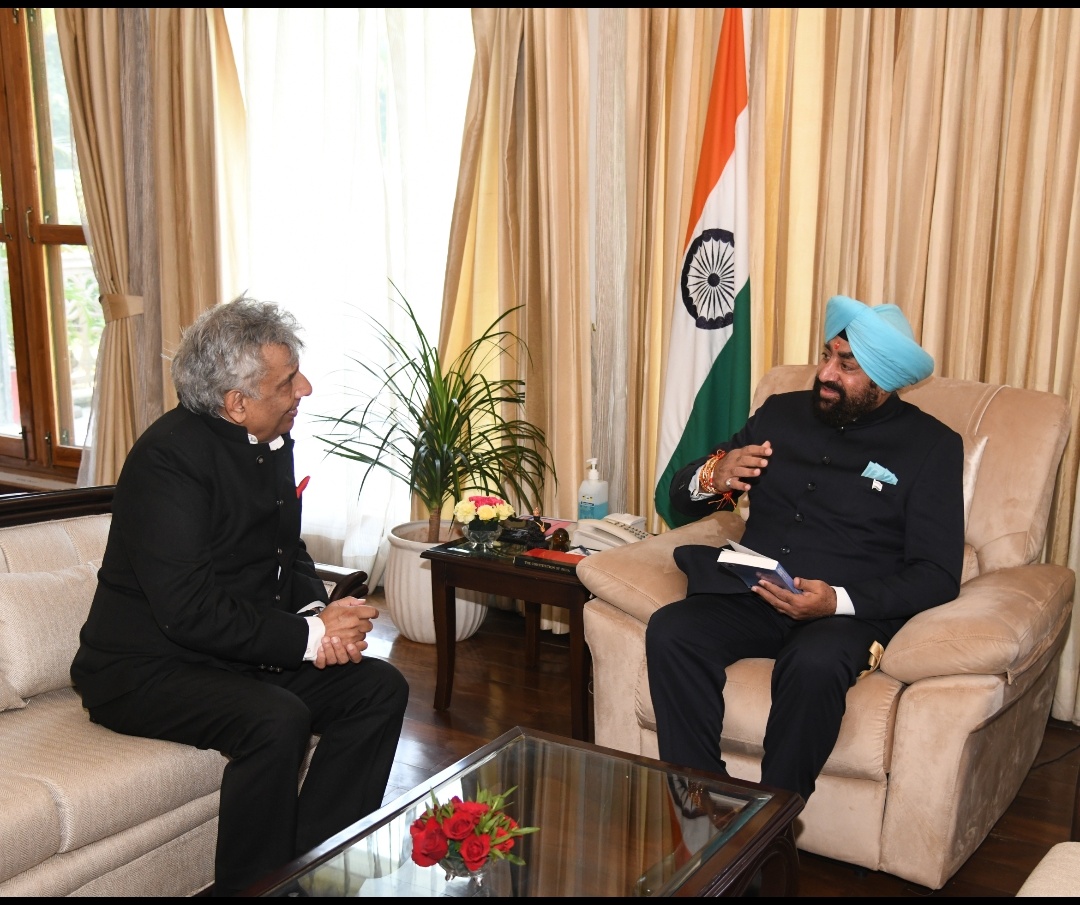
I was about to launch my first book and sought time with him. I was taken to Raj Bhavan, to his sitting room, where we sat one to one. He rose, shook my hand for 45 minutes the Governor of Uttarakhand gave his time to an enthusiastic writer and his manuscript. He went through every chapter, asking why I had chosen the titles of each chapter. He is wonderfully good with numbers, and when he reached the last page, page 333, he held up three fingers.
“Three,” he said. “The Trishul!”
He explained what that number meant, and how successful my book would be. He is terrific with words. At one point he told me “Words are so powerful. You prefix them with an “s” and they becomes “Swords”! Talwaar!” he beamed!
He personally saw to it that I had my biscuits and pakoras. I sat there with a cup of tea, thinking how brilliant, spiritual, friendly, and how little he needed to prove he was a person of consequence. There was no ceremony in that room, no distance between a Governor and a visitor, no sense that I ought to be grateful merely for an audience. There was simply a man who had made time for another man and taken a genuine interest in what he had written.
What do I admire most in him? A person in public life is often calculating, always weighing the person in front of him. With the Governor, you felt you were in the presence of a mind which was like a clean, flowing stream. He was transparent, intelligent, and always smiling.
He was also the best-dressed Governor I have ever seen, and I notice such things. Lovely bandhgala suits, matching turbans, shoes always polished.
And then there was the speaker. I have seldom found a more impressive and invigorating orator. He spoke from the heart. He thundered. A true nationalist, he could stir a hall with his voice and gestures. People who came tired went home taller. That is a rare gift, and many of us will miss it.
Governors come and go. It is the nature of these appointments. I have learnt to take the changes in my stride, and at my age I do not think I should carry too many sentiments with me. New relationships serve their season, and one moves on. One should not burden oneself with extra emotions on shoulders and mind that are growing weak.
But I just can’t forget someone like him.
I must have met him about ten times, no more, and yet I feel I am losing a friend. He leaves a void in my heart and in my mind.
Perhaps that is the curious thing about human relationships. They are not always measured by years, or by the number of meetings. Sometimes a handful of encounters is enough. A few kind words, an unexpected gesture, a willingness to listen, and a person who was once simply the Governor becomes someone whose absence you can already feel.
My second book is about to be launched. I had hoped he would do it, and imagined the Trishul smile once again. That will have to wait. Or perhaps I shall take the book to wherever he settles. After all, if a man can give you 45 minutes when he is the Governor, a little distance should not come between us now.
And if I may borrow the manner of the old masters:
ओहदे बदलते हैं, मेज़–ओ–कुर्सी बदलते हैं,
दिल में जो घर बना ले, वो जगह नहीं बदलती।
(Offices change, desks and chairs change. But the place someone makes in the heart never changes.)
Thank you, sir, for stopping in the aisle and remembering me when you could so easily have walked on. Thank you for the 45 minutes, the tea and pakoras. Thank you for reminding me that the true measure of a man is not the office he occupies, but the way he makes another human being feel.
Doon will miss you. And so will I.
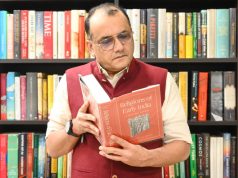
(Kulbhushan Kain is an award winning educationist with more than 4 decades of working in schools in India and abroad. He is a prolific writer who loves cricket, travelling and cooking. He can be reached at kulbhushan.kain@gmail.com)