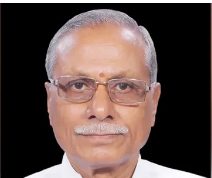
By Anil Raturi
Recently, I was observing, in a WhatsApp group, of which I am a member, a discussion about Allahabad (now Prayagraj).
I noted the attachment that many members seemed to have for this city. Their posts reflected their love for this fascinating place.
I too feel the same nostalgia about this extraordinary town.
It provoked me to ponder on the reasons that could be behind the magic of Allahabad.
My first visit to Allahabad happened in 1979 when, as a young student, I visited this city with some friends.
At the Sangam Ghat, I experienced an indescribable feeling. Sitting on the boat floating on the Ganga,e ven at that very young age, I got a strange sense of visiting a place which was timeless; a riverside, where humanity came, prayed and dwelt, almost since the beginning of time!
I have carried that feeling with me ever since.
When I wrote my first Hindi novel, “Bhanwar: Ek Prem Kahani”, I made sure that the protagonist visits the Sangam Ghat!
During that first visit to Allahabad, I had noticed how the town seamlessly amalgamated the past and present. The ancient traditions of the Pandas, Akbar’s medieval fort, the British colonial planned Civil Lines, the vitality of independent India’s throbbing life on its streets or the stimulating atmosphere of the Indian Coffee House!
After joining the IPS, I was sent for duty at the Prayag Kumbh Mela of 1989.
I remained there for almost a month.
I still remember the cold, early hours of a January day (Magha-Mauni Amavasya), when I stood on duty at the Sangam Ghat, amidst the teeming millions of devotees, who descended on the banks of the Ganga like human waves!
How the traditional Akharas – specially the awesome Nagas fascinated the crowds -specially the women devotees.
Standing on duty for almost 24 hours, I was covered in sand, dirt and sweat, all paradoxically sanctified by the holy flowers being thrown on the Akharas (some of which landed on us hapless cops as well!).
In due course, my visits to Allahabad became quite regular. Attending High Court cases, visiting the UP Police Headquarters or just passing through the town during official tours.
I can imagine the British India of 1800s (just a few decades after the British took control of the Province of Bengal), which was still headquartered in Calcutta, as its capital.
Bombay and Madras were the only two other important cities then.
At that time, in the North, there was no modern city in the entire subcontinent (including Pakistan).
Delhi was still a slum, which it had become after the collapse of the Mughals. It only had a limited British presence, because Calcutta was the capital.
Lahore was still with Maharaja Ranjit Singh.
As the British moved North from Bengal after defeating Shuja-ud-Daula of Awadh in the Battle of Buxar in 1764, they took over the Allahabad fort in 1801 and founded the modern town of Allahabad.
It became the earliest modern city in the whole of North India.
In 1866, the Allahabad High Court was established, which became the first High Court in the North. Calcutta, Bombay and Madras High Courts had been established a few years ago.
Soon, Allahabad University came up in 1887.
It also became the first modern University in North India.
British judges, erudite lawyers, professors and students from all over began converging on Allahabad.
After the annexation of Awadh and formation of the United Provinces (UP), Allahabad became the capital of one of the richest States.
Lucknow became the capital of UP only in 1921.
Delhi became the capital of India as late as 1931.
Before that, Allahabad was the most important station in the Northern plains.
It also remained the capital of India for one day when the Viceroy shifted from Calcutta.
From 1801 till Independence, many State and National level offices of the British were established in Allahabad.
The city attracted and cultivated a modern elite for more than a century.
For instance, 7 of India’s former Prime Ministers either hailed from or studied at Allahabad.
The famous “Chhayawadi” Poets, many other illustrious authors of Hindi, Urdu and English as well as innumerable famous national level administrators, etc., also sojourned in Allahabad at some time or the other.
This early modernism became a layer of culture that mounted itself over the medieval Ganga-Jumna tehzib of Allahabad, which, in turn rested on the timeless ancient ethos of Prayag. It is, perhaps, this cumulative historical layering of culture that became instrumental in creating the inscrutable magic of this city!
With the emergence of New Delhi as India’s capital, Allahabad began losing its prominence.
Today, it continues to retain some of its old charm, but the city is certainly not what it was during its heyday.
Through the shared nostalgia, we endeavour to keep our fond memories about the place alive, even though, sadly, the Allahabad of today may not be the same!
(Anil Raturi is a retired IPS Officer and former DGP of Uttarakhand.)