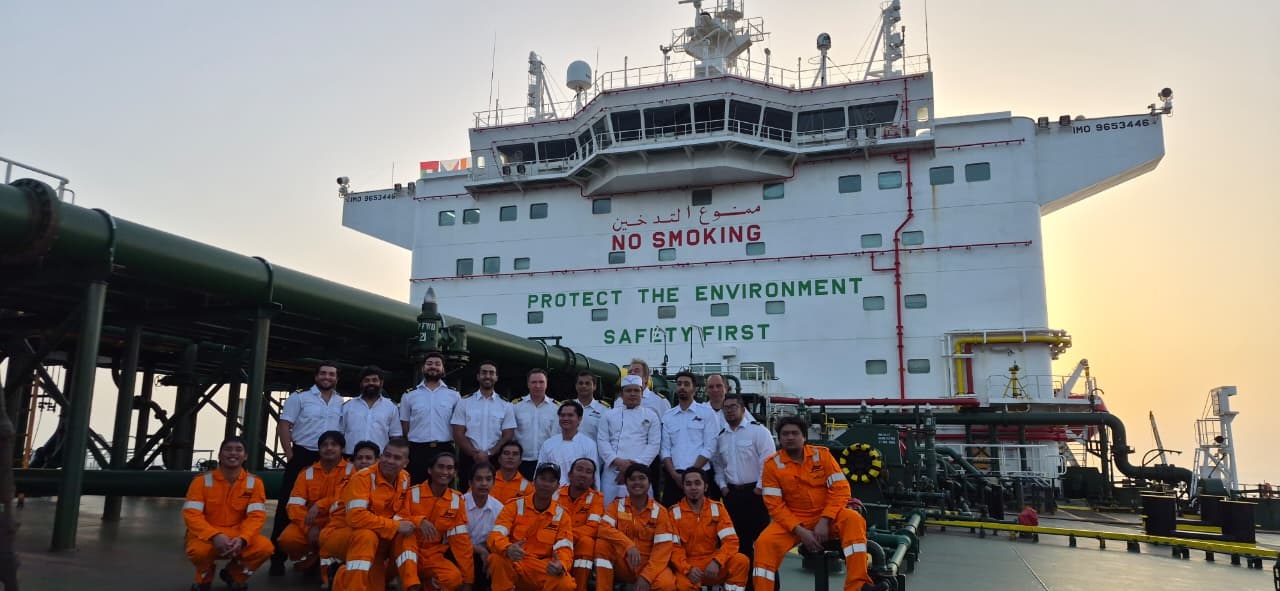
 By Manoj Pande
As he bid goodbye to his family in Dehradun on 9 February, en route to Egypt to pick up the next assignment, Arnab Roy had no inkling that it would be different this time. It was supposed to be yet another usual assignment, couple of months long from one port to another. He had been doing so for 35 plus years. Sailing across seas and oceans carrying bulk cargo and tankers, an interesting yet a challenging and tough job with only the blue seas for company for days together.

Arriving at the Suez port, Arnab joined a mammoth 250 metre long tanker and began an 11 day journey to Kuwait. Arriving on 27 February, the tanker was filled with 95,000 million tonnes of jet fuel at Kuwait. The destination? Port of Le Havre in France, an approximate journey of about 21 days through the Suez Canal.
The mixed nationality of officers and crew from India, Philippines, Egypt, Bulgaria, Croatia and Romania were ready to set sail on the evening of 28 February. Last minute checks and formalities were being done.
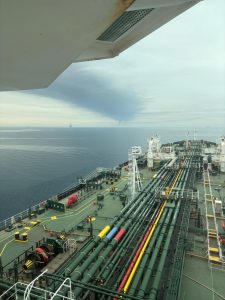
And then it started. The Iran- US- Israel war. Suddenly the sky was filled with drones, missiles and missiles being intercepted. The sky lit up periodically and noises during the day made it impossible to commence the journey, especially with the kind of cargo that the tanker was carrying. Their tanker was a sitting ball of fire had any missile hit. Captain Arnab Roy and his team had no option but drop anchor with no idea when would they be able to move.
Meanwhile the hostilities continued. Each loud explosion or midair interception of missiles made it very clear that the situation was serious. Obviously, there was no likelihood of the tanker moving to Le Havre or anywhere for that matter. And just to remind the reader that the journey had to be made through the Strait of Hormuz. It was not a normal situation by any standards.
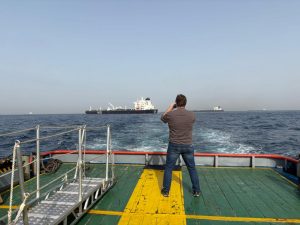
The ship dropped anchor just outside the Kuwait port limit area. It was not alone, all around there all kinds of sea faring vessels for company stuck due to the war. Movement being restricted, there was no choice but to stay put. The first priority was to arrange for food and rations. Fortunately, being a Kuwait owned vessel, this was sorted out. In many other ships rationing is also being resorted to. The shipping company also gave them updates and instructions from time to time which was very essential since the whole scenario was controlled by external factors.
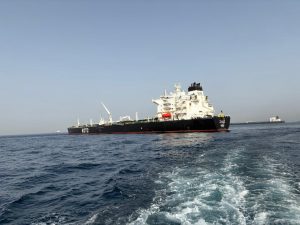
In a normal scenario, there is much to do in a moving ship. Even when stationary, lots of routine maintenance functions and watchkeeping continue. Thus, one of the directives was to upgrade the prescribed security level. This was obvious, considering where the tanker was.
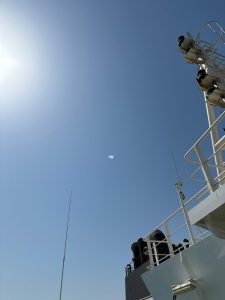
There were scary incidents apart from the missiles too. About 30 miles away a ship was attacked and caught fire. There were five Indian nationals on the ship. One person lost his life.
Stuck at sea, the team had to keep its morale high and not get bored or depressed. There were games for the crew and even a walkathon on the deck that was videographed. Much excitement was generated. Regular parties with singing and dancing kept up the spirit of bonhomie amongst the team. And the ultimate was a creative arts competition using whatever material was available on board. And what wonderful things they made! This was followed by an auction of these creations, when everybody bid for their choice. Arnab has also brought home a creation that he won in the auction. And for your information, the bids were in dollars.

As the skirmishes continued, there were attempts by some to somehow sail out of the area. Some tried using a Pakistani flag, which as has been widely reported, did not succeed. Some tried to smuggle out along the Oman coast but were often located by the drones. And in this war like situation, the GPS does not often work or is jammed and so the old navigational techniques have to be relied upon. Fortunately, the other communication channels worked so that they were able to keep in touch with those back home.
After a month in Kuwait, with the ceasefire coming into effect, the tanker moved to the relatively calm Dubai on 8 April. And that is where it still is. Fortunately, the company has been able to arrange relievers for many of the officers and crew, though some nationalities are not getting immigration permits, and such persons remain with the vessel continuing their stay. His reliever, another Indian national, arrived a few days ago and Arnab flew home from Dubai.
Back home on 21 May for a well-deserved rest, he was welcomed by family and well-wishers. And was the first thing he did the next morning? Taking a much needed haircut in the neighbourhood saloon!
—— ——
(A former Railway officer, Manoj Pande lives in Dehradun.)