The Books from My Shelves
By Dr Sudha Rani Pandey
Books are a distinct contribution to the sadhana of ‘Shabd Brahma’ (Word as the Ultimate Reality). From oral traditions, birch-bark manuscripts, and pictorial rock inscriptions to the modern era of publishing, the world of written literature has long been a soulful companion of the humans in their long intellectual journey. Ancient maxims like “Na hi jnanena sadrisham pavitramiha vidyate” (Nothing in this world is as purifying as knowledge) and “Rite jnananna muktih” (Without knowledge, there is no liberation) do not merely awaken human inner consciousness—they are also meaningful and eternal messages that define humanity itself. Even in the age of Artificial Intelligence, the grandeur of the written word endures in its elemental form. Words give shape to human consciousness, thoughts, and emotions, while books preserve them across generations by giving them a timeless form. As messengers of the past, present, and future, books introduce us to a vast storehouse of knowledge, global culture, thoughts, and values of life. The synthesis of soul, life-force, and physical body and its harmony with words and books, form the living footprints of human civilisation’s journey.
My love for books developed during childhood at home, nurtured by my mother’s inspiration who introduced me to the world of books.
Among the books that I read in higher classes, “Godan” by Munshi Premchand stands out. Known as an epic of rural life, it remains relevant even today.
Three other good books which I read during this formative phase of my life are: “Satarangini”, a poetry collection by Harivansh Rai Bachchan, “Rashmi Rekha” a poetry collection by Balkrishna Sharma ‘Naveen”, and ‘Gunahon Ka Devta’ by Dharamvir Bharati, a widely popular novel.
Since the days of my post-graduation and research work till date, I have gathered a significant collection of books.
The following are some noteworthy ones:
1. ‘Ekadasopanishad’ – A Commentary by Adi Shankaracharya (Gita Press Gorakhpur 2019): A collection of eleven major Upanishads, which established the Advaita Vedanta that prioritised the path of knowledge over ritualism, presenting ‘self-knowledge’ as the means to liberation.
2. ‘Kalidas Granthavali’ – Edited by Acharya Sitaram Chaturvedi (Chaukhamba Prakashan 1980 Varanasi) is a compilation of all the works of the great Sanskrit poet Kalidasa. It includes the original texts of his epics (Raghuvamsham, Kumarasambhavam), lyrical poems (Ritusamharam, Meghadootam), and plays (Malavikagnimitram, Vikramorvashiyam, Abhijnanasakuntalam), along with detailed critical insights.
3. ‘Therigatha’ – Edited by Dr Bharat Singh Upadhyay (Gautam Book Centre Delhi 2010): Compiled in the original Pali language with translations, this work is the ninth book of the Khuddaka Nikaya within the Sutta Pitaka of the Buddhist Tripitaka. It represents the oldest known collection of women’s literature in the world. Originally written in the Sinhala script, it was published in English with research by Mrs Rhys Davids and later edited in Devanagari transliteration by Dr Bharat Singh Upadhyay. Therigatha presents the poignant experiences and life struggles of Buddhist nuns seeking self-realisation—poems of liberation from oppressive lives and the discovery of identity.
4. ‘Akka Mahadevi’ – Research project by Subhash Rai for the Raza Foundation (Setu Prakashan Noida 2024): Focuses on the great female saint, cultural commentator, and Vachana poet of Karnataka. Her creative genius in Indian literature remains an inspiring and relevant force.
A companion on the grand journey of love and rebellion, Akka Mahadevi’s Vachanas seek humanity through tales of liberation and endure as a great hymn of humanism in Indian literature.
5. ‘Savitri’ by Sri Aurobindo (Arvind Ashram Pondicherry 1954): An epic poem in English expands upon the original mythological story of eighteen verses from the Mahabharata in nearly twenty-four thousand lines. It has been translated into many languages worldwide. Reading “Savitri” is to witness a profound journey into the inner realm, Indian philosophical thought and an immortal narrative of encountering, understanding and overcoming death.
6. ‘Geet Panchashati’: A collection of 500 selected poems by Rabindranath Tagore, (published by the Sahitya Akademi Delhi 1960). Transliterated into Devanagari and edited by Prabhat Kumar Tiwari, this beautiful volume draws from Tagore’s original collection Gitabitan, encompassing themes of devotion, love, nature, and life. Translated into major Indian languages, its universal sentiments and musical sensibility continue to enchant readers and music lovers. Influenced primarily by the Dhrupad style and set to various ragas and rhythms, these songs express the enduring connection between humanity and the Divine.
7. ‘Mrityunjaya’ – by Shivaji Sawant (Bharatiya Gyanpith 1974): Originally written in Marathi, this novel focuses on the Mahabharata, poignantly depicting the life struggles, humiliation, generosity, and steadfast friendship of Karna (Radheya). Shivaji Sawant brings to life this iconic character whose presence loomed continuously in the background alongside the Kauravas. Often described as Karna’s autobiography, it was translated into Hindi by Omshivraj.
8. ‘Divija’ by Indu Kumar Pande (Samay Saksya, Dehradun 2023): This collection of 51 poems represents an affirmation of human inner consciousness, seamlessly balancing poetry, science, and spirituality. Resonating with the rhythm of ancient seer-voices, these poems explore mythical creation and cosmic origins. Written in both uncreated (Apaurusheya) and human (Paurusheya) forms, they highlight the symbolism of the inner psychic entity (Chaitya Purusha). Transcending levels of deep reflection towards a higher consciousness (Supramental), Divija introduces a divine realm far removed from physical turmoil.
9. ‘We, the People of the States of Bharat’ by
Dr Sanjeev Chopra( Harper Collins 2023):
A significant book written in English, translated into Hindi by Sachin Chauhan under the title “Hum Bharat ke Rajyon ke Log” (Rajkamal Prakashan 2024). It is an authoritative research work on the creation and redrawing of internal boundaries of Indian states and Union Territories from 1947 to the present. Featuring an extensive introduction and rich reference material, it serves as a guiding text on the restructuring of modern India.
10. ‘Shri Guru Bhagawat’ by Dr Chandrabhanu Satpathy (Vision Publishers And Printers Bhuvaneshwar 2010): A monumental work highlighting the glory of the ‘Guru Principle’ (Guru Tattva), rooted in the Bhagawat tradition of Odisha. Originally written in Odia and translated into Hindi and English by the author himself, it has been translated into nearly all major Indian and international languages. Published across eight volumes in the traditional nine-syllable meter (Nabakshari chhanda), it serves as an encyclopaedia of the Guru Principle, spiritual discipline, and philosophy.
11. ‘Chandan Kiwar’ by Malini Awasthi (Vani Prakashan, Delhi 2025): A widely acclaimed book that captures the vibrant presence of folk culture.
It represents the musical and literary manifestation of the author’s devotion to music. Rooted in the soul of Indian folk traditions, it serves as a living document of cultural heritage. Amid today’s pop music landscape, Chandan Kiwar brings to life the timeless joy and transcendent experience of authentic folk melodies.
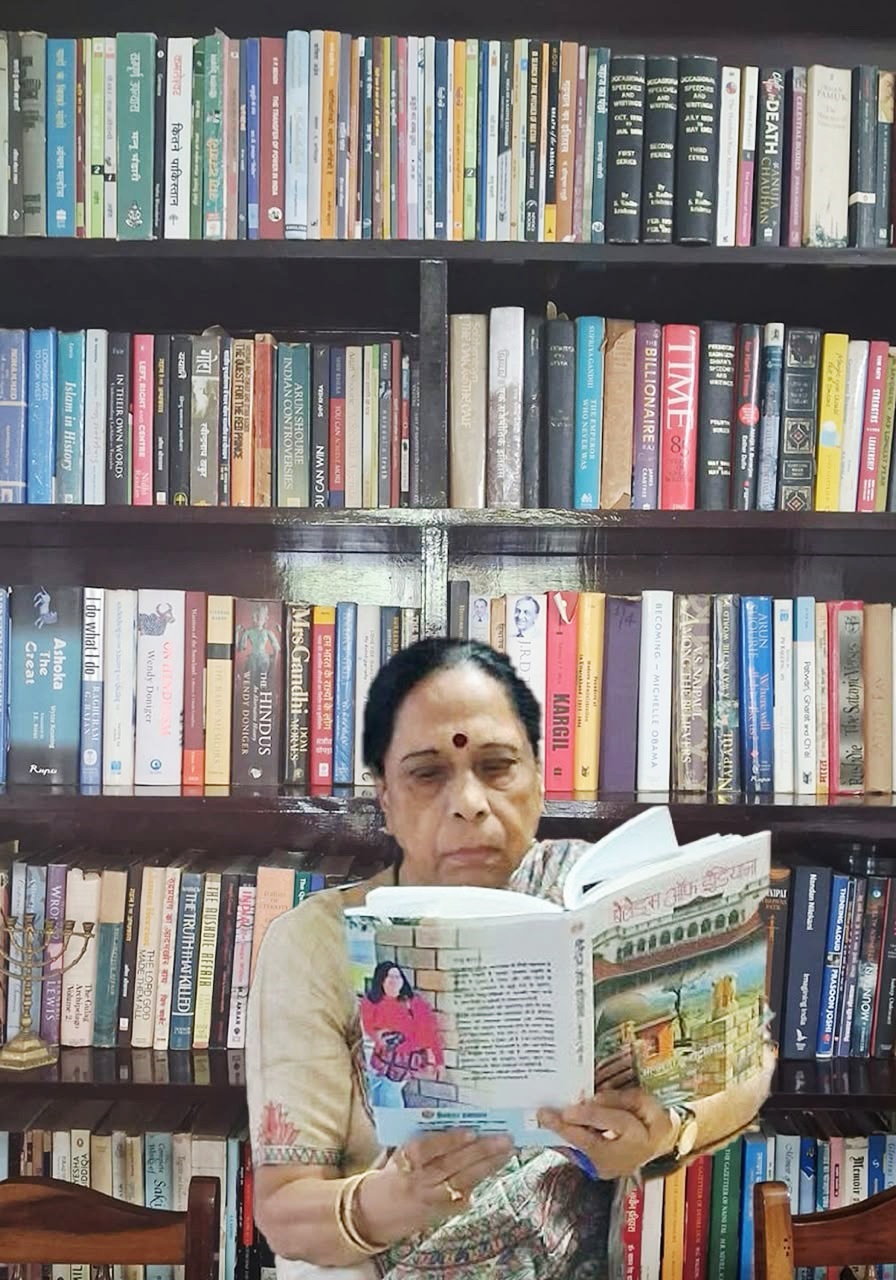
Even in this e-culture era, where an entire library fits on a single keyboard, holding a printed book in hand creates a direct, intimate dialogue with the author.
(Dr Sudha Rani Pandey is former Vice Chancellor, Sanskrit University, Haridwar.)