
Review
“The Last Salute: A Love Letter to MiG-21”
 By Sunita Vijay
After more than six decades of faithful service with the Indian Air Force, the beloved fighter of generations of pilots – the MiG-21 – was given a grand and emotional goodbye.
What made the occasion particularly poignant was the silence that followed the final roar. The mighty machine that had dominated the skies for decades, captivating everyone on the ground with its ferocious speed and thunderous sound, was finally laid to rest. That familiar roar had come to mean much more than the sound of a fighter jet taking to the skies. It was a sound of assurance and trust, a reminder that someone was always training for the day of combat, honing their skills and standing vigilant in the defence of the nation.

A wave of nostalgia washes over us when we bid farewell to something that has been part of our lives for decades, whether it is a human being or a machine. A machine is made of metal, wires and moving parts, but when it becomes part of you, it is something that feels remarkably human. In September 2025, the Indian Air Force officially retired its iconic Soviet-era MiG-21 fighter jets after more than six glorious decades of service. The quotidian task of flying the MiG-21 for our Air Force pilots, and maintaining it for the ground technicians who were its keepers, meant that its retirement day flooded them with emotional memories. An enduring symbol of India’s skies, it now bows out after a remarkable journey marked by courage, service and countless stories etched into the history of the Indian Air Force. The craft, first introduced into the Indian Air Force in 1963 as India’s first supersonic fighter jet, was given a heartfelt farewell in Chandigarh, its first home, a respect-filled gesture to a legendary fighter aircraft.
The Last Salute: A Love Letter to MiG-21 is directed by Operation Safed Sagar co-creator Kushal Srivastava. It is a 79-minute documentary streaming on Netflix that chronicles the 62-year journey of the iconic Soviet fighter jet with the Indian Air Force (IAF). The documentary unfolds as a bouquet of fascinating tales and memories, each one stirring our curiosity and leaving us wanting to know more about the MiG-21. Those who flew the MiG-21 opened their hearts about what it was truly like to be inside this legendary machine. They spoke of the sheer thrill, the “kick” and the adrenaline rush of flying it; of its ruggedness and cramped cockpit, where every movement mattered. They recalled tense, close-to-death moments, unusual take-offs and landings, and the split-second decisions that could mean the difference between life and death. They spoke, too, of the breathtaking view of India’s varied topography from thousands of feet above the ground; landscapes that looked entirely different from the cockpit of a fighter aircraft. And then there were the experiences of war: the pressure, the uncertainty and the critical decisions made in the air, when there was no room for hesitation. These are not merely stories of flying a fighter aircraft; they are memories of courage, camaraderie, danger and an extraordinary era in the history of Indian military aviation.
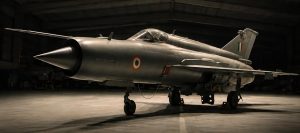
The MiG-21 is legendary, iconic, prolific, spartan and agile, popularly known for its blistering speed, low cost and rugged durability. But it is also unforgiving and aggressive, with blind spots, short range and a light payload, making landings difficult while delivering a high-adrenaline rush and immense thrills. Some critics have even debated whether it was brilliant machinery or total garbage; truly, it carries a mixed legacy. It also earned the grim nicknames “flying coffin” and “widow maker” due to the hundreds of crashes over its lifespan, which claimed the lives of over 170 pilots. However, the director consciously chooses to focus on the brighter side of the MiG-21’s remarkable journey, turning the film into a tribute to the service it rendered to the nation and to the brave warriors who flew it. These are men and women trained to put their lives at risk, who made India proud by taking this formidable bird into the skies. Over the years, they developed not merely an understanding of the machine, but a deep bond with it, with its character, its demands and the wealth of experience it offered.
The background score is particularly effective, with its tempo and rhythm evolving alongside the documentary’s transition from the aircraft’s active years to its final retirement ceremony. Equally powerful is the use of sound. The mechanical thrum, the escalating engine roar and the visceral vibration of the aircraft create an almost physical experience for the viewer. At times, the ominous, pulsating wall of sound seems to reverberate through the screen, allowing us to almost feel the rumble of the jet and sense the sheer power of the machine. Together, the music and soundscape add another emotional layer to the film, transforming the MiG-21’s final farewell from merely a ceremonial moment into a deeply immersive experience.
The documentary is engaging, thoughtfully crafted and beautifully paced, holding the viewer’s attention while gradually unfolding the remarkable story of the MiG-21. Rather than simply documenting the retirement of a machine, the film brings alive the people, memories and experiences behind it, making the farewell feel personal and deeply moving. The sensitive storytelling and judicious use of interviews, visuals, music and sound make The Last Salute a fitting tribute to an extraordinary aircraft and the brave men and women who flew it.
The documentary gradually builds towards this farewell through reminiscences of pilots across generations, including Chief of the Air Staff Air Chief Marshal Amar Preet Singh and former CAS Air Chief Marshal Birender Singh Dhanoa (Retd). From Air Commodore SS Tyagi, who holds the world record for flying hours and sorties on the MiG-21, to Squadron Leader Priya Sharma, commissioned in 2018, their memories reveal the extraordinary bond between pilot and machine.
They speak of its demanding and unforgiving nature, and the need for a pilot to operate at 100 per cent. The message is clear: once inside the cockpit, there is little room for complacency or error.
As one pilot aptly puts it, “The MiG-21 does not come down to your level; you have to rise to its level.”
The film also acknowledges the often-unseen contribution of families, reminding us that behind every pilot is a family sharing the risks and sacrifices.
What The Last Salute captures beautifully is the complete experience of flying this formidable machine: the exhilaration, fear, discipline, instinct and immense power. It also celebrates the human effort behind every sortie: the pilots, their families and the teams who kept the aircraft flying. The film also brings into focus the aircraft’s significant contribution to Operation Safed Sagar during the Kargil War, reminding us of the crucial role played by the MiG-21 in India’s military operations.
Ultimately, The Last Salute is not merely about the retirement of a fighter jet. It is a tribute to an era, its warriors and a machine that demanded everything from those who flew it.
The MiG-21 may have rested its wings, but its six-decade legacy continues to fly.
The Mikoyan-Gurevich “MiG-21” is the most-produced supersonic jet aircraft in aviation history. It features a thin fuselage and delta-shaped wings. Powered by an afterburning turbojet, it can exceed Mach 2, twice the speed of sound. It features an iconic supersonic shock cone in the nose that automatically adjusts airflow to the engine. It is a lightweight, nimble interceptor that demands high skill from its pilots due to its sharp handling characteristics. Pilots historically used it for quick-strike intercept missions, making a fast pass and then disengaging rather than engaging in long dogfights. Flying it is a visceral, high-adrenaline experience defined by raw sports-car agility, lightning-fast vertical performance and an unforgiving demand for pilot reflexes. The cockpit is cramped, with sparse glazing and restricted outward visibility, putting total focus on the instruments. The landing speed of a MiG-21 typically ranges between 270 km/h and 340 km/h (approximately 145 to 185 knots), depending on the specific model, weight and altitude.