All Around the World with the Most Travelled Indian
 By NITIN GAIROLA
Money and Time – if either of these is in short supply, then world travel is a challenge. They also go hand in hand, matching each step of theirs – but in opposite directions. Just like me, millions of Indians started from middle class families (and some from downright poor families). So do not to believe anyone who tells you money isn’t important when it comes to world travel.
Excessive money is clearly not in abundance for many, and the moment most turn 21 they start working after their graduation (if they are lucky) in order to pay the bills. I was a bit luckier on this front since after graduation I did a job for a year and then was also able to complete my post-graduation for better career prospects. But all this meant that my first post-MBA job came at the age of 25, a few years delayed compared to other people who take the post-graduation route. And since my personal bank balance was Rs.0 on the eve of my first job, I had to earn and save money, no choice. I knew that if I were frugal in my early years, then the power of compounding would take over on my savings and over the years I would achieve financial freedom or F.I.R.E (Financial Independence, Retire Early) as it is popularly known today. That would buy me the time of my life I craved for.
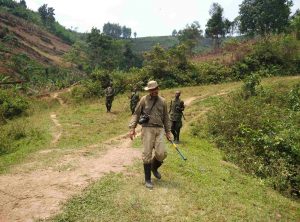
However besides money and time, which are inversely proportional, there is also the element of energy or health. I didn’t want to start travelling in my 40s, after saving and saving in my 20s and 30s. I wanted to see this world when I was able and at my fittest and I wanted my travels to be larger than just random holidays. So I was done with Europe and developed South East Asia in my 20s only. In my late 20s itself I had turned my eyes towards Africa, South America and Asia along with the Polar Regions, particularly the Arctic. These were the adventures I sought and I knew they would get harder and harder when the energy wanes and risk tolerance goes south.
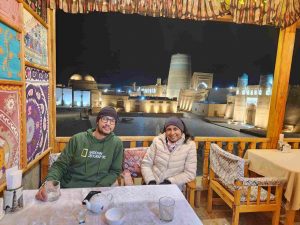
So in my late 20s I had to draw a long term travel plan, since it is at that time I wanted to be a mega world traveller, bigger than anyone else when it came to visiting every country in the world (the idea for natural world records came later). At that time whether I was a known traveller or an unknown wasn’t one bit a concern for me since I just wanted to do it all. That was the energy and brashness of youth and I had it bad. So I started these intense trips where I would pack nearly half a dozen or so countries per visit and aim for a minimum of 2 trips per year. Some years we did 3 international trips with 1 or 2 of them being only week long ones (5 working days + 2 weekends = 9 days) and the main one being 2 weeks long (10 working days + 3 weekends = 16 days). Sometimes they were even upwards of 3 weeks (23 days).
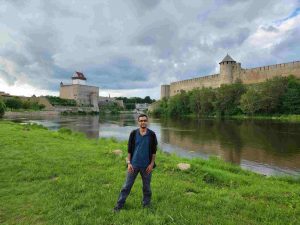
So basically, just like the power of compounding on our savings, here too consistency paid. We were compounding our countries with the 30-40 odd days we were out in the world each year. So if you add it over nearly 2 decades (exclude covid years naturally), we are talking about 600 odd days or nearly 2 years of our lives seeing this wonderful and diverse world. This is what I tell people when they ask I how visited the world with a full time job. I just tell them that it requires intense planning and execution, but it is possible. Like in most things in life, it is not just about motivation but about discipline.
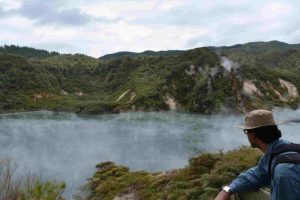
But even for me, it was only during the covid pause that my thought process evolved and I realized that I will not only visit every major country, but actually set the record as the first Indian to visit every major desert, forest, grassland, tundra and ice biome on Earth. That was the moment of clarity and epiphany that I was waiting for all my life and I sure am glad I didn’t wait for my early 40s to arrive before travelling the world. I just started booking international tickets on sheer gut, when my savings were very low. I somehow knew it would lead somewhere I wanted to go in life, not somewhere I was asked to go. And it indeed did and the best part of it is that over time I was able to save quite well too, since I was always fiscally prudent. Sometimes playing on the front foot helps but the key is to have a good balance and to be sensible about your finances too.

That first Kuwait Airways flight from Delhi to London in 2007 started it all (I have spoken about this one quite often). I am glad it was a cheap hopping flight and not a luxury direct one, since more than London I got excited when I was landing it Kuwait. It all looked so alien and exotic to me. I think that landing, that not understanding the language (no internet, no Google translate), that not having anyone around to watch my back just gave me an incredible high. I felt scared but I felt free. To this day I feel very scared every time I start a new adventure but that sheer elation to be there and then to come back home safe is just unmatched.
Moving from the psychological to the practical side, I have saved big bucks by booking my air tickets through flight aggregators such as Kayak, Momondo, Hopper and now Google Flights too. And my favourite planning tool (when my travel dates or destinations are not fixed) is easily Sky Scanner or the ‘Explore’ option in Kayak. Besides on stays, I again go with Kayak but I also love Booking.com, Agoda and Air B & B. I sometimes look at Hostelz.com, HostelWorld.com, HostelClub.com and Zostel too but we don’t do multi-bunk bed sharing as we prefer private rooms within the hostels. That we feel is the best of both worlds since you meet cool travellers in the common areas of the hostel (pantry, playrooms, pubs) and yet have your privacy and sound sleep that a personal room offers. We also avoid splurging on food by not eating in fancy restaurants or cafes much (but sometimes we do as we are human too).
And when it comes to the 4th cost in world travel i.e. visas and travel insurance, there really isn’t much you can do other than doing it directly (without agents) to save some bucks. Finally the 5th cost is the cost that brings most meaning to our travels – the cost on activities. This is also a very personal choice as different people want different things from their travels – some want extreme sports, some want safaris & camping, some want the city life, while others want the natural world adventures and more. We save on flights, hotels, food, visas & insurance but never on activities since it pretty much defines why we are out there. A business class flight ticket, a 5-star hotel or a Michelin Star restaurant (as lovely as they are) won’t define us. However the natural world adventures and extreme destinations do fit into our larger storyline, so we go for them.
But as I mentioned, since this is a very personal choice I would highly recommend you do some soul searching to figure out what matters most to you. And travel itself is a personal choice. In our day & age of peer pressures and social media, one major message doing the rounds is that ‘if you haven’t travelled well, you haven’t lived well’. I can’t begin to tell everyone that this is a downright idiotic and myopic view. You can have the best possible life living in your home and hometown with close family and friends and in living alone as well (likely with your favourite pet, plants, music records and old books). So it finally boils down to who you are and this ‘who are you?’ question is probably the toughest one we try to answer is in our brief lifetimes. I believe I have found the answer for myself and those who can relate to travel as a theme may find the answer for themselves too. As they said in the ‘ancient’ X-Files TV series of Fox Mulder & Dana Scully – ‘The truth is out there…’. It’s for us to find it for ourselves.
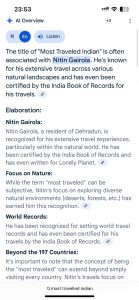
And yes, now about travelling the world with a full time job. The internet is full of people telling you to quit your job and live your dream life, but believe me you that money really matters. Those who say money isn’t important generally have a lot of it. So my advice is to have a really big bank balance and to ensure that your investment rate post tax is at least 2% more than the long term consumer price inflation or CPI (which in India hovers at around 6% per annum, hence your post tax returns must be at least 8% p.a.). Ideally if you can live a year within 2% of your total fund, then your wealth will never reduce over the years during your non-working life. Else this ugly thing called inflation can easily make you poor within a decade or two. And once you have this worry ticked off and you still retain the travel itch then by all means live your one life on your own terms when you have both money and time, not to mention energy too. But know that you can still see the world even with a full time job. I have taken that route and so far it has paid off very well as I am right up there in the Indian travellers stack (at least the Gen A.I. Search thinks so). But to pull this off, it requires my cheap version of management guru Philip Kotler’s ‘4 Ps’. My 4 Ps of world travel are Purpose, Planning, Persistence and Patience.
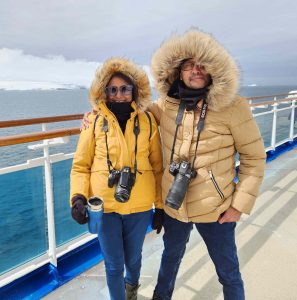
(Nitin Gairola is from Dehradun and has travelled the natural world more than almost any Indian ever. He has set world travel records certified by India Book of Records, has written for Lonely Planet, and holds National Geographic conservation certifications. He is also a senior corporate executive in an MNC and in his early days, used to be a published poet as well. More than anything else, he loves his Himalayan home.)