It was 2 September 1994. At sunset, a jeep with flashing lights did the rounds to announce that we were under curfew. A place that had never seen a lathi-charge had witnessed a police firing. The movement for a separate state had peaked.
Nothing would be the same again.
With all the town’s professional politicians gone, I was nominated to a peace committee to help restore normalcy.
‘I cannot see any men,’ complained the new Station House Officer. ‘Just hope they are not planning more trouble.’
He needn’t have fretted.
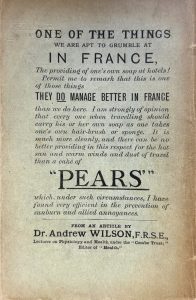
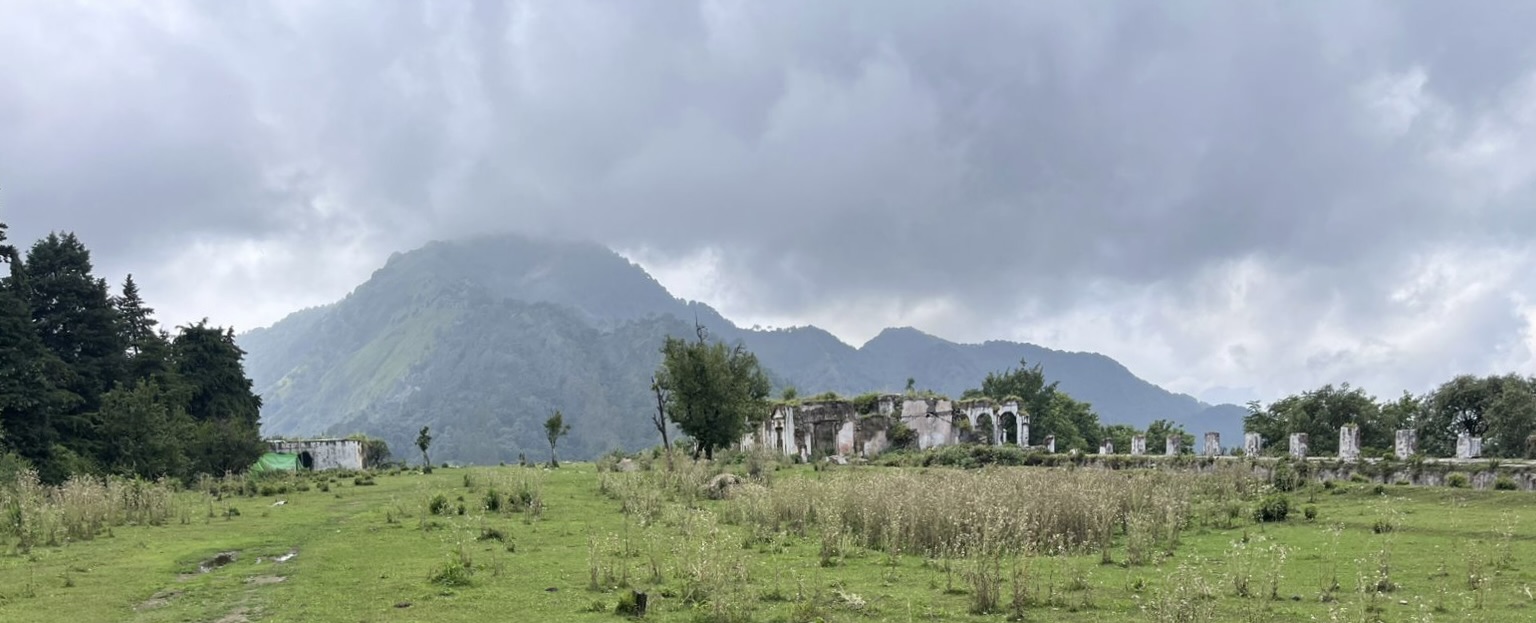
Pic courtesy: Rahul Kohli
You would have found the boozers all lined up in an orderly queue, patiently awaiting their turn to buy stash near the country liquor kiosk, next to the Roxy Building on Camel’s Back Road.
Nothing has changed twenty-five years later; the same scene repeated itself after the pandemic that hit us. When lockdown restrictions eased, long lines of people magically appeared outside every liquor kiosk in the place. Who said ‘the more things change, the more they remain the same’?
I find that tippling has been an inseparable part of the hills. Maybe it is a hangover from the days of the early breweries. Who’s to tell?
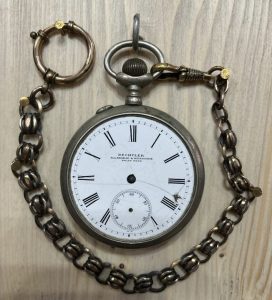
Pic courtesy: Author’s Collection
In the growing-up years, for instance, there was Ajay Singh, a clerk in Water Works, who you would hear long before he appeared as the Clock Tower struck nine. Staggering past, singing a chanty from radio compere Amin Sayani’s Binaca Geetmala, he would say:
‘Bal jab pyar kiya toh darna kya? (When you’re in love, then why be scared?)
Halting briefly at Rai Singh’s Sweet Shop, perched precariously next door to the water springs of Bawri, he would yell: ‘Bal Rai Singh! Namkeen kahan hai?’ Grabbing a handful of fritters atop the counter, he would say: ‘Paisey kal koh!’ (Payment tomorrow!). A hush would descend on the bazaar as he slunk home. With home just a stone’s throw away, he sobered up, dusted his coat, silently slunk through a narrow alley, and scurried to vanish as quietly as a church mouse.
Others, like Sultan, a petty contractor born with a swagger that would have easily put John Travolta to shame. You’d easily recognise him, come winter or summer, by his one-size-too-big trench coat. (Imagine Peter Sellers doing an imitation!) Sozzled at the Naaz Bar, at closing time, he would to the old hand-drawn rickshaw shed, and plonk himself in one. Ere the rickshaw drew up outside his home, he would instinctively return to the land of the living, sit bolt upright, pay his fare and, without a whisper, make his way home.
Of course, he was miles ahead in the marathon to be crowned the town drunk, whose unique USP was that he taught a whole generation of youngsters to keep reality at bay with a few drinks a day.
And it must be said, they learnt the ropes quite fast.
Even a hundred years ago, our local breweries ensured that no one died of thirst at our clubs, hotels, or restaurants. Tales survive of an Army Sergeant who took to singing scraps of the most bawdy and indecent songs, rendering himself a common laughing stock by singing: ‘Beer! Beer! Glorious Beer! Fill me right up to here!’ Retribution came with dismissal from service.
For some of us, trouble came unannounced in 1977. Like a bolt from the blue, the Morarji Desai Government announced prohibition in the hills. It left us like beached whales, quite high and dry.
Of course, we tried ‘everything’, including the foul-tasting, alcohol-laced ayurvedic tonic Mrit Sanjivanisura – reputed to bring even the dead back to life. It tasted vile. But it went a long way in putting you to sleep. In those difficult times, I must admit, our valiant milkmen were knights in shining armour; they came to our rescue by filling our hot-water bottles with hooch from their village stills. There were niggling problems, though, that always dogged us; the contents tasted of rubber, and at night our beds stank of country hooch.
At day’s end, of course, white-lightning got you nowhere. It was like a bicycle on a stand, which also gets you nowhere. Sometimes, the theft of our childhood lingers.
Ganesh Saili, born and home-grown in the hills, belongs to those select few whose words are illustrated by their pictures. Author of two dozen books, some translated into twenty languages, his work has found renown worldwide.