Garhwal Post Bureau
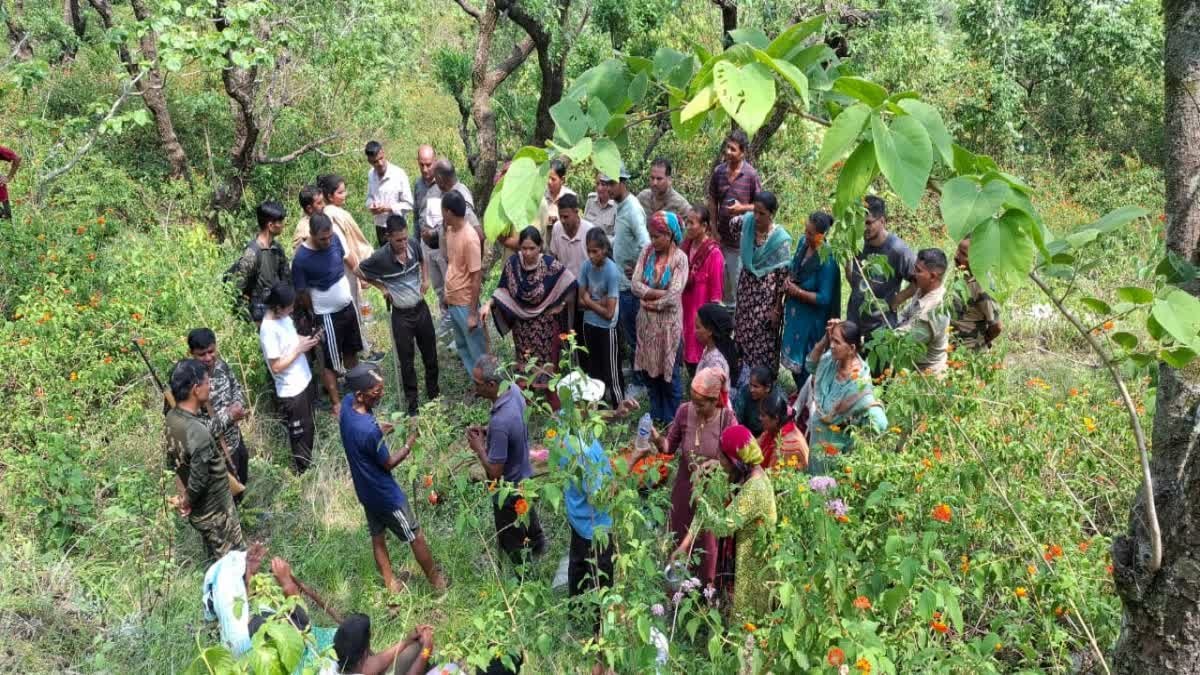
LANSDOWNE, 27 Jun: A woman was killed in a yet another leopard attack on Saturday in Banasi Talli village under Nainidanda block of Pauri Garhwal district, spreading shock and fear across the region. The incident occurred when two women, Shanti Devi and Sushila Devi, had gone to the upper forest area to collect fodder for their cattle. The leopard, hiding in the bushes, suddenly pounced on Sushila Devi and dragged her into the forest, leaving her no chance to escape.
Shanti Devi, who was present at the spot, raised an alarm and villagers rushed to help, but by the time they reached, it was too late. After a search, the body of Sushila Devi was recovered some distance away. The Forest department was immediately informed and its team arrived at the site to begin investigation and launch a search for the leopard. Local MLA Dilip Rawat was also apprised of the incident. The tragedy has created an atmosphere of grief and panic in Banasi Talli and neighbouring villages.
The villagers have expressed anger against the Forest department and demanded immediate capture of the leopard, increased patrolling in the affected area and effective measures to ensure public safety. They said that rising wildlife activity has made it increasingly risky to enter forests and fields, instilling constant fear among residents.
At the same time, Pauri Forest Division SDO Ayesha Bisht stated that the department has deployed cages and trap cameras to monitor the leopard’s movements. A trained shooter has also been stationed in the area to take swift action if required. She assured that every possible effort is being made to provide relief to villagers and appealed to residents not to venture alone into forests or deserted areas. She urged that any sighting of the leopard should be immediately reported to the Forest department.
It may be recalled that in the hills of Uttarakhand and particularly in Pauri districts, leopard attacks on humans have become very frequent with many people losing their life. This incident once again indicates the growing human–wildlife conflict in the region, with villagers demanding urgent and sustained measures to restore safety and confidence.