By Arun Pratap Singh
Garhwal Post Bureau
Dehradun, 14 Aug: The Chamoli tunnel tragedy, in which at least seven workers have died, 12 have been injured while three remain missing, cannot be dismissed merely as an unfortunate geological event. It raises serious questions about the safety systems at the Vishnugad-Pipalkoti Hydroelectric Project and the accountability of those responsible for monitoring the construction site and acting on early warning signs.
The most disturbing information emerging from the accident is that debris had reportedly been falling inside the tunnel for two days before the major incident, according to the locals. If this is the case, why did the project authorities fail to take the warning seriously? Were reports of falling debris and water ingress communicated to senior officials in time? If so, what action was taken? If not, who was responsible for this serious communication failure? Most importantly, why were workers allowed to continue working in an area where conditions were apparently deteriorating?
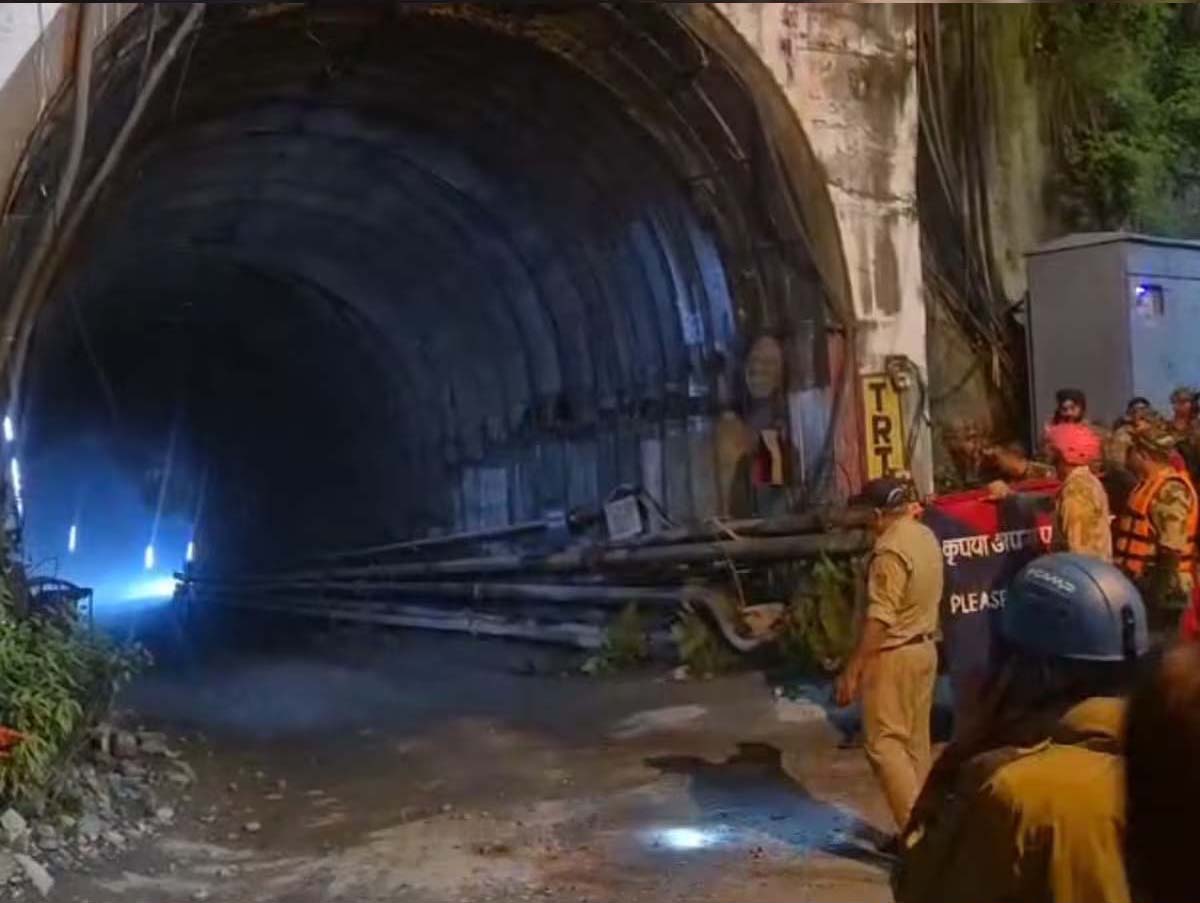
The accident occurred when a heavy landslide, reportedly around 150 metres inside the tunnel, brought debris, water and boulders crashing into it. Workers were reportedly thrown away by the force of the impact, while others were trapped under the debris. Oxygen levels reportedly fell sharply inside the tunnel, making the rescue even more difficult. The cries of workers calling for help present a horrifying picture of the incident.
The project management has described the incident as a geological disaster caused by sudden inflow of water and debris. But this explanation cannot by itself answer questions about preparedness. Tunnels are constructed in difficult geological conditions, and the possibility of rockfall, water ingress and sudden changes in underground conditions is precisely why stringent safety systems and continuous monitoring are required.
According to the officials, the 444-MW project is currently around 80 percent complete. This is not the first accident in its approximately three-kilometre-long tunnel. In December 2025, two loco trolleys collided inside the tunnel, injuring several workers. The latest tragedy, coming barely eight months later, raises a crucial question: what corrective measures were taken after the earlier accident and were they actually implemented on the ground?
Were all the prescribed safety norms being fully followed? Were regular inspections and geological assessments being carried out? Was tunnel stability continuously monitored? Were warnings such as falling debris and water ingress properly recorded and immediately conveyed to higher officials? And was there a system to automatically stop work and evacuate workers when such warning signs appeared?
There is also a serious question regarding the workforce. Were all workers engaged at the site properly registered and documented? Was a foolproof system in place to know exactly how many workers were inside the tunnel, where they were deployed and who was responsible for their safety? Such basic information becomes critical during any tunnel disaster. It may be pertinent to remind here that the initially, it was claimed that there were only 12 workers trapped inside, then the figure was raised to 18 late last evening and then raised to 28 and finally it was declared that 22 workers had been trapped inside the tunnel.
The State Government has announced ex-gratia assistance of Rs 4 lakhs to the families of each deceased worker. While this is necessary, compensation after a tragedy cannot substitute for accountability. What is THDC’s responsibility? What are the construction companies engaged in the project proposing to do for the families of those killed and injured? So far, there has been no clear announcement from THDC or the construction agencies concerned regarding additional compensation or assistance.
The immediate priority is to rescue the three missing workers and ensure proper treatment of the injured. But once the rescue operation is over, there must be an independent and credible inquiry into the circumstances leading to the accident. Merely terming it a geological disaster and moving on would be wholly inadequate. Will there be a detailed inquiry behind the reasons of the incident and to find out if there was any negligence on part of the management that allowed the accident?
The crucial question is not only what caused the sudden inflow of water and debris, but whether the disaster could have been prevented, or its consequences reduced, had the warning signs been acted upon in time. If debris had indeed been falling for two days, someone must answer why work was not stopped, why workers were not evacuated and why senior officials were not alerted.
The Government needs to make public the safety protocols prescribed for the project, inspections conducted before the accident and the action taken after the December 2025 mishap. If any official, project manager, safety officer or contractor failed to act despite having information about the danger, accountability needs to be fixed, particularly at the higher levels responsible for supervision and safety.
Seven lives have already been lost, 12 workers injured and three remain missing. Rescue, relief and compensation are essential, but they cannot be the end of the matter. Unless accountability is fixed, especially of senior officials responsible for ensuring safety, such incidents will continue to recur.
What is required now is strict adherence to safety norms, independent scrutiny of the project’s safety arrangements, proper registration and tracking of every worker, timely reporting of geological warning signs and clear fixing of responsibility.