All Around the World with the Most Travelled Indian
 By NITIN GAIROLA
My love for History and Geography is well established and these two subjects happen to be the reason why most of us travel the world – to see the human side of it and the natural side as well. The story of travel, like all stories from the past is all about the history of humankind. But this is a special history story since it’s the story of movement on the face of the Earth. So the story of travel is a study in both history and geography and to understand where we can go from here, let’s roll back the clock and see what travel has meant to humanity. You will realize that travellers and explorers, more than anyone else, have shaped the world that we know today. The core nature of humanity is to explore, to understand and that is what travel is, even in its present day garb of tourism.
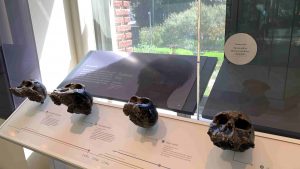
Travel is movement. Travel is connection. Travel is both learning & understanding but above all else, travel is curiosity. However for many years, the reason for travel would only be a search for food, survival, trade and for conquering lands, for both economic and political gains. And it is with this hunger that our first human travellers set afoot into the great unknown, on the plains of East Africa some 200,000 years ago. A movement had started. Homo sapiens, from mere hunter-gatherers, had become explorers and there was a great story waiting to be written. And it must be understood that while Homo sapien is the only surviving hominid species, there were other such species too that had moved out of Africa much before 100,000 years ago (time when Homo sapiens or the modern man first stepped into Asia from Africa). For example Homo erectus had reached as far as India and Indonesia around 1 million or 800,000 years before the dawn of the modern man (Google Java man). Neanderthals had reached Europe as well, but they went extinct around 40,000 years ago, most likely driven to extinction by us Homo sapiens only.
In this series of articles I will cover the geographic footprints left behind in history by all great travellers and explorers, from the earliest to the present day ones. Their names would come up sequentially over this enormous historic timescale (and categorized as per their geographic location), so that you make connections between one time period and the next. This will provide you a better context of this great story of migration. The impact of such human actions and interactions will lead to our present day world as we know it.
So here we go into this elemental need of ours – the need to know, to learn, to explore, to discover. Here we go into the need to move. It will take you to and through places that you can then visit yourself, to trace the footprints of man and feel connected to the larger story of humankind.
Stone Age
From 200,000 years ago at the dawn of Homo sapiens and upto the end of the Ice Age (around 12,000 years ago or in 10,000 B.C. – ‘Before Christ’), few had gone down south, few west and few east. But those who had gone up north from the savannahs of East Africa to present day Middle East, are the ones whose future generations populated the early world outside Africa, which was essentially Asia and Europe. The first Home Sapiens to reach Eurasia (Europe & Asia combined) would have done so around 100,000 years ago (i.e. just 0.1 million years ago, a blip in Earth’s history of 4,500 million years). These men, women and children braved the elements without protection or guidance and despite unimaginable attrition, one species of hominoids, Sapiens, somehow managed to make it to the end of the last Ice Age. There were times when Homo sapiens species was down to its last 10,000 individuals or members, especially during the Toba super massive volcano eruption in Sumatra, Indonesia about 74,000 years ago. The eruption had completely altered weather patterns across the entire world and disrupted all animal and plant life, on which humans depended for survival.
Over the course of time as earlier as 40,000 years ago we had the development of footwear made from animal skin. It really was our first travel accessory. You see we have a very deep connection to our shoes as they were what wheels and wings are today. So we humans survived Ice Ages, blizzards, super volcanoes and fights with Neanderthals and lived to tell the tale, while other hominids did not. Purely by chance we had wiped out all our hominid competition and the human travel story had just begun. The ice age survival was the first major test and it could have gone either way. Had it gone against us (we were down to 10,000), the human race would not be here at all and the world would have been ruled from the jungle and by the jungle.
Pre-history
From around 12,000 years ago, the world was warming and the Ice Age waning as the Earth was drawing to an ‘interglacial’ warmer period (which last on average 10,000 years within a cold phase of 100,000 years). This current interglacial is termed as the Holocene epoch. We are still in the warmer Holocene period, which however lies very much in the middle of the much larger Ice Age that started 34 million years ago. It is either the 5th or 6th major Ice Age in Earth’s 4,500 million (or 4.5 billion) year history.
In this distant past, some of the nomadic hunter-gatherers who walked endless miles every day settled down into communities by 8,000 BC. These communities got formed as we learnt how to sow and reap i.e. as we learnt agriculture. For many, there was no more a need to continue as hunter-gatherers or to explore new lands in search for food as long as the present one was productive, the way the ‘Fertile Crescent’ was. Fertile Crescent refers to the land around present day Israel, Lebanon, Syria, Iraq and Iran and the main crops at that time were the wild ancestors of wheat and barley. Soon animals such as sheep, goat, cows, pigs and donkeys were being domesticated which ensured a supply of milk, meat, wool and the world’s first vehicle for carrying loads. There were other advantages of staying in one place, such as it gave people time to create things like clothes, baskets and pottery. Later even molten metal was being used to make axe heads, a tool which would help in self-defense when travelling. Now humans had started looking at things outside of survival and this would play a major role in expanding their creative thought process and in raising general curiosity and inquisitives – Things essential for exploration. This warmer period has been the perfect time for the rise of agriculture as the Ice Age would not have allowed us to settle down and become the ‘dominant’ species that we have become.
Around 7,000-6,000 BC the first cities were being built such as Jericho in present day Palestine and Catal Huyuk in today’s Turkey (you can witness ruins of these 2 very ancient cities even today). In their day, they had brick or mud homes, shrines, warehouses, walls and even a place to bury the dead, showing the strong sense of community that must have been prevalent even then. By 5,000 BC we had the dawn of the first civilization, a collection of multiple self-sustaining city states in an area later called ‘Mesopotamia’ somewhere in present day Iraq, between the Euphrates and Tigris Rivers. It was the land of Sumer and the first human civilization was the one of the Sumerians.
This settling down, which started in 8,000 BC, can be said to be the second major test or blow to the need for human exploration and it would not recover for at least another 3,000 – 4,000 years, well into 4000 BC, which is the best guesstimate for the invention of the wheel. This is not to imply that no one explored lands at this time, just that there was less of a need to do so. In any case, since writing and recording of events had not started, no one will know the great explorers from this time. This time is referred to as ‘pre-history’ i.e. the time before the written word or written-history.
Proto-History
With the wheel, came carts or wheel barrows in 3,500 BC in Mesopotamia and later chariots by around 2,000 BC. Man had moved beyond footwear and donkeys. Besides these modes of transport, horses were being increasingly used by man, both for riding on their backs or having these tireless animals latched to carts and chariots. All this helped people travel further in their short lifetimes, it helped communities connect and trade with each other and this led to a slightly broader understanding of the world, relative to that time. Of course, we being apes, it also led to misunderstandings and territorial fights. This was also the first time in history that human travel would be for anything more than mere food and survival. Now we had movement for basic trade as well.
As pointed a while back, stories of ancient individual explorers-traders are rare since writing began only during the age of the Sumerians, around 3,000 BC. Naturally, the initial use of writing was only for the most practical work, such as for maintaining accounts of grains and goods, and later to help in recording items for trade. People would have then thought it to be unwise to maintain travel accounts of individual traders when the only way to write a book was to painstakingly etch images on stone or wet clay.
So basically we were really far from posting our each daily activity on social media. Writing to communicate views and thoughts would come much later during the times of the great Greek philosophers and historians such as Socrates, Plato, Aristotle, Herodotus, amongst others, around 500-300 BC. Theirs is of course the written material that is interpretable from the age, with actual literary authors going back to Ptahhotep who wrote in Egyptian scripts and Enheduanna who wrote in Sumerian around 2,400 BC. Even the Vedas of India, some of the oldest deciphered hymns and religious texts, were penned down around 1,500 to 1,000 BC, but these don’t give much insight into specific adventures of travellers.
Later in this era, travel was done more and more for trade and then for alliances, conquests and wars as well. Many great civilizations and empires rose and fell. Almost all such civilizations on the Mediterranean would have had great seafarers besides some nomadic desert explorers as well. It’s a pity that their adventures will never be known. And if we were to unearth any such book today, it would become an instant best seller.
The Egyptian world had started stirring by 4,000 BC, with people settling on the bountiful banks of the Nile River and becoming proficient at farming. By around 2,500 BC the great pyramids were being built, such as Khufu’s pyramid in Giza, in which the great kings were buried (it is very close to Cairo, the capital of present day Egypt). From 3,000 to 1,500 BC, the Cretans were also at their peak (Crete is an island in present day Greece). They were great sailors and under King Minos had ruled the Mediterranean Sea. Trade between Cretans and Egyptians had started in the port towns, with their main export being exquisite pottery.
Far away in Southern Asia, people had been drawn to the fertile plains of the Indus River and the Indus Valley Civilization was beginning to form by 2,500 BC. It is known that they traded with Mesopotamia, as their pottery has been excavated from Mohenjo-Daro and Harappa – 2 of the most famous Indus Valley cities, in present day Pakistan. We in India also have some famous Indus Valley sites such as the ones in Dholavira and Lothal in Gujarat and Rakhigarhi in Hisar district of Haryana, not too far from Gurgaon.
Meanwhile back in Mesopotamia and in the land of Sumer, Sargon of Akkad came and united all the city states of Mesopotamia. These would later turn into Babylon that was ruled by Hammurabi near 2,000 BC (note that the famous ‘Hanging Gardens of Babylon’ were built much later in the 6th century BC by King Nebuchadnezzar-II of Babylon). At the same time, Anatolia was forming in present day Turkey and would acquire great wealth from their trade of metal. However they were soon overrun by the Hittites, who arrived in Turkey by 2,000 BC, but we are not certain where the Hittites came from. During this time they traded both metal and blows with the Egyptians and peace finally come to the land when, in 1270 BC, a Hittite princess married the great Egyptian king, Ramesses-II. The treaty they sighed is said to be the first international treaty between two countries, the first recorded act in geopolitics, which defines our world today.
Around this broad time range, the Egyptians and later the Phoenicians were building boats and the early ships to test the waters of Mediterranean and Red Sea. The age of the mega voyages of discovery in Europe would still be at least 3,000 years away (from 1,400 A.D. – ‘Anno Domini’), but the sail has been set on the mast way back then.
In Egypt, the period from 1,567 BC to 1,166 BC is referred to as the period of the new kingdom, the age of their great warrior kings. It was the time of Tuthmosic III, Amenhotep II, Seti I and Ramesses II, who took over and created a mighty military empire covering not just the fertile Nile Valley but also Nubia to the south and Sinai and Syria to the north.
It comes as no surprise that in this time of great wealth, trade and arts, one of the first recorded human journeys took place in Egypt itself. In 1,500 BC, the Egyptians under the reign of Queen Hatshepsut, took a voyage to a place called Punt for trade. It is likely that Punt was in modern day northern Somalia, on the shores of the Red Sea. It is believed that the Egyptians came back with incense, besides exotic trees, ivory, gold and other fine goods from Punt. On their journey back, they would have sailed up the Red Sea and gone southwards on the Nile to bring the goods back to their kingdom. A lot about Egypt from this time is known from the very few papyrus rolls (the sheets on which scribes wrote) that have somehow remained intact to this day.
The main trading partners of Egypt, besides the Cretans, were the Mycenaean in Greece, who were also the masters of the Mediterranean and are of the ‘Achilles’ and ‘Helen of Troy’ fame (but know that they were mythological characters and not real, as much as we would like to believe they were). However many brave warrior-explorers of that time were real people but their heroic deeds have been washed away by the tides of time. History is indeed cruel, especially to those who think they can create history.
(Nitin Gairola is from Dehradun and has travelled the natural world more than almost any Indian ever. He has set world travel records certified by India Book of Records, has written for Lonely Planet, and holds National Geographic conservation certifications. He is also a senior corporate executive in an MNC and in his early days, used to be a published poet as well. More than anything else, he loves his Himalayan home. Reach him at facebook.com/MostTravelledIndian/ and instagram.com/MostTravelled_Indian/)