NITI Aayog holds meet on Spring-shed Management and Climate Adaptation
By Our Staff Reporter
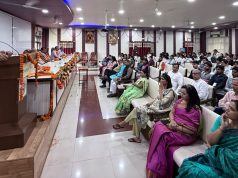
Dehradun, 17 Feb: NITI Aayog, Government of India, in collaboration with GB Pant National Himalayan Environment Institute, Almora, and the International Integrated Mountain Development Centre, organised a one-day workshop on ‘Spring-shed Management and Climate Adaptation: Strategies for Sustainable Development in the Indian Himalayan Region’, here, today. On this occasion, the book, ‘Indian Himalayan Region Towards a Sustainable Future’, written by Prof Annapurna Nautiyal, former Vice Chancellor of HN Bahuguna University, was also released.
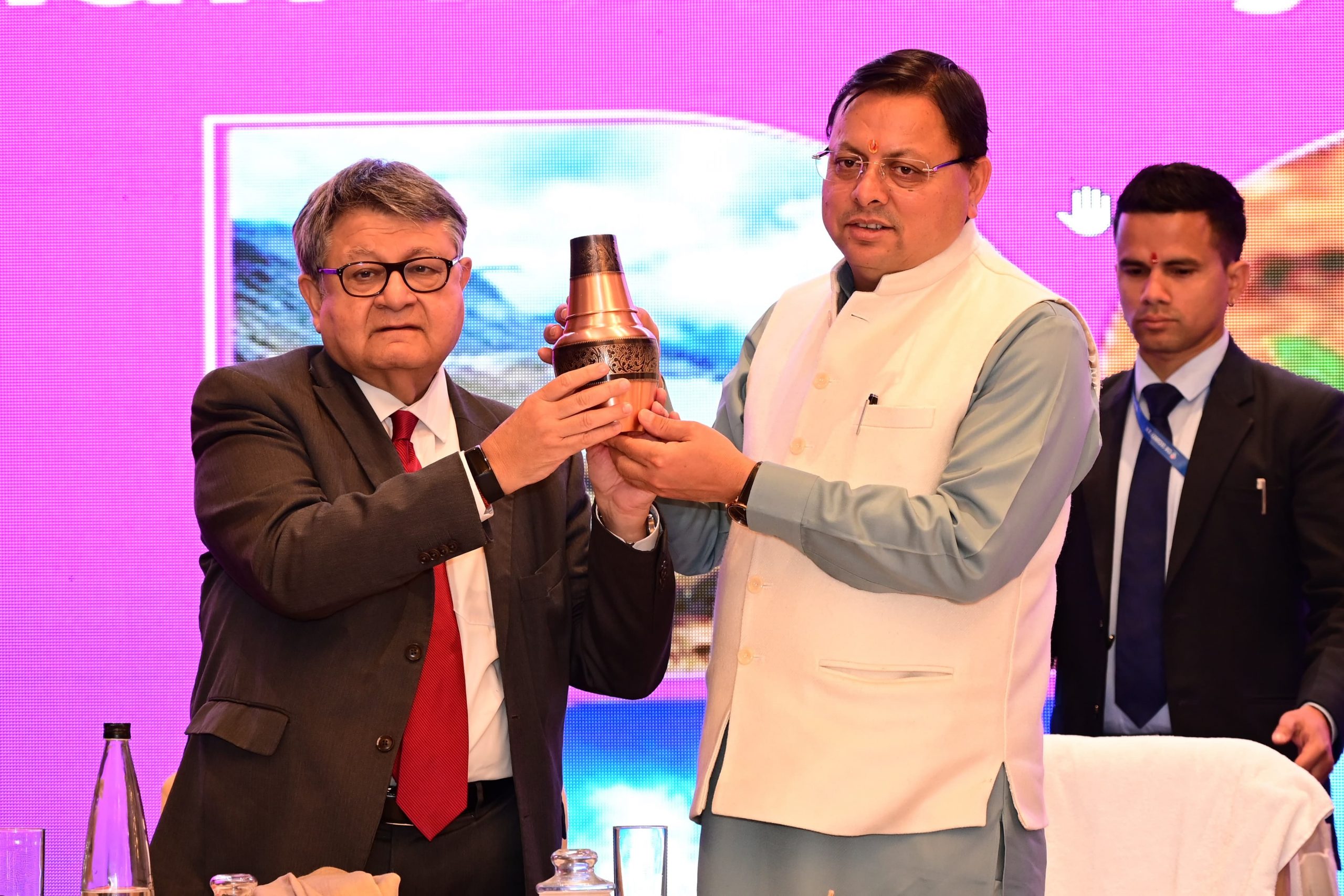
Chief Minister Pushkar Singh Dhami, while participating as the Chief Guest at the workshop, observed that it would strengthen efforts to revive water sources in the Indian Himalayan region and create an action plan to address the challenges of climate change. He stated that the state government is prioritising spring-shed management and climate protection. Work is being done to balance the economy and ecology, maintaining environmental balance and biodiversity. Efforts have been made to assess the environmental contribution of water, forests, land, and mountains by preparing a GEP index on the lines of GDP in the state.
The CM said that Uttarakhand is an important water tower of the country, with glaciers being an uninterrupted source of water in the state. He claimed that many initiatives are being undertaken in the state to solve the problems of climate change and ecological crisis. The ‘Spring and River Rejuvenation Authority’ has been constituted in the state to promote water conservation. Under this, 5,500 groundwater sources and 292 tributaries are being identified and treated. He also reminded that large-scale tree plantation was done on the Harela festival in the state. Under the Amrit Sarovar Yojana, 1,092 Amrit Sarovars have been constructed in the state.
Dhami said that under the river linking project, a request has been made to NITI Aayog to connect Pindar with Kosi, Gagas, Gomti, and Garud rivers. He expressed hope that this workshop will prove to be an important initiative towards the scientific revival of natural water sources not only in Uttarakhand but also in entire mountainous region of the country.
Vice Chairperson, NITI Aayog, Suman K Beri emphasised on creating awareness to bring back people settled outside to their villages to revive the empty villages in the Himalayan states. He also urged everyone concerned to take the Vibrant Village Scheme seriously and provide employment and basic amenities in such villages. He stressed upon the importance of science, community participation, and women empowerment to realise the goal of developed India envisioned by NITI Aayog Chairman and Prime Minister Narendra Modi. He also stressed on expanding broadband service and strengthening internet connectivity in the state.
Irrigation Minister Satpal Maharaj observed that climate change is negatively impacting natural water sources. In the traditions prevalent in Uttarakhand, water sources are considered sacred and worshipped. Keeping in mind the importance of water, everyone will have to make collective efforts for its conservation, he stressed.
On this occasion, NITI Aayog Member VK Saraswat, Chief Secretary Radha Raturi, NITI Aayog Advisor Surendra Mehra, Principal Chief Conservator of Forests (PCCF & HoFF) Dhananjay Mohan, Deputy Director, ICIMOD, Isabel, and Director, NIHE, Sunil Nautiyal were among those present.