By KAUMUDI BISHT,
AKSHAT KALA AND
NIKHILESH BANERJEE
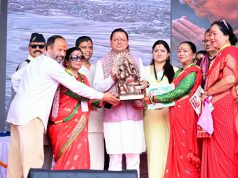
DEHRADUN, 8 Mar: The second day of Vasantotsav 2025 at Raj Bhavan turned into a vibrant celebration of womanhood, aligning with International Women’s Day. “Spring is the time of plans and projects,” writes Leo Tolstoy in Anna Karenina, and nowhere was this more evident than at Vasantotsav. As Nature awakens from winter’s slumber, so too do the aspirations and endeavours of women—caregivers, entrepreneurs, and creators—who, like Spring itself, bring renewal and vitality to the world around them. Uttarakhand, a state where women have long been the backbone of social and economic progress, saw a grand tribute to their resilience, leadership, and contributions. Just as Spring breathes new life into the earth with its colours and fresh blooms, women bring renewal, strength, and transformation to society with their resilience and spirit.
From the high-altitude villages where women sustain traditional farming to urban spaces where they are breaking barriers in education, business, and governance, the event captured the essence of their journey. Discussions and cultural performances highlighted the indomitable spirit of Uttarakhandi women – those who have carried the weight of history on their shoulders while carving out a future of possibilities. Uttarakhand’s women, whether as silent changemakers or vocal leaders, continue to redefine progress, proving that every struggle they endure today becomes a story of strength for tomorrow.
The second day of the Vasantotsav festival brought to light the remarkable contributions of women who are shaping their communities in diverse ways—through caregiving, entrepreneurship, and cultural preservation. Amidst the vibrant celebrations, several initiatives stood out, showcasing resilience, creativity, and a deep sense of responsibility toward society. Among the innumerable examples from Rajbhawan, this article could only bring a few for your information.
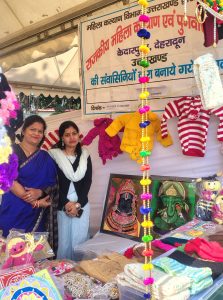
At the Rajkiya Mahila Kalyan evam Punarvas Kendra in Kedarpur, Dehradun, women are not only nurturing marginalized children but also empowering them with vocational skills. The center, operated under the Mahila Kalyan Vibhag of Uttarakhand, provides a safe haven for orphaned and physically challenged girls, equipping them with training in sewing, handicrafts, weaving, knitting, and fabric stitching. Under the supervision of Archi Nautiyal and craft teacher Ganga Adhikari, the girls recently set up a stall—commonly known as Nariniketan or Mahilakaran—to showcase their handcrafted items. Beyond skill development, the center collaborates with the NGO Keystone to reunite lost children with their families, with two girls recently being sent home to Nepal. Their work is a testament to how women-led initiatives extend both care and opportunity to those who need them the most.

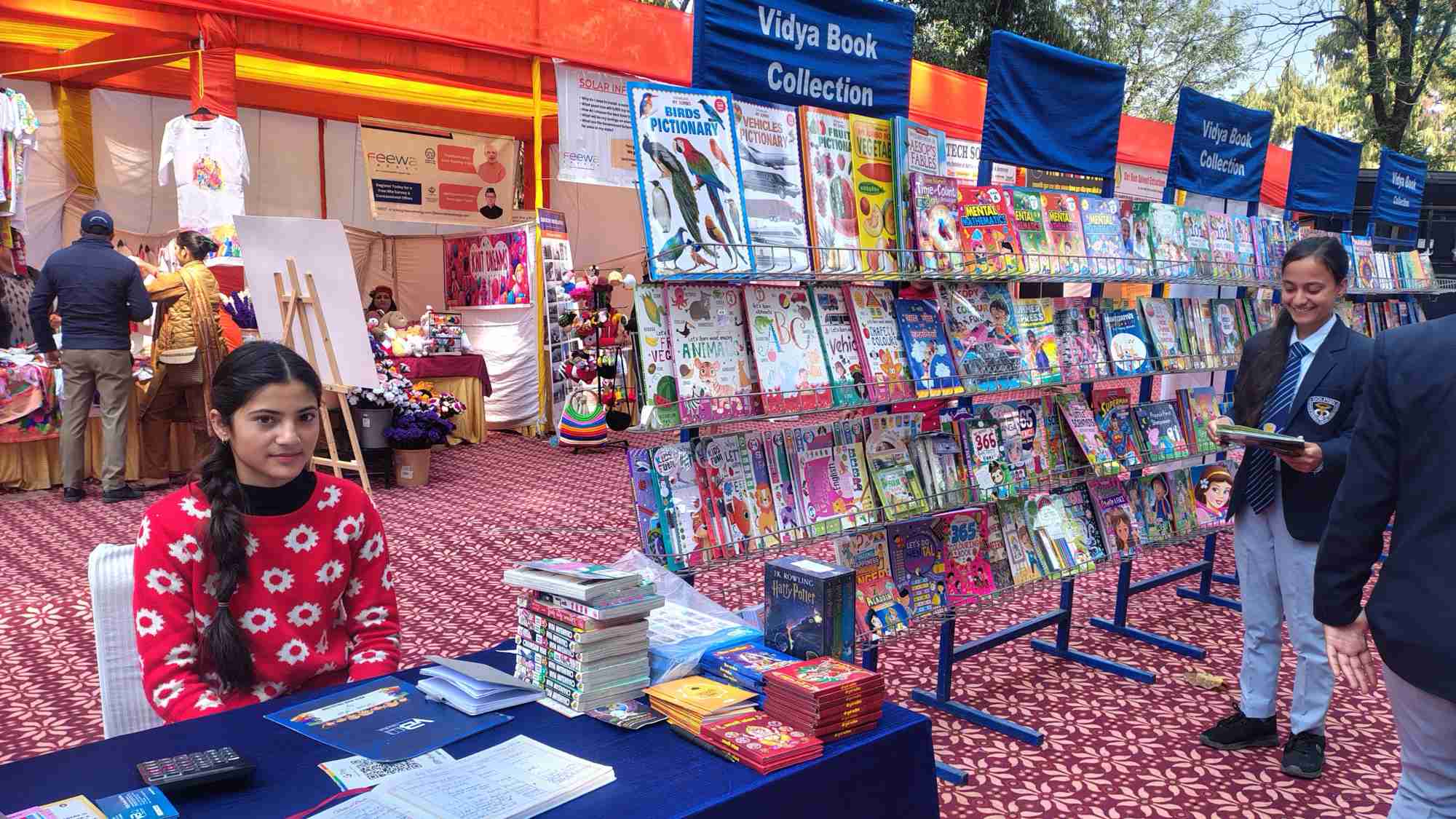
In another nook of the arena, Vidya Book Collection, managed by Sakshi Rana, reflected the role of women as preservers of heritage and knowledge. This book stall has become a cultural hub, offering literature that delves into Uttarakhand’s history and its many unsung heroes. Sakshi’s carefully curated collection includes books on regional history, spirituality, and Indian astrology, along with a special section dedicated to women’s narratives. Meanwhile, Pirul Shakti, an eco-conscious initiative by Suman Panthri, is redefining entrepreneurship with a focus on sustainability. Using natural materials like pirul (pine needles) and chyunti (a local fiber), she crafts decorative items, jewellery, and woven baskets, while also working with Devdar (cedar wood) to create unique handicrafts. Running the business independently for the past six months, Suman has seen steady growth, attributing much of her success to cultural events like Vasantotsav, which provide a platform for small businesses and traditional crafts. Her initiative not only supports environmental conservation but also keeps indigenous craftsmanship alive.

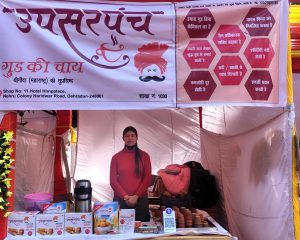
Another example of women-driven entrepreneurship was Upsarpanch Chaha, a homegrown venture by Swati from Dehradun. Inspired by Maharashtra’s traditional jaggery tea, she introduced gud ki chai, a healthier, chemical-free alternative to regular tea. Made with pure jaggery and homemade spice blends, the tea has received an enthusiastic response from customers looking for natural and preservative-free options. Swati credits events like the Flower Festival for helping small businesses gain visibility and allowing her to introduce more people to the benefits of jaggery-based beverages. The work of organizations like Himwal Society stood out for the connection between women, culture, and the environment in the Himalayas. Dedicated to empowering women through awareness and livelihood programs, preserving Uttarakhand’s rich cultural heritage, assessing biodiversity, and promoting education outreach in the Himalayan regions, Himwal Society has established centres in Joshimath, Uttarkashi, Dehradun, and Ramgarh. This is precisely what reflects the spirit of the festival—nurturing both nature and society, much like the season of spring itself, which brings renewal and growth to all that it touches.
These initiatives, though just a handful from the many showcased at Vasantotsav, highlight the diverse ways in which women continue to shape their communities. Whether through caregiving, education, sustainability, or entrepreneurship, their work reflects a deep commitment to both social progress and cultural preservation.
“If people did not love each other, I really do not see what use there would be in having any springtime,” writes Victor Hugo in Les Misérables. And on this International Women’s Day, as the Vasantotsav festival blossomed outside Raj Bhawan, it felt as though love itself had blossomed into the air, carrying with it the warmth of spring. It was a celebration not just of flowers but of resilience, unity, and the many ways in which women bring color and renewal to the world around them.
Women from all walks of life came together—some young, some old, some carrying years of experience in their smiles, others still discovering the world with wide, curious eyes. Among them were those observing Ramadan, fasting from dawn to dusk, yet arriving at the festival with the same enthusiasm and joy as the others. Their presence was a quiet testament to the strength that women carry within, the ability to give, to nurture, and to celebrate life even in the midst of personal discipline and devotion. In the very crowd were also the women who were especially abled, moving through the festival with a grace that defied limitations. And then there were the children—young girls running about, their laughter as fresh as the spring breeze, their hands reaching out to touch flowers, to hold onto something bright, something alive. Women are the caregivers, the creators, the entrepreneurs, and the dreamers. And on this day, among the flowers and the festivity, they reminded us that the arrival of spring is not just in the turning of the seasons but in the way we come together—in love, in strength, and in the shared joy of simply being. This Sunday we look forward to seeing you on the final day of Vasantotsav as we continue to celebrate the beauty of spring and the strength of womanhood!
(Writers of this report are students of Doon University).