By ARUN PRATAP SINGH
Garhwal Post Bureau
Nainital, 30 Jun: The Uttarakhand High Court today ordered continuance of its restriction on all transactions concerning tea garden land in Dehradun while directing the state government to respond in full to a Public Interest Litigation (PIL). The PIL, filed by advocate Vikesh Singh Negi of Dehradun, challenges the sale of approximately 350 bighas of land originally vested with the government after being declared surplus in 1960. Negi’s petition alleges that land in Ladpur, Nathanpur and Raipur, once belonging to Raja Chandra Bahadur Singh, has been systematically sold by the land mafia with complicity from officials, and he urged that these sales be halted and the land repossessed.
During today’s hearing, the court reprimanded the government for failing to submit a response despite earlier extensions granted. A division bench comprising Chief Justice G Narendar and Justice Alok Verma maintained the stay on all deals and directed the government to furnish its affidavit without further delay.
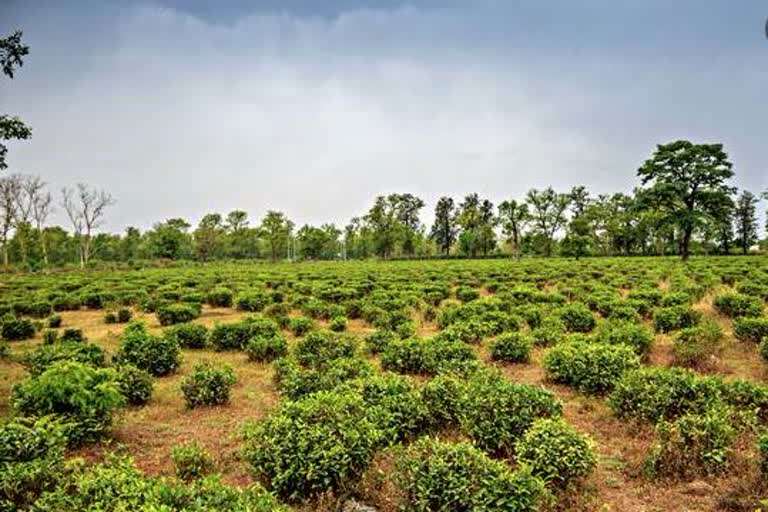
It may be recalled that this case forms part of a broader pattern in Dehradun, where historic tea gardens, mostly dating back to British era plantations established in the 1840s and 1850s, have largely fallen into the hands of land developers, leading to allegations of illegal encroachment and misuse. Citizens and activists have been long expressing serious concern that more than eighty per cent of Dehradun’s once-lush tea estates have been lost to real estate speculation, despite the existence of legal protections under the Land Ceiling Act. There have been claims that several transactions post-1975 were carried out in defiance of Supreme Court directives, and that state authorities have not enforced cancellation of such illegal sales.
Several public interest litigations (PILs) have been filed over the years seeking to preserve these green zones. Formerly thriving tea estates such as Arcadia Grant, East Hopetown, Gudiyabagh and Herbertpur have now dwindled into abandoned and overgrown plots. Another recent PIL by tea estate workers had opposed attempts to acquire these lands under smart city initiatives, arguing that residential development would further endanger Dehradun’s ecological balance. Another PIL questioned the use of tea land for seasonal farming, like sugarcane or cucumbers, instead of maintaining the legally mandated tea cultivation.
In the wake of mounting pressure from the activists as well as the local people, the state administration has recently initiated crackdowns on illegal sales, particularly in Vikas Nagar, Ladpur and Raipur. Sub-registrars and the district magistrate have been instructed to halt sale registrations on disputed tea estate land. Furthermore, efforts have been launched to revive these estates under a broader agricultural reform plan. It may also be recalled that the Chief Minister had recently inaugurated a campaign aiming to transform select tea gardens into organic farming zones, with additional emphasis on developing aroma valleys and modernising infrastructure through polyhouse installations.
The High Court’s insistence on receiving a comprehensive government affidavit indicates that the enforcement on part of the government to prevent illegal land deals in respect of the tea estates has rather been insufficient. Precious government land is at risk of being irreversibly lost unless the enforcement is strictly implemented or unless the court forces the government to take strict action in this regard. The matter has been listed for further hearing, where the adequacy of the government’s response is likely to be closely scrutinised. The legal outcome of this case may play a defining role in determining the future of its historic tea garden estates.