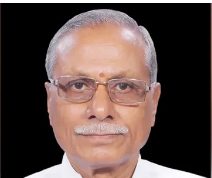
By Roli S
In the year 2025, this thousands of years old civilisation called Bharat and popularly known worldwide as India has created history. It has shown to the world that this land of Mahatma Gandhi and Buddha can defend its sovereignty and fight a ‘Dharmyuddh’ taking lessons from Krishna and Ram even in the year 2025! The armed forces acted with exemplary professionalism, discipline and sense of purpose. The political leadership took firm, timely and result oriented decisions, and the entire population stood united with them at the time when terror needed to be taught a lesson. The victorious Bharat beamed with pride at the job well done. Needless to say, that overworked, overzealous and overexcited media showed and conveyed all the events in the best way they could. But in an era where a message can cross continents in milliseconds, and artificial intelligence (AI) can simulate conversations, draft speeches, and even negotiate terms, one of the greatest challenges in international relations and at the moment for India has become the element of ‘trust’. Whether Bharat had won the trust of the international community? Whether the precise and target oriented actions of Indian military and timely ceasing of military action was appreciated by people around the world who are witness to a few unending conflicts going on elsewhere? Whether the message of India’s war against terror was effectively conveyed by the right-thinking, peace-loving people of the social media? Sadly, as much as it should, social media while connecting billions, has also contributed to the spread of misinformation, disinformation, and polarising narratives. Irresponsible people and countries are often resorting to “information warfare” conducted through online platforms. Artificial Intelligence has certainly revolutionised communication. Tools like machine translation, sentiment analysis, and even AI-generated diplomatic briefings have increased efficiency and accessibility. However, AI lacks emotional intelligence, intuition, and the moral judgment that often guide complex human and diplomatic decisions. In such an environment, face-to-face conversations and diplomacy becomes a much-needed stabilising force. Even though the age-old art of face-to-face interaction may seem, to some, outdated or redundant. Yet, paradoxically, the more we rely on digital communication, the more vital in-person dialogues become – especially among international communities and delegations. Face-to-face meetings allow for a richness of interaction that cannot be replicated through screens or algorithms. Body language, tone, eye contact, and the subtleties of presence—all contribute to a depth of communication that builds trust and understanding. This means that digital communications, no matter how sophisticated, strip away a large portion of what makes communication effective. It is vital to build trust in a distrustful world. It is important to bring your story to the interested audience. The handshake, the eye contact, the off-the-record conversations — these are not mere formalities. They are moments where sincerity can be assessed, and relationships can be built. International relations are steeped in culture, history, and symbolism. Face-to-face interactions provide an opportunity to engage with these nuances in ways that virtual platforms cannot accommodate. The choice of meeting venue, the attire, the seating arrangement—all carry cultural and diplomatic significance. In the moment of an international crisis that Bharat finds itself in these days, face to face conversation is not luxury, but a necessity. Social media becomes a double-edged sword. While it is useful to some extent for public diplomacy and soft power, it also contributes to oversimplification of complex issues because tweets can be misinterpreted, deep fakes can distort reality, and viral moments can overshadow serious policy decisions. Policy decisions like the new normal for Bharat or the new doctrine of Bharat! Real-world diplomatic engagements emphasise depth over brevity and understanding over optics. After all, “The world is not ours to keep. We hold it in trust for future generations”. That trust must be built not just with digital efficiency, but with human empathy—something only in-person dialogue can fully nurture. In an age defined by the speed and reach of social media and artificial intelligence, the value of slowing down for a handshake, a shared meal, a difficult conversation in the same room cannot be overstated. It is in these moments that misunderstandings are cleared, truth comes to light, empathy is built, and genuine progress is made. The screen can connect minds, but only presence can connect hearts.
This is not to suggest that digital tools and AI have no place in diplomacy. On the contrary, they have become essential in logistics, intelligence gathering, translation, and public communication. However, the core of international understanding remains human.
The future of diplomacy and international cooperation lies in a hybrid model—one that uses digital tools to enhance preparation, analysis, and dissemination, but relies on face-to-face meetings to cement trust, foster empathy, and forge lasting agreements. As international tensions rise and global challenges—from climate change to pandemics to wars—demand collective action, the world must remember that the most powerful tools for peace and progress are not the latest algorithms, but the oldest practices: listening, looking one another in the eye, and talking—in person but that only under acceptable conditions and rules. Since Bharat believes “Vasudha” to be a “Kutumb”, Bharat, by sending its parliamentary delegations to apprise the world about the new India doctrine and its fight with terror, has given the call to the entire world that the ‘Future now is Hybrid’ not a digital-only one.
(Roli S is an Author & Educator based in Thane.)