By Sunil Sonker
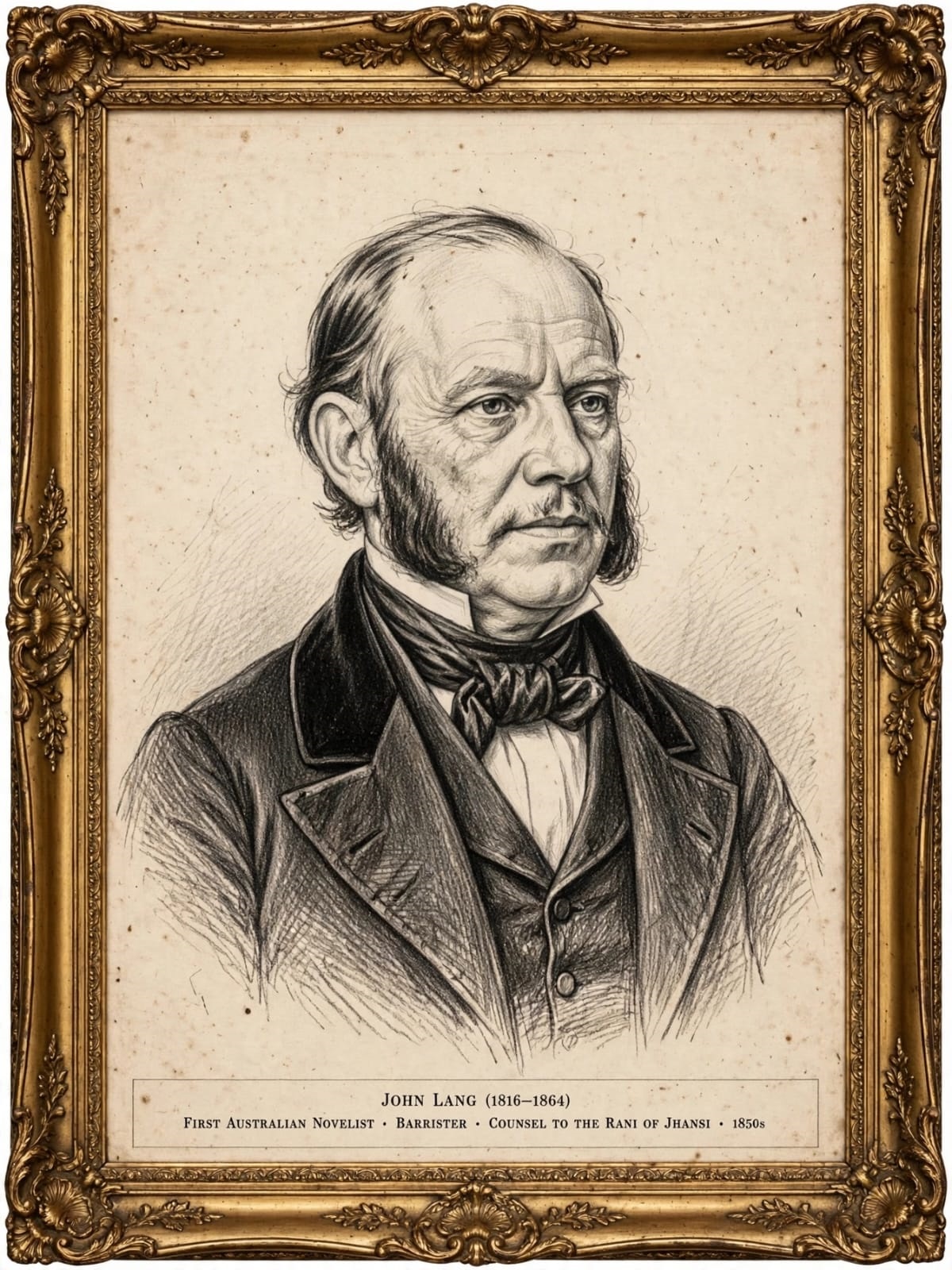
Mussoorie, 26 Aug: Historian Gopal Bhardwaj paid tribute to John Lang—an Australian-born barrister, writer, and journalist who fought the legal battle for Rani Lakshmibai of Jhansi—on his death anniversary, here, today. He noted that Lang’s life was deeply intertwined with the history of India, British rule, and Mussoorie. To this day, his grave in the old cemetery on Camel’s Back Road stands as a significant testament to this history.
According to historian Gopal Bhardwaj, Lang was not merely a British lawyer but also a journalist and writer who questioned the policies of the British administration. While living in India, he advocated for the Indian cause and criticised the policies of the East India Company. In 1845, he launched a newspaper titled ‘The Mofussilite’, which published sharp critiques of the then-British administration and the East India Company’s policies.
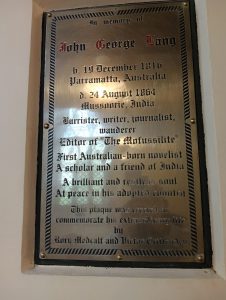
John Lang is best remembered in history for his association with Rani Lakshmibai. The Rani waged a legal battle against the British policy of annexing the state of Jhansi into the East India Company’s territory following disputes over succession. Lang represented the Rani in this matter. This was the era when Indian states lacking a direct heir were being annexed into British rule under Lord Dalhousie’s “Doctrine of Lapse”. Lang stood up against British authority and championed the Rani’s legal struggle. His writings also reflected a deep empathy for India and its people. Beyond his roles as a journalist and writer, he was active in the literary sphere and contributed to Charles Dickens’s magazine, ‘Household Words’.

After residing in India for a long period, John Lang developed a deep connection with Mussoorie. He spent the final years of his life in the Mussoorie-Landour region and passed away in Mussoorie on 20 August 1864. He was approximately 47 years old at the time. His funeral and burial took place at the cemetery located on Camel’s Back Road in Mussoorie. For several decades, his grave remained neglected, hidden amidst bushes and moss. Later, in 1964, the renowned author Ruskin Bond rediscovered the grave and brought John Lang’s story back to public attention. Gopal Bhardwaj noted that Mussoorie’s Camel’s Back Road is famous not only for its natural beauty but also because the old cemetery there preserves the memories of many significant figures from the British era. In addition to John Lang, this cemetery houses the graves of British army officers and notable figures in Uttarakhand’s history, such as Frederick ‘Pahari’ Wilson.
John Lang’s story is significant because he raised his voice in support of Indians at a time when British rule was expanding its political and administrative influence. His journalistic and legal activities set him apart from the ruling establishment of the day. According to historians, this is why his name is still cited alongside Rani Lakshmibai and other key foreign figures associated with the early stages of the Indian freedom struggle.
Gopal Bhardwaj remarked that John Lang’s grave in Mussoorie is not merely a tombstone but a piece of living history that tells the story of an era when British officers, writers, journalists, and military personnel flocked to this hill town in large numbers. It is essential to preserve such historical sites and acquaint the new generation with the stories hidden behind them.