By Arun Pratap Singh
Garhwal Post Bureau
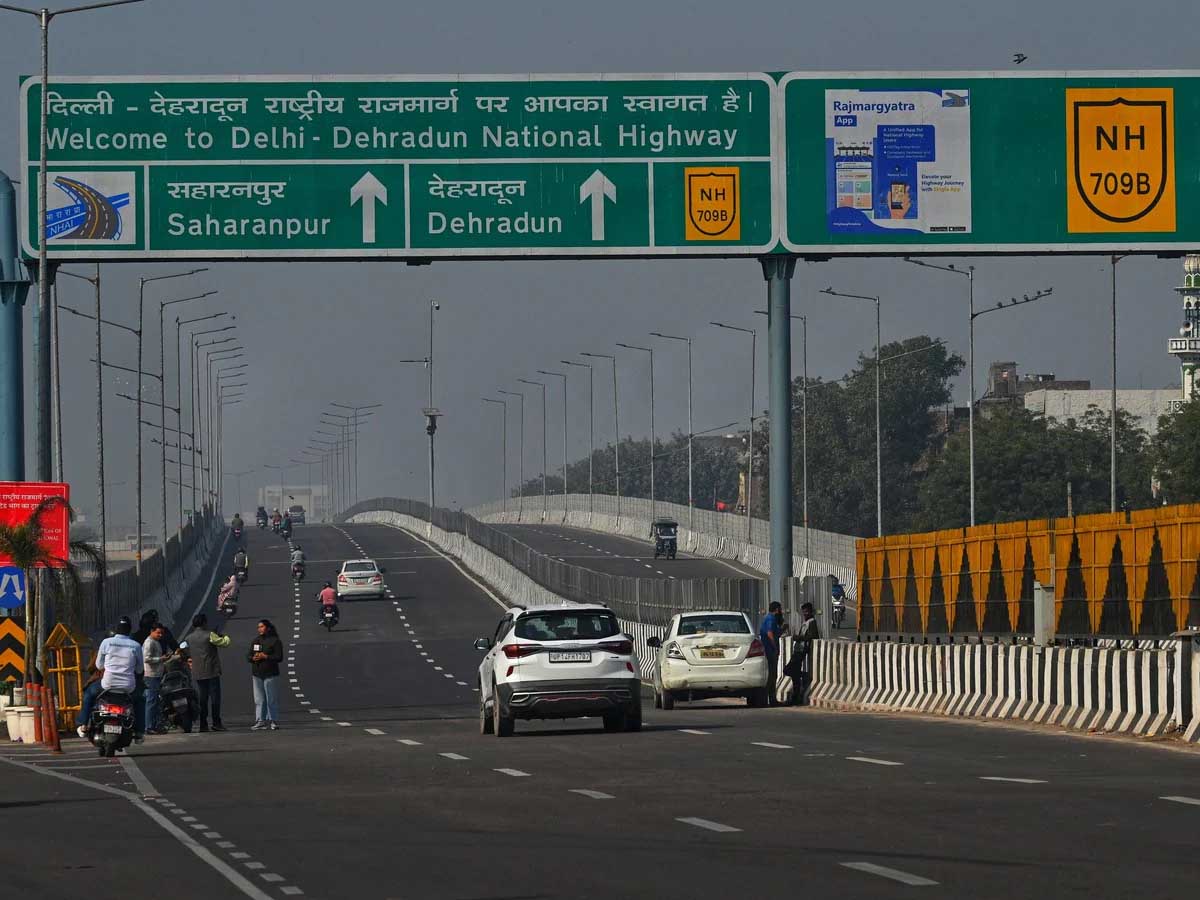
Dehradun, 8 Apr: The long-awaited Delhi–Dehradun Expressway is now set to be inaugurated on 14 April by Prime Minister Narendra Modi. The project has been much delayed as the initial deadline for the project was January, 2024. Now the expressway is complete and it would be fully become operational on 14 April, even as key wayside amenities along the route remain incomplete with rest areas still under construction at many locations, petrol pumps yet to be operational and amenities such as restaurants and the toilets in various stages of development, a situation that is expected to inconvenience commuters in the initial months.
This correspondent had recently commuted on this route from Delhi to Dehradun and found no operational petrol pumps, electrical vehicle charging stations and rest areas. During the travel, this correspondent had to exit the Expressway at two locations between Baghpat and Saharanpur as these sections were partially closed. Now that the Expressway is formally being inaugurated on 14 April, it is almost certain that for at least the initial months, the motorists will have to begin their journey with full fuel tanks or they would have to exit the access-controlled highway at designated points near Baghpat, Baraut, Shamli and Saharanpur for refuelling, food and other necessities, while electric vehicle users will similarly have to depend on charging facilities outside the expressway until dedicated infrastructure is commissioned. Apart from these issues, the road was found to offer a very smooth drive and it does appear that the commuters may well be able to complete their journey between 2.5 to 3 hours.
Along the Delhi stretch, however, between Akshar Dham where the expressway begins along the Gita Colony and till Loni Border, they may have to face some traffic jams during peak morning and evening hours. The rest of the route offers a smooth journey and while travelling from Delhi to Dehradun, the commuters will encounter traffic jams only after entering Dehradun.
The 210-kilometre, six-lane, access-controlled corridor, developed at an estimated cost of around Rs 13,000 crore under the Bharatmala Pariyojana, has been conceived as a largely greenfield project with limited brownfield stretches, beginning near Akshardham in Delhi and traversing through Loni, Baghpat, Baraut, Shamli and Saharanpur in Uttar Pradesh before entering Uttarakhand and culminating in Dehradun. This expressway is expected to provide a significant boost to connectivity, tourism and regional economic activity while also easing congestion on existing highways, particularly the Delhi–Meerut corridor.
It may be recalled that the project has witnessed considerable delays and missed several deadlines, having originally been targeted for commissioning by January 2024, followed by informal indications of a November 2025 opening, but incomplete stretches, particularly between Baghpat and Saharanpur interchanges, and pending finishing works in Uttarakhand led to repeated deferments, even as authorities opted to prioritise construction quality, including allowing the road surface to stabilise through a monsoon cycle before inauguration. However, the elevated Wildlife Corridor in Mohand region was thrown open in December last and it has cut the travel time between Ganeshpur to Dehradun to only around 20 minutes, from around an hour.
Officials of the National Highways Authority of India have carried out detailed inspections across major stretches, including a 74-kilometre segment, reviewing safety standards, structural readiness and finishing works, while trial runs have already been conducted on several portions, notably the 12-kilometre elevated stretch between Ganeshpur and the Asarodi in district Dehradun which has been open for controlled vehicular movement since late December 2025.
A defining feature of the expressway is its extensive eco-sensitive engineering in the Rajaji National Park region, where nearly 20 kilometres of the alignment passes through forested terrain, including a 12-kilometre elevated wildlife corridor, considered among the longest in Asia, designed to ensure unhindered movement of wildlife, along with dedicated elephant underpasses and multiple animal crossings, while a 340-metre tunnel near the Dat Kali temple further facilitates smooth transition through the hilly section; construction in this stretch was subject to strict environmental restrictions, including a ban on work during night hours, contributing to project delays but ensuring minimal ecological disruption.
The elevated section from Mohand to Dehradun, supported by 575 pillars, has also incorporated special reinforcement measures in view of possible seasonal river flooding. During the inspections last year, it was observed that some pillars installed over the seasonal river in Mohand needed reinforcement and since then, at least 24 pillars have been strengthened by increasing their thickness by approximately 1.5 to 2 feet to withstand strong water currents to ensure long-term structural safety.
The corridor has been developed in multiple construction packages, including key stretches from Akshardham to the Uttar Pradesh border near Loni, from Loni to Khekra near the Eastern Peripheral Expressway, and onward segments bypassing Baghpat, Baraut and Shamli through western Uttar Pradesh up to the Saharanpur bypass. These packages are now reported to be complete and offer seamless journey till Dehradun.
Designed for high-speed travel, the expressway will have a maximum permissible speed of 100 km per hour for cars and 80 km per hour for heavy vehicles, supported by automated enforcement systems to ensure compliance, and features multiple interchanges, rail overbridges, major bridges and planned wayside amenities. However, these amenities including rest areas, the food courts and toilet facilities, are still under construction at most locations and are unlikely to be fully operational at the time of inauguration.
In terms of user cost, the corridor is expected to have four toll plazas, with indicative toll charges suggesting that the users may pay approximately Rs 675 for the full stretch, though final rates are yet to be notified officially.
While portions of the expressway, particularly from Akshardham to Khekra and further stretches towards Saharanpur, have already witnessed trial traffic movement enabling commuters to reach Saharanpur from Delhi in less than two hours under controlled conditions. The absence of fully operational support infrastructure such as fuel stations, EV charging points and rest stops remains a key concern for early users, necessitating careful planning of travel with reliance on exit points for essential services. Once fully operational with all ancillary facilities in place, the Delhi–Dehradun Expressway is expected to emerge as a transformative infrastructure corridor for North India, strengthening connectivity between Delhi, western Uttar Pradesh and Uttarakhand, enhancing access to major tourist and pilgrimage destinations including Haridwar and the Char Dham circuit. The under-construction Haridwar spur of the Delhi–Dehradun Expressway originates from the main corridor near the south-eastern side of Saharanpur, close to the Saharanpur bypass/Ganeshpur region, from where it branches off towards Roorkee and further to Haridwar. This will become the leading route for those wanting to visit Char Dham and the Garhwal hills from Delhi and beyond, once it is operational, significantly cutting travel time to Haridwar and Rishikesh. This spur is planned as a separate greenfield link of about 50–51 km, commonly referred to as the Saharanpur–Roorkee–Haridwar stretch, and will connect the main expressway with Haridwar and further integrate with the Char Dham highway network. This may take up to another year to be completed, claim the sources.