Garhwal Post Bureau
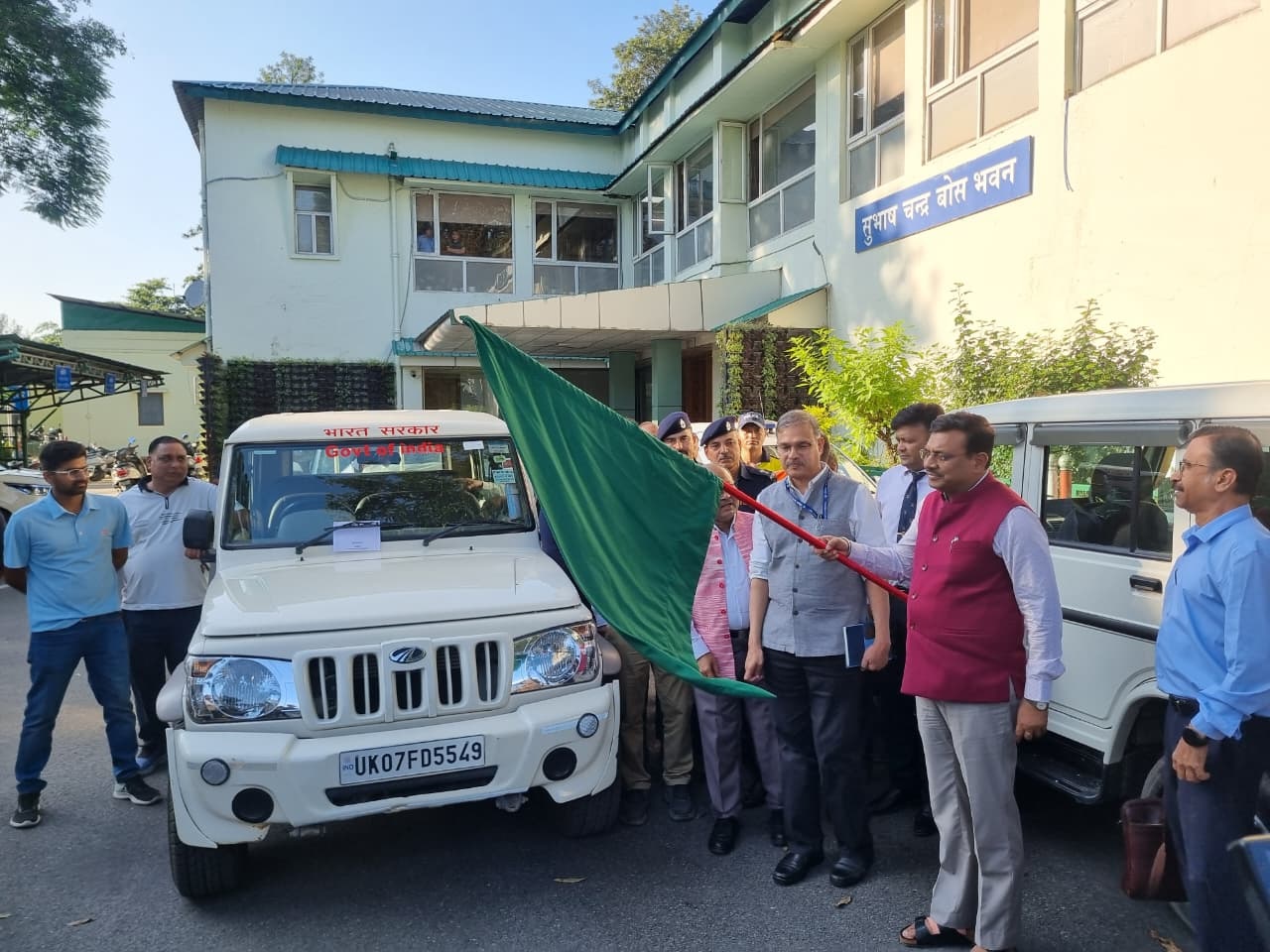
Dehradun, 29 Sep: An important initiative has been launched in Uttarakhand to reduce the risk of potential Glacial Lake Outburst Floods (GLOAFs) and strengthen the monitoring and early warning system for glacial lakes in the high Himalayan regions. The installation of early warning systems for glacial lakes in the state is being initiated from Vasundhara Tal in Chamoli district. Chief Secretary Anand Bardhan flagged off a scientific and technical team from the Secretariat on Tuesday to establish a monitoring and early warning system at Vasundhara Tal and extended his best wishes to the team. He stated that this initiative will prove to be a milestone in mitigating the risks and understanding the risks of GLOAFs in the future. He added that advanced sensors, satellite communications, and real-time data monitoring will help better understand changes in glacial lakes.
This is the first scientific team to visit the high Himalayan region of Uttarakhand to establish a monitoring and early warning system for a glacial lake. This expedition is proposed from 29 September to 15 October.
Chief Minister Shri Pushkar Singh Dhami extended his best wishes to all the scientists, experts, and security forces involved in the expedition. In his message, He stated that since Uttarakhand is located in the high Himalayan region, monitoring glacial lakes and being vigilant against potential risks associated with them is extremely important. The establishment of the early warning system at Vasundhara Tal is an important step towards further strengthening the state’s disaster preparedness from a technological and scientific perspective. The state government is striving to further strengthen modern monitoring and early warning systems in the high Himalayan regions through coordination with scientific institutions, experts, and all departments involved in disaster management.
This expedition is being conducted by the Uttarakhand State Disaster Management Authority under the National Glacial Lake Outburst Flood Risk Reduction Program. The expedition team includes scientists and technical experts from the Central Building Research Institute (CBRI), Roorkee, and the Wadia Institute of Himalayan Geology, Dehradun. To provide security, transportation, and field support to the expedition team in the high Himalayas and inaccessible terrain, personnel from the State Disaster Response Force (SDRF), National Disaster Response Force (NDRF), and Indo-Tibetan Border Police (ITBP) will also accompany the team. USDMA is providing necessary coordination and logistical support for the expedition. USDMA has provided satellite phones and low earth orbit devices to the team to ensure communication and coordination with USDMA.
Present on the occasion were Secretary Disaster Management and Rehabilitation, Vinod Kumar Suman, Additional Chief Executive Officer Administration, Prakash Chandra, Additional Chief Executive Officer Implementation (DIG), Rajkumar Negi, Commandant SDRF, Arpan Yaduvanshi, Director CBRI, R Pradeep Kumar, CBRI scientist Dr. D.P. Kanungo, Joint Chief Executive Officer, Dinesh Kumar Punetha, Dr. Shantanu Sarkar, NDRF Deputy Commandant, Rohitashva Mishra, and Wadia scientist, Dr Amit Kumar.
According to Disaster Management and Rehabilitation Minister Madan Kaushik, trengthening scientific monitoring of glacial lakes in Uttarakhand is among the state government’s priorities. He stated that this system will continuously provide data on water levels, weather, snow conditions, water flow, and other important parameters. He stated that the state government’s objective is to minimise disaster risk and further strengthen the safety of people living in the high Himalayan regions by utilising modern technology and scientific expertise.
Secretary, Disaster Management and Rehabilitation, Vinod Kumar Suman, stated that the state government is continuously monitoring and conducting scientific studies regarding the status of glacial lakes in Uttarakhand and the risk of potential Glacial Lake Outburst Floods (GLOFs). According to 2023 data from the National Remote Sensing Centre (NRSC), a total of 344 glacial lakes have been identified in the state.
He added that the National Disaster Management Authority (NDMA) and technical institutions have identified 13 glacial lakes in Uttarakhand as high-risk lakes. These include one lake in Bageshwar, four in Chamoli, six in Pithoragarh, one in Tehri Garhwal, and one in Uttarkashi.
According to him, bathymetric surveys of six lakes have been completed. Bathymetric surveys have been completed for the Saraswati Tal and Vasundhara Tal proglacial lakes in Chamoli district, Kedar Tal in Uttarkashi district, and Mabang, Pungru, and Sukti Yankti lakes in the Darma Valley of Pithoragarh district. The surveys have collected the lakes’ depths, water holding capacity, and other important hydrological data, which will be used to scientifically assess potential gale risk and strengthen necessary disaster management preparedness.