By Our Staff Reporter
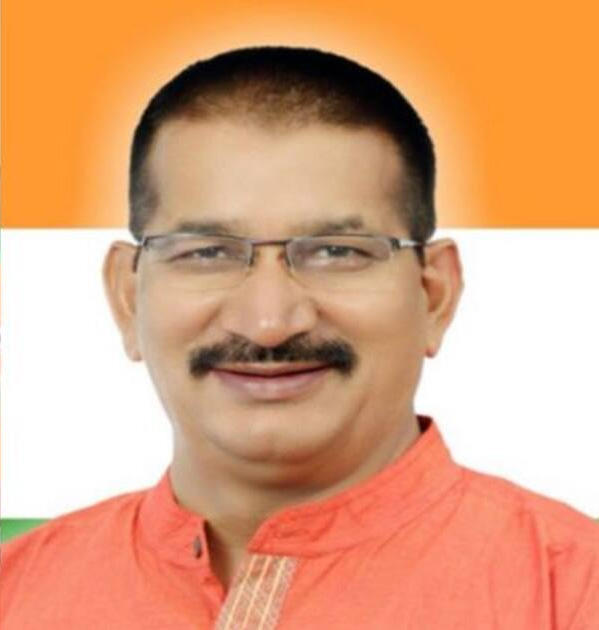
DEHRADUN, 12 Feb: Kishore Upadhyay, MLA and founder of the Himalaya Bachao-Ganga Bachao campaign and Forest Rights Movement, embarked on his journey to Prayag Raj on Wednesday on the occasion of Maghi Purnima as part of the ongoing campaign.
Upadhyay expressed deep concern about the rapidly deteriorating conditions in the Himalayas. He noted that nearly a third of the Himalayan glaciers have disappeared, and similarly, the water levels in the Himalayan rivers, including the Ganga, are dwindling. Scientists predict that, in the near future, even the summit of Mount Everest may no longer have snow.
MLA Upadhyay had recently visited Ganga Sagar in relation to this campaign, and he emphasized that the situation there is extremely alarming. The sea has already consumed approximately 30 kms of land from the original Kapil Muni Ashram, and in the future, the island may submerge entirely. This situation is a precursor to what is expected to happen in coastal and maritime regions worldwide.
Upadhyay believes that this is a man-made catastrophe, and humans are the only ones who can resolve it. He mentioned that he will be requesting support from the Sant-Sadhu community to save the Himalayas and Ganga, as these sacred sites are considered the source of strength and devotion for all ascetics, saints, and spiritual leaders.
He raised the question: “Will the next Kumbh be possible?” He noted that it is possible that by the time of the next Kumbh, the Ganga might be on the brink of running dry. In the past, the supply of 200 cusecs of water from the Tehri Dam was essential for holding the Mahakumbh.
Crisis for Rivers like Ganga and Yamuna
30 Years of Study Reveal Serious Impact of Climate Change
Rapid Melting of Glaciers Emerges as a major problem
Climate change and rising temperatures are causing a significant reduction in the number of glaciers in the Himalayas. Rivers like Ganga and Yamuna are facing severe threats. The increase in temperature in the Himalayan region is causing glaciers to melt rapidly, threatening the water supply and climate stability of rivers like Ganga and Yamuna.
This has been confirmed by a 30-year study conducted by Professors Vishwambhar Prasad Sati and Surjit Banerjee from Mizoram University. Professor Vishwambhar Prasad Sati, originally from Chamoli, stated that the Himalayas are undergoing rapid changes. The continuous disruption in climate stability poses a threat not only to the local population but also to global climate, as the melting of ice sheets and the fragmentation of ice pieces are matters of great concern.
Ganges, Yamuna, and Pindari glaciers weakening
In particular, the glaciers that feed important rivers like the Ganga and Yamuna have seen a significant rise in temperature over the past few decades. This has led to the rapid melting of glaciers and a reduction in ice cover. Glaciers like Gangotri, Yamunotri, and Pindari are becoming weaker, with glaciers receding and thinning.
Snow absence on Himalayan peaks
The once snow-covered peaks of the Himalayas no longer have snow throughout the year. Studies reveal that there has been a continuous reduction in the thick ice sheets. From 1991 to 2021, the area of thick ice during snow periods at the mountain peaks has decreased from 10,768 square kilometers to 3,258.6 square kilometers, indicating a dangerous decline.
Signs of Water Crisis
In contrast, the area of thin ice sheets has increased from 3,798 square kilometers in 1991 to 6,863.56 square kilometers in 2021, leading to increased warmth in the region. Areas like Auli, which were once always covered in snow, no longer see the same snowfall. Similarly, snowfall frequency in Nainital has reduced significantly, with snow now occurring only once every two or three years compared to the 1990s when it was an annual event. If this trend continues, it could lead to a severe global crisis in the future.
Upadhyay emphasized that, having been born in the Himalayan region and near the source of the Ganga, he has been working for the success of this campaign for the last 40 years, and he remains committed to its cause.