Garhwal Post Bureau
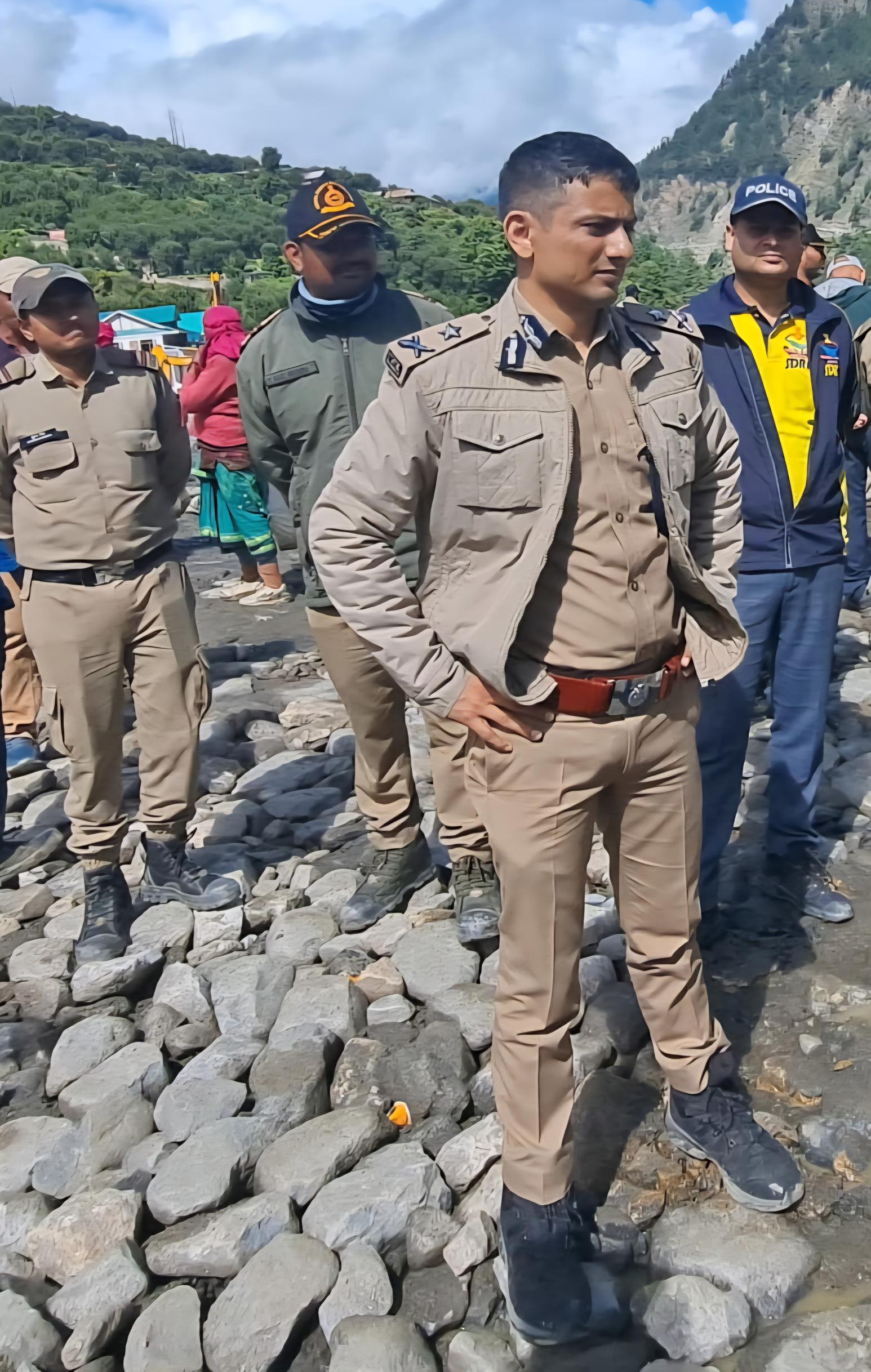
Uttarkashi, 13 Aug: Inspector General of SDRF Arun Mohan Joshi, deputed as Incident Commander, is leading the rescue operations at Dharali. In a high level briefing at the Dharali rescue site in Uttarkashi district, coordinating operations with multiple agencies including NDRF, ITBP, BRO, PWD, and the Irrigation Department, Joshi discussed the details of the rescue operations being caried out at Dharali.
It may be recalled that sector-specific tasks have been assigned to each agency, with a focus on debris clearance, victim location, and flood mitigation. The meeting marked a pivotal moment in the ongoing rescue and relief efforts following the catastrophic flash flood that struck Dharali on 5 August.
Following the briefing, Joshi met with disaster-affected residents of Dharali village to assess their immediate needs and grievances. He assured them that all relief and rehabilitation measures were being prioritised and executed with urgency. Later, Joshi inspected a temporary lake near the army camp in Harsil, which was formed when a landslide triggered by a cloudburst blocked the Bhagirathi river, creating a natural dam. With forecasts of further rainfall increasing the risk of downstream flooding, Joshi directed two SDRF teams led by Inspector Pramod Rawat, along with scientists and Irrigation Department officials, to assess the lake’s depth using an OBM boat and manually remove debris to facilitate water drainage.
The rescue operation has involved advanced techniques including canine searches, victim-locating cameras, and thermal imaging equipment. However, the scale of devastation has posed formidable challenges in the rescue and rehabilitation operations. Under the supervision of the IG/Incident Commander, two teams of the State Disaster Response Force (SDRF), led by Inspector Pramod Rawat, in coordination with officials and scientists from the Irrigation Department, used an OBM (Outboard Motor) boat to measure the depth of the temporary lake. The teams also manually removed debris to increase water discharge from the lake. With further rainfall warnings in place, the risk posed by the lake has heightened, prompting urgent measures. Joint teams have been clearing debris and logs from the lake’s edges to channelise the water flow.
All agencies, working within their respective sectors, carried out canine searches, manual searches, and technical searches using victim locating cameras and thermal imaging devices at identified sites, followed by excavation and debris removal.