 Dr Avinash Chandra Joshi
The recent success of India in the ICC Men’s T20 World Cup offers valuable lessons for modern corporate leadership. The evolution of Indian cricket leadership—from Sunil Gavaskar to Sourav Ganguly, MS Dhoni, Virat Kohli, Rohit Sharma to Suryakumar Yadav—reflects a remarkable transformation in mindset, strategy, and leadership culture.
In earlier decades, particularly during the era of Gavaskar, Indian cricket often adopted a defensive approach. Drawing a Test match against stronger teams was considered a respectable outcome. Over time, however, the team underwent a remarkable transformation—from cautious survival to fearless competition. This gradual metamorphosis offers an instructive case study for modern organisations navigating rapid change.
The turning point came under Sourav Ganguly, who transformed the psychological mindset of the team. When he became captain in 2000, India struggled overseas against powerful teams such as Australia and South Africa. Ganguly realised that the key barrier was not talent but belief. By backing young players like Virendra Sehwag, Yuvraj Singh, Harbhajan Singh and Zaheer Khan, he created a confident new generation. His leadership demonstrated that transformation begins with psychological empowerment—when individuals believe in their capability, performance follows.
The next phase emerged under MS Dhoni, whose calm and trust-based leadership created a culture of empowerment. Dhoni consistently trusted his players and allowed them the freedom to take responsibility. His famous decision to entrust Joginder Sharma with the final over of the 2007 T20 World Cup final symbolised his faith in individuals. The lesson for corporates is clear: trust-based leadership fosters ownership and creativity, while excessive control often suppresses initiative.
Virat Kohli then ushered in a culture of discipline, fitness, and relentless competitiveness. Fitness benchmarks became mandatory and preparation more scientific. Kohli demonstrated that sustained excellence requires clear standards and constant improvement. Corporations too must build cultures where continuous learning and performance excellence are non-negotiable.
Rohit Sharma’s leadership represents maturity and balance. His calm strategic thinking allows players to perform freely while maintaining tactical clarity. In uncertain environments—whether in sports or business—composure becomes a stabilising force. Leaders who remain calm under pressure help teams navigate challenges with confidence.
The emerging leadership of Suryakumar Yadav reflects the mindset of modern T20 cricket—creative, fearless, and innovation-driven. The format rewards experimentation, quick decision-making, and unconventional thinking. This leadership style mirrors the needs of modern organisations operating in fast-changing digital markets.
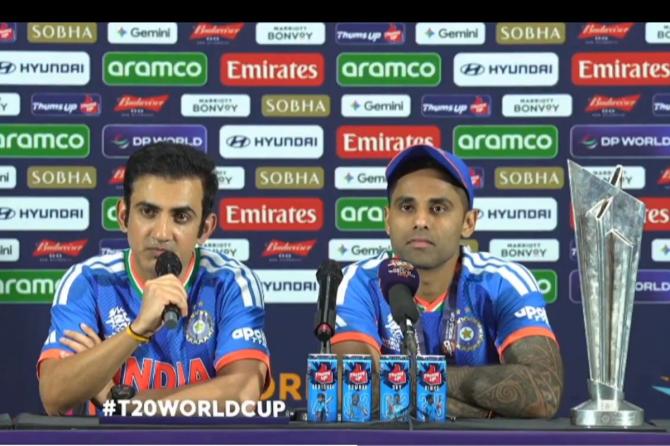
The essence of this transformation was captured during the post-match press conference by Coach Gautam Gambhir and captain Suryakumar Yadav. Gambhir emphasised a high-risk, high-reward philosophy, where the team focuses on collective success rather than individual milestones. He stressed that great teams celebrate trophies, not personal records. Suryakumar echoed this sentiment by remarking that he prefers to see himself as a leader rather than merely a captain, highlighting the importance of shared responsibility and collective ownership within the team.
Modern T20 cricket also reflects an impact-driven strategy. With only 120 balls in an innings, every delivery becomes an opportunity to create impact. Teams increasingly aim for ambitious totals around 240–250, combining tactical planning with fearless execution. The emphasis has shifted from survival to maximising scoring opportunities.
Cricket’s evolution—from Test matches to ODIs to T20 formats—demonstrates the importance of adaptability. Organisations today face similar disruptions from technology, globalisation, and artificial intelligence. The essential lesson is organisational agility and continuous learning.
Ultimately, leadership in Indian cricket has evolved through distinct phases: Ganguly built belief, Dhoni created trust, Kohli enforced excellence, Rohit brought strategic calm, and Suryakumar represents innovation and adaptability. The broader lesson for corporates is clear—great organisations are built on confidence, trust, discipline, agility, and collective purpose.
The journey of Indian cricket therefore offers more than sporting inspiration. It provides a powerful leadership blueprint for organisations striving to succeed in an increasingly complex and competitive world.