All Around the World with the Most Travelled Indian
 By Nitin Gairola
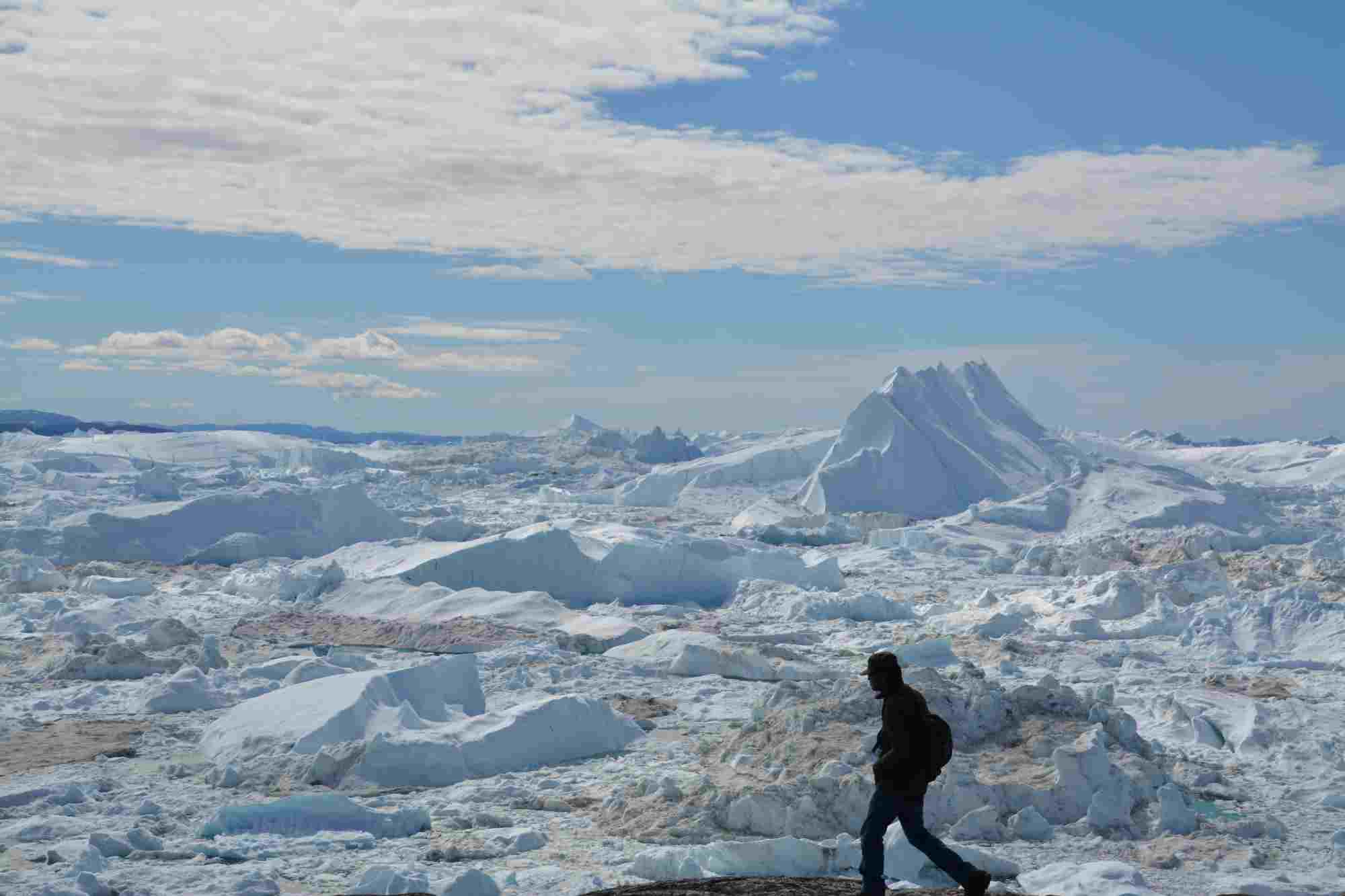
Since I am writing about the natural world and earth science these days, I thought I should try to make a connection between sustainability and tourism – the two arch enemies who don’t see eye to eye. In the world of sustainability and environmental protection, the most used buzzword has been over-tourism by us humans. You can’t escape hearing or seeing it in your favourite destinations. Tourists as a group are vilified almost everywhere and for everything, be it for overcrowding big cities during peak season, raising the rents and other daily costs for locals, trashing historical places or for destroying fragile coastlines, not to mention being a big factor in exacerbating global warming or climate change with their airline miles. Being called a tourist is almost a bad thing these days. In fact, it if weren’t for their positive impact on the economic machinery, one could guess that tourists would not be welcomed in any destination at all. We know tourism is a big industry but just like any other business, we know it’s good for humans but bad for the environment at large.
So, when can a tourist actually be a hero in every sense – not just for economic growth but for the planet’s wellbeing too? When is tourism actually good? Frankly the only thing that comes to my mind is nature & wildlife travel which is a sub-branch of adventure travel. It’s that’s sweet spot on the graph where the inverse lines of economy and environment intersect. Here the tourists can almost feel the cape flutter in the wind when they fly into a destination to save the world (just trying to be dramatic).
Let me give some perspective to this point of view with a quick background of the nature & wildlife crisis on Earth. From 1900 till now, fauna and flora biodiversity has plummeted in terms of entire species (not just individual members) being wiped out of Earth in what some scientists call the 6th mass extinction event. As would be obvious, the planet has already gone through 5 such events on its geological timescale, with the last one wiping out the dinosaurs 65 million years ago. The difference with this one is that it’s being caused by a particular species i.e. humans and not by any external force such an asteroid impact or an extreme weather event such as super massive volcanoes going off or dramatic changes in atmospheric or water compositions, which in turn can kill majority of life on the planet.
Since the 1970s, these changes started getting tracked actively at a time when we truly became a super-advanced species by venturing into space and landing on the Moon itself. Since then, reputed conservation organisations such as WWF (World Wildlife Fund) have been raising alarm bells about the sharp decline in biodiversity on Earth. In the landmark ‘Living Planet Index’ report released by WWF in 2014, they highlighted how the count of both charismatic large animals and the lesser known smaller wildlife living in their shadows, has nosedived. Overall, 60% of mammals, reptiles, birds and fish have vanished from the world in the past 50 years. Some scientists say that the world could take 5-7 million years to recover from this loss, which is way more than the 0.2 million years (200,000) since the arrival of homo sapiens on Earth and the 2.5 million years since the arrival of more primitive hominid cousins of ours.
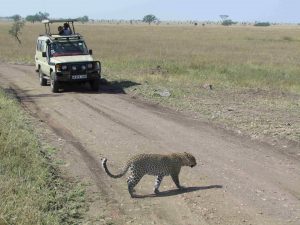
To put the crisis in context, one of our most beloved animals, the mighty African Elephant used to number at 27 million in 1800 and that count plummeted to just 2 million by 1970. Today only 450,000 individuals are left, being killed @ 20,000 per year for the illegal ivory trade. The big cats have an equally shocking and sobering statistical tale to tell. African Lion numbers are down from 110,000 in 1970 to around 25,000 today. The Asiatic species of lions is in the hundreds, around 900 odd at last count in one part of India – Gir National Park. And this is actually a success story since they were down to around 100 not too long ago. Leopards have declined 75-90% in India (their African cousins are doing better) and the South American Jaguar numbers are falling precipitously as well, with deforestation of the Amazon. The elusive ghost cat of the Himalayas, the Snow Leopard, is surviving with a 4 to 6 thousand population size and the majestic Tiger has gone down from over 100,000 at start of the 20th century to 45,000 in 1970 and less than 6,000 today, with 2 species extinct in the wild and two-thirds of all tigers being in India itself. All this thanks to hunting in the 1st part of the 1900s and habitat loss in the 2nd part. In fact, one of the main reasons why the Tiger didn’t go extinct in India but revived from the lows of just 1411 individuals in 2006 to around 3900 today, is because we had safari tourists who wanted to view the beast in the wild. That’s a conservation success story too but it still throws light on how grim things are with such low numbers.
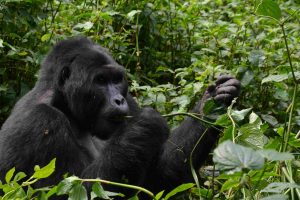
Central Africa
The great apes (other than humans) have fared no better. The Gorillas, largest of the apes, have 4 species. One of the most iconic, the Mountain Gorilla species that’s found in Uganda, Rwanda and Congo number around a 1000. And that’s after coming back from the brink with less than 300 individuals left in the 1980s. The Chimpanzees, our closest relatives, are estimated to be anywhere between 170,000 to 300,000 today but they were over a million just a century ago. One of the species, the Western Chimpanzees, have declined by more than 80% since 1990. Finally, the tale of the Indonesian Orangutan is well documented, with the devastating impact on their populations due to razing of pristine rainforests for growing the palm oil tree, the oil of which is used in many of our everyday consumption products like soaps and shampoos. These Orangutans were 230,000 just a hundred years back and now just 105,000 are left in the island of Borneo and only around 13,000 in Sumatra.
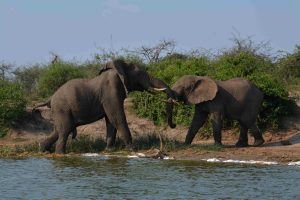
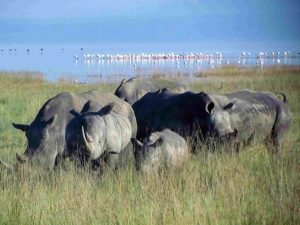
Coming to our favourite pre-historic looking beast, the Rhinoceros has 5 species – The White and the Black Rhinos of Africa, the Greater One-Horned Rhino of the Indian sub-continent and the Javan & Sumatran Rhinos of Indonesia. Sadly, the Northern White Rhino sub-species is now down to just 2 adults and both are female. Also, the Sumatran & Javan Rhinos are below 100 members each. The Great Indian Rhino has made a comeback due to fantastic conservation efforts with the support of tourist money and its count is around 4000 presently. Overall, the Rhinos have gone down from 500,000 at the turn of the 20th century to 70,000 by 1970 and finally less than 27,000 today, all 5 species included. You can see a trend forming. This animal, just like the elephant for tusks, is prized for its horn which is used in preparation of traditional Chinese medicines (which don’t work) and shockingly the horn is being used as a status symbol for young Vietnamese moving up the social ladder. The African Rhino poaching peaked in 2015 when 1349 of them were killed in just 1 year. And speaking of poaching, the humble Pangolin is a heavily poached and trafficked animal in the world with 2.7 million of them being skinned each year for their scales.
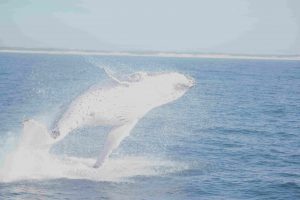
The IUCN (International Union for Conservation of Nature) regularly releases the ‘Red List’, a list of animal species categorised as per their threatened status, with the most threatened ones in the wild labelled as ‘critically endangered’. Imagine that nearly 30,000 entire species, not individuals, are considered threatened with extinction. That’s 41% of all amphibians, 26% of mammals including whales, 14% of birds, 30% of sharks & rays and 33% of coral reefs.
Contrary to this downward trend, there is one more that’s clear as day. In 1800 there were 1 billion or 1000 million humans. In 1930 it was 2 billion, 4 billion in 1974, 6 at the turn of the 21st century and there are over 8.2 billion of us today in 2025 (and nearly half of them are in South Asia and Eastern China). So, as we grow by the billion, the other creatures who share the planet with us are being pushed to the edge of extinction. The UN expects human population to hit 9-10 billion by mid-century and peak at around 11 billion by 2100. And 8.2 billion means 8200,000,000 individuals for greater perspective. Now compare that to the tragically low numbers you just read. Overall humans, and our domestic animals such as our pets and livestock, are leaving no space for wild animals. Only 4% of all animals by weight are wild.
You can now easily see where the natural world is headed. So, what do we all do? Well, with each overland adventure and each safari, these animals are worth more alive, than dead. Their economic worth to locals can override the need for cutting forests for farms, for the poor poacher to earn from killing, for eating bush meat, etc. Also, these tourists would naturally like to view and photograph the animals in their natural wild surroundings and not in private farms or zoos. With that, we have large government protected areas such as national parks and wildlife sanctuaries marked out, where the forest cover remains largely undamaged. Forests are the critical piece of the climate puzzle as they are major carbon sinks (absorbing greenhouse gases that heat the planet) and oxygen sources. The forests are literally the lungs of the planet. WWF states that the forest cover globally has reduced by 53% since 1970, and today only 30% of all land on Earth is forested, and just half of that or 15% overall, is protected. You can be sure that even this protection is because there are people wanting to pay money to see the animals in the wild. And because of the favourite flagship species, the others are protected too along with their habitat, which is critical to maintaining the health of our home planet. There is now a call from the top conservation organisations including the National Geographic Society, Conservation International and others, that 30% of the planet should be protected by 2030 and 50% by 2050, in order for it to be liveable for future generations.
The preservation of animals indirectly means the preservation of the eco-systems that support wildlife and us. Hence their survival is imperative not just for boosting tourism revenue of a nation but for maintaining the fragile ecological balance of the planet itself, by containing deforestation and ensuring greenhouse gases are absorbed efficiently which otherwise could cause an irreversible climate crisis. This is how we can actually contribute to saving the planet, one natural world adventure at a time. And for some inspiration, just watch David Attenborough’s documentaries such as Planet Earth, Our Planet and A Life on the Planet. Clearly, he has ‘The Planet’ on his mind and maybe so should we.
(Nitin Gairola is from Dehradun and has travelled the natural world more than almost any Indian ever. He has set world travel records certified by India Book of Records, has written for Lonely Planet, and holds National Geographic conservation certifications. He is also a senior corporate executive in an MNC and in his early days, used to be a published poet as well. More than anything else, he loves his Himalayan home. Reach him at: www.facebook.com/ MostTravelledIndian/)