By Arun Pratap Singh
Garhwal Post Bureau
Dehradun, 31 Mar: In a significant relief to residents in an election year, electricity tariffs in Uttarakhand will not witness any hike for the financial year 2026–27. The decision comes as a major relief for the consumers, already reeling under the impact of the ongoing US and Israel’s war with Iran. The Uttarakhand Electricity Regulatory Commission (UERC) has rejected the proposal submitted by Uttarakhand Power Corporation Ltd (UPCL) proposing a steep hike of around 18.86 percent. UERC has decided to retain the existing rates but at the same time it has introduced calibrated adjustments across select categories.
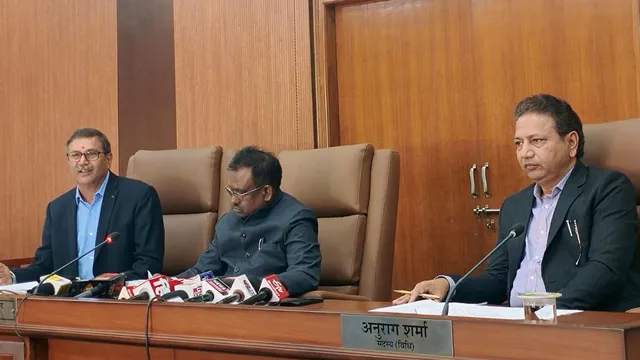
This information was shared with the media at a press conference organised by UERC at its office here today. The decision was announced by Commission Chairman ML Prasad along with Member (Law) Anurag Sharma and Member (Technical) Prabhat Kishor Dimri.
Prasad informed the media that the Uttarakhand Electricity Regulatory Commission (UERC) has turned down the proposed overall tariff increase of around 18.86 per cent submitted jointly by the power authorities from the state, namely UPCL, UJVNL and PTCUL. As a result of the UERC decision, no additional burden would be passed on to consumers during FY 2026-27. The proposal by the power corporations had sought an increase ranging from nearly 17 to 40 per cent across various categories, with an aggregate impact exceeding 18 per cent. However, the Commission declined to approve the hike, emphasising that consumer interest must be safeguarded and that tariffs should remain stable in the prevailing economic context. While rejecting the hike, the regulatory commission has however introduced limited restructuring measures to maintain balance within the tariff framework.
For the domestic consumers, the existing tariff structure has been retained in its entirety. Lifeline consumers will continue to be charged at approximately Rs 1.85 per unit, while slabs for other households, ranging from 0 to 100 units, 101 to 200 units, 201 to 400 units and above 400 units, would remain unchanged. Fixed charges across all domestic categories have also been kept intact, ensuring no additional financial burden on households.
At the same time, the Commission has provided targeted relief in certain segments. The tariff for single-point bulk supply (RTS-1) consumers has been reduced from Rs 7.50 to Rs 6.25 per kVAh, offering respite to group housing societies and similar entities. Industrial consumers with a load factor exceeding 50 per cent will also benefit from a reduced tariff of Rs 6.60 per kVAh, reflecting an effort to incentivise efficiency and higher utilisation.
According to Prasad, the move is aimed at promoting renewable energy adoption. As per UURC, the consumers with a load exceeding 25 kW will be eligible for a rebate of 22.5 per cent on solar power usage between 9 a.m. and 5 p.m. Additionally, the continuous supply surcharge has been reduced from 15 per cent to 7.5 per cent, further easing costs for eligible consumers.
The UERC has also announced incentives for prepaid metering. Under this category, the consumers availing the prepaid metering scheme would receive a 4 per cent rebate on energy charges, while others will receive a 3 per cent concession.
In addition, UERC has issued directions to the Uttarakhand Power Corporation Limited (UPCL) to constitute a committee for identifying the ten most loss-making feeders, signalling a renewed push towards reducing transmission and distribution losses.
Prasad further stated that UERC has maintained cross-subsidy levels within the Plus or Minus 20 per cent band prescribed under the National Tariff Policy and has not altered fixed or demand charges across various categories. This, according to UERC, indicates a conscious effort to preserve financial equilibrium within the power sector without imposing additional costs on end users.
A comparative analysis of domestic tariffs reveals that all the proposed hikes in tariff have been strictly declined. For instance, the lifeline category remains at Rs 1.85 per kWh against a proposed Rs 1.94, while the 0–100 units slab continues at Rs 3.65 per kWh against a proposed Rs 4.23. Similarly, tariffs for higher consumption slabs 101–200 units, 201–400 units and above 400 units, have been retained at Rs 5.25, Rs 7.15 and Rs 7.80 per kWh respectively, rejecting the proposed upward revisions.
Significantly, the fixed monthly charges for domestic consumers also remain unchanged, with Rs 75 for up to 1 kW, Rs 85 per kW for 1–4 kW, and Rs 100 per kW for loads above 4 kW, despite proposals for an increase. By freezing tariffs while introducing structural improvements and targeted concessions, the regulator has prioritised affordability and efficiency. However, the decision is also being viewed in the context of the election year, where concerns around inflation and public sentiment at the time of war in the West Asia region, have assumed greater significance, making the decision both economically and politically consequential.