Subodh Uniyal stresses on greater public awareness to tackle human-wildlife conflicts
By Arun Pratap Singh
Garhwal Post Bureau
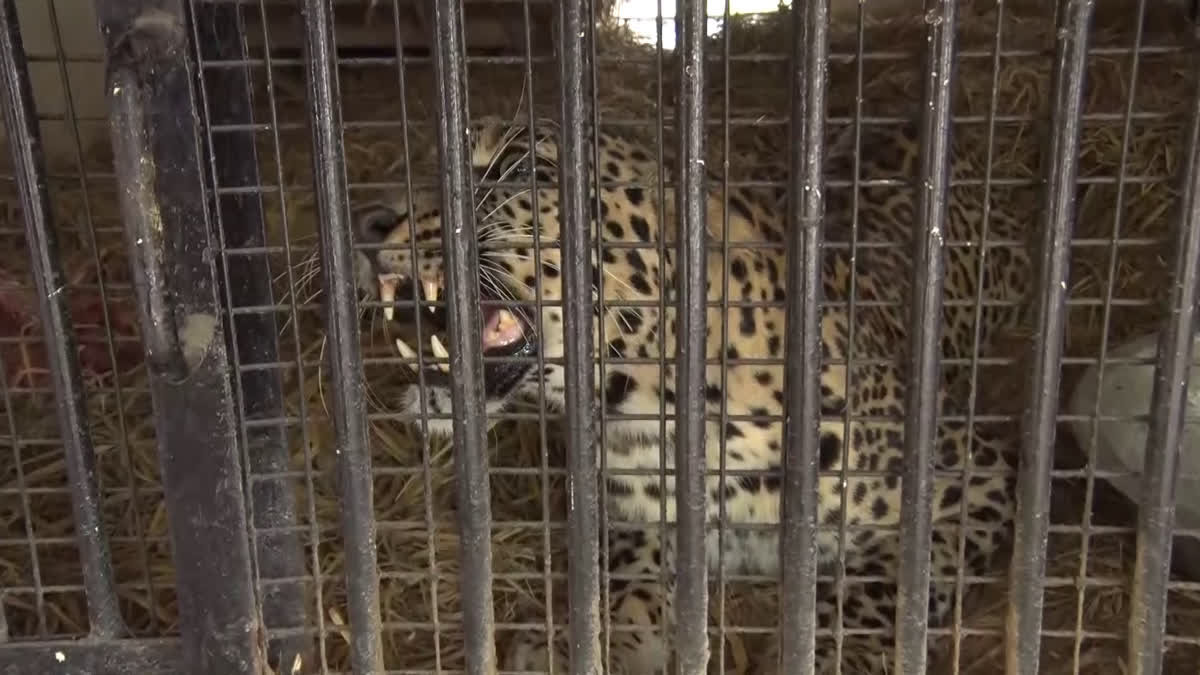
DEHRADUN, 1 Aug: The growing human-wildlife conflict in Uttarakhand continues to pose a major challenge, as the official orders to capture dangerous wild animals or eliminate those declared man-eaters have failed to provide lasting relief to affected communities. Despite repeated interventions by the Forest Department, attacks by tigers and leopards continue unabated in several parts of the State, claiming human lives and severely affecting the livelihoods of rural families.
The situation has become particularly alarming in the hill districts, where fear of tigers and leopards has become a part of daily life. Hardly any region in the state now appears to be untouched by the presence of large predators. The situation is especially serious in Pauri district, where repeated leopard attacks have disrupted normal life in several villages. Residents in many areas are compelled to remain indoors after dusk, while children face risks in travelling to school and women fear venturing into forests or agricultural fields. Public anger over the continuing attacks has erupted into protests on several occasions, prompting the Forest Department to intensify its response.

In the face of mounting public pressure, the Forest Department has issued numerous orders to capture dangerous animals and, in exceptional cases, to eliminate those officially declared man-eaters. However, these measures have not yielded the desired results on the ground. Incidents of attacks continue to be reported and affected communities say they have received little relief, raising questions over whether the existing strategy is adequate to deal with the growing human-wildlife conflict.
Forest Minister Subodh Uniyal said that public awareness is an important component in addressing the growing human-wildlife conflict. He said the Forest Department is conducting awareness campaigns across the state and educating people about precautionary measures to minimise the risk of wildlife attacks. However, he acknowledged that much more extensive efforts would be required to deal with the challenge effectively.
The official figures of the Forest Department underline the scale of the challenge. Between January 1 2025 and January 31 2026, orders were issued to capture 106 dangerous wild animals across Uttarakhand, while four man-eating leopards were eliminated following due authorisation. Despite these measures, there has been no significant decline in attacks on humans.
A Division-wise analysis shows that the highest number of capture orders was issued in the Almora Forest Division, where 33 dangerous wild animals were ordered to be captured. This was followed by 13 in the Terai West Forest Division, eight in Rudraprayag, seven each in Pauri and Haridwar, six in Bageshwar and three in the Lansdowne Forest Division. These figures indicate that the problem extends across a wide geographical area and is no longer confined to isolated pockets.
The human cost of the conflict continues to mount. So far this year, tiger attacks have claimed the lives of 12 people, while leopard attacks have killed 16 others, taking the total number of fatalities caused by the two predators to 28. The figures underline that the issue has gone far beyond being merely a wildlife management concern and has become a serious public safety challenge for rural Uttarakhand.
The impact is equally severe on rural livelihoods. Thousands of families dependent on livestock rearing continue to suffer heavy economic losses due to attacks by predatory wildlife. According to Forest Department data, tigers, leopards and other carnivorous wild animals have killed more than 63,000 head of livestock over the past two decades. The number of livestock lost stood at 6,441 in 2025, 6,448 in 2024 and 5,958 in 2023, indicating that the problem has remained consistently severe in recent years.
Wildlife experts, meanwhile, believe that the long-term solution lies not merely in capturing or eliminating dangerous animals but in adopting a scientific and sustainable wildlife management strategy. They emphasise the need to maintain the natural food chain and adequate prey populations inside forests, manage wildlife in accordance with the ecological carrying capacity of forest habitats and ensure the conservation of natural ecosystems. Experts point out that if wild animals are deprived of sufficient prey and secure habitats within forests, they are increasingly likely to stray into human settlements, leading to a further escalation of conflict.
The continuing attacks, rising public resentment and growing economic losses indicate that issuing capture or elimination orders alone will not be sufficient to address the crisis. Experts and officials alike stress on the need for a comprehensive strategy combining prompt response to conflict situations with scientific wildlife management, enhanced protection for vulnerable villages, modern surveillance and monitoring systems, timely compensation for victims and sustained public awareness.