Garhwal Post Bureau
Dehradun, 31 Jan: The battle against human-wildlife conflict will no longer be the sole responsibility of the Forest Department in the state. Public representatives are now set to take the field. In accordance with directives from the Union Ministry of Environment, Forest & Climate Change, efforts are being intensified to not only enhance dialogue with affected regions but also to implement a plan increasing the involvement of local representatives using regional languages. Initiating this shift, the Forest Department organised a workshop in Dehradun on Friday, where suggestions for resolving these issues were sought directly from public figures and affected citizens, with immediate guidelines being issued on the spot.
During the workshop, it was shared that the burden of managing human-wildlife conflict is being redistributed from the shoulders of the Forest Department to include the pivotal roles of public representatives, local residents and various organisations. Consequently, this conflict in Uttarakhand will no longer remain an isolated departmental task. Instead, the active participation of local communities is being ensured. Following central ministry instructions, a decision has been taken to accelerate public awareness programmes across the state, highlighting the roles of Members of Parliament, Members of the Legislative Assembly, and local bodies.
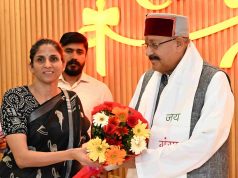
During the workshop held in Dehradun, Rajya Sabha MPs Naresh Bansal and Kalpana Saini participated in extensive discussions regarding the identification of sensitive conflict zones, existing prevention measures, the use of technology, compensation systems and community-based interventions. During the meeting, it was clarified that the strategy for conflict prevention will now follow a bottom-up rather than a top-down approach. This means villages, Gram Sabhas, Mahila Mangal Dals, and youth groups will be directly integrated into the process. Emphasis was placed on using local dialects in awareness campaigns to ensure the message resonates effectively with the populace.
Representatives from WWF India stated that radio collars have been provided to the Uttarakhand Forest Department to monitor wildlife movement. By optimising their use, a timely alert system can be developed to warn villagers in advance. An agreement was reached regarding the installation and regular maintenance of solar lights in sensitive villages. Furthermore, a proposal was also tabled to plant fruit-bearing trees along forest fringes to ensure wildlife finds adequate food within the jungles, thereby discouraging them from entering human settlements. Additionally, the decision to clear bushes and remove Lantana in sensitive areas will be executed with the cooperation of Gram Sabhas.
In view of the fact that leopard attacks are most frequent in Uttarakhand, a suggestion was made at the workshop to conduct a specialised census to ascertain their actual population. It was stated that this will assist in identifying high-conflict zones and tailoring specific strategies for those areas. Great stress was laid on the expeditious disbursement of ex-gratia payments for crop damage or loss of life and property caused by wildlife. It was decided that victims should not be kept waiting for long periods, ensuring that public trust is maintained and a positive perception of the department is fostered. Rajya Sabha Member Kalpana Saini announced that Rs 5 lakh from the MP fund would be allocated to each of the 12 districts for the prevention of man-wildlife conflict, specifically for solar lighting and security measures.