By: Ganesh Saili
As we walk past the gates of Lyndale Estate, Prakash Semwal, normally the most level-headed person I have met, asks: ‘Have we strayed onto a film set of Jurassic Park?’
He was talking about the ghastly chain-link fence topped with razor wire that encloses the site of the old brewery. No one has spared a thought for the other dwellers of the forests: badgers, barking deer, bears, civet cats, foxes, flying squirrels, ghoral, honey badgers, pheasants, pine martens, porcupines, or even the occasional leopard co-existing with over four hundred species of birds.
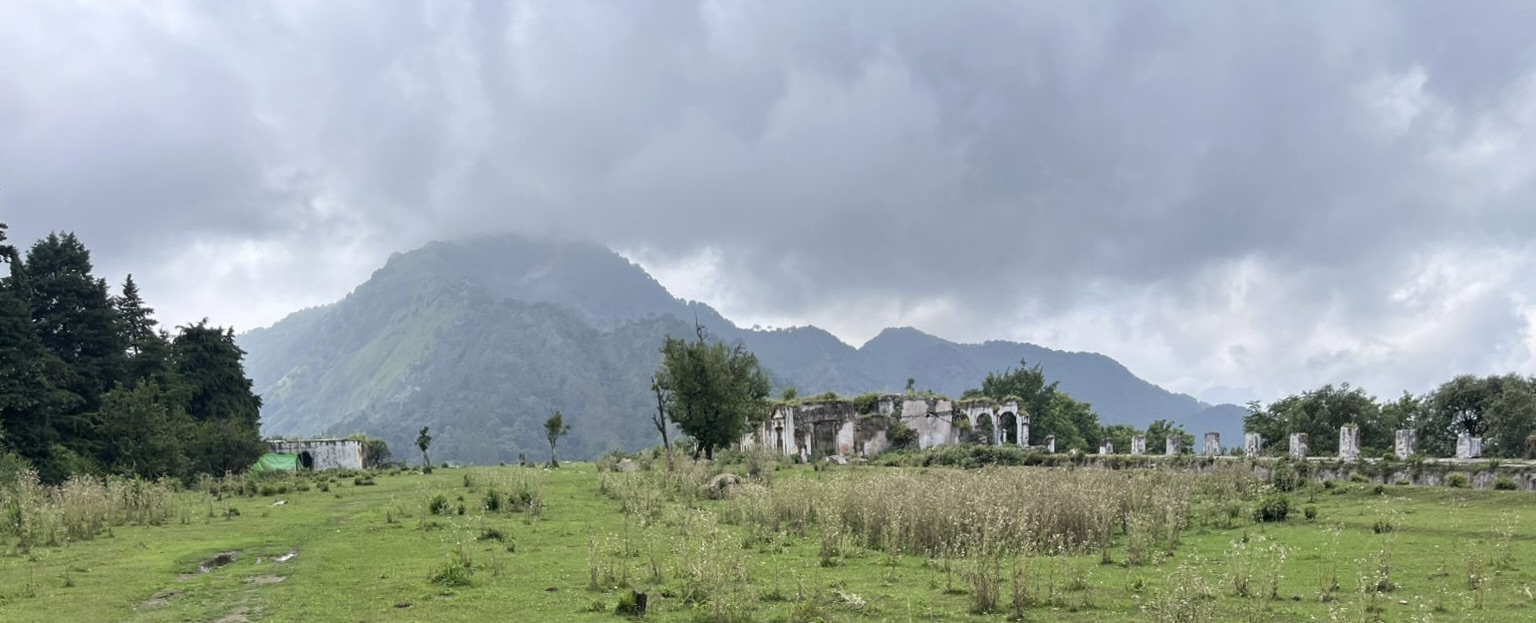
On a huge flat loom, the ruins of Bohle’s Brewery, which had come up in 1834. The old walls have many stones missing, especially around the windows, revealing an eight-foot-thick stone wall; the stones had, in all probability, been used by the contractors who built the crumbling road that we are walking on.
As far as tippling goes, it has always been a part of these hills. Is it like a hangover from the days of early brewers like Bohle’s or Mackinnon’s? I wonder.
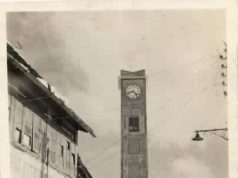
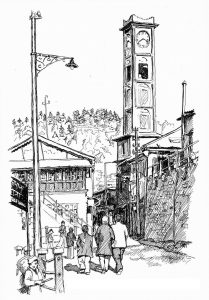
There was Ajay Singh, a babu, who, when sober, worked in the waterworks. You heard him long before you saw him; every evening, as the Clock Tower struck nine, he would stagger past, propping up the lampposts lining the street, singing a chanty from Amin Sayani’s Binaca Geetmala, mocking the locals: Jab pyar kiya toh darna kya?’ (Those in love are never scared!)
Squealing to a halt outside Rai Singh’s Sweet Shop, perched opposite the freshwater springs of Landour’s Bawri, he would yell: ‘Bal Rai Singh, namkeen doh!’ Impatiently grabbing a handful of fritters atop the counter, he’d say: ‘Weigh it tomorrow when I pay you.’ As he sobered up and slunk silently through a dark lane, scurrying home quietly like a mouse, the complete hush normally associated with night would descend once more on the bazaar.
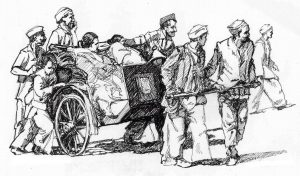
How can this list be complete without mention of drunks like Sultan? He was a contractor with a swagger that would easily have put John Travolta to shame. Come winter or summer, he was draped in his one-size-too-big trench coat, which would have done Peter Sellers proud. Sozzled, he would stagger out of the Naaz Bar, barely manage to plonk himself into an old hand-drawn rickshaw, before passing out. Just as the rickshaw drew up outside his home, he instinctively returned to the land of the waking, sitting bolt upright, paying his fare. Not a single word was spoken; he had made it home one more time.
Pic courtesy: Bruce Skillicorn
Of course, he was miles ahead in the marathon to be crowned the town drunk. His unique USP was that he taught a whole generation of youngsters to keep reality at bay by guzzling a few drinks a day.
And it must be said they eagerly learnt the ropes very quickly.
Even a hundred years ago, the local breweries ensured that no one died of thirst at our clubs, hotels, or restaurants. A tale still survives whereby an Army Sergeant took to raucously singing scraps of the most bawdy and indecent songs. He rendered himself a common laughing stock by singing: ‘Beer! Beer! Glorious Beer! Fill me right up to here!’ Soon after, retribution followed. He was dismissed from the British Indian Army.
Grief struck us in 1977, when Morarji Desai declared prohibition all over the hill districts. It left us like beached whales, quite high and literally, quite dry.
Of course, we tried almost everything, including the foul-tasting, alcohol-laced ayurvedic tonic Mrit Sanjivanisura – reputed to bring back the dead to life. Zia, the painter, sold bottles stashed behind his finished signboards. Despite the addition of lemon juice, it tasted vile, but it did help us fall asleep during those tough times. I admit, our valiant milkmen appeared like knights in shining armour. With enterprise, they came to our rescue and delivered our hot-water bottles filled with white-lightning from the stills in their abutting villages. There was a small niggling problem though: the booze tasted of rubber, while at night our beds stank of hooch.
At day’s end, white-lightning got you nowhere. But then, neither does an ugly razor-wire-draped chain-link fence.
Ganesh Saili, born and home-grown in the hills, belongs to those select few whose words are illustrated by their pictures. Author of two dozen books, some translated into twenty languages, his work garnered recognition worldwide.