Garhwal Post Bureau
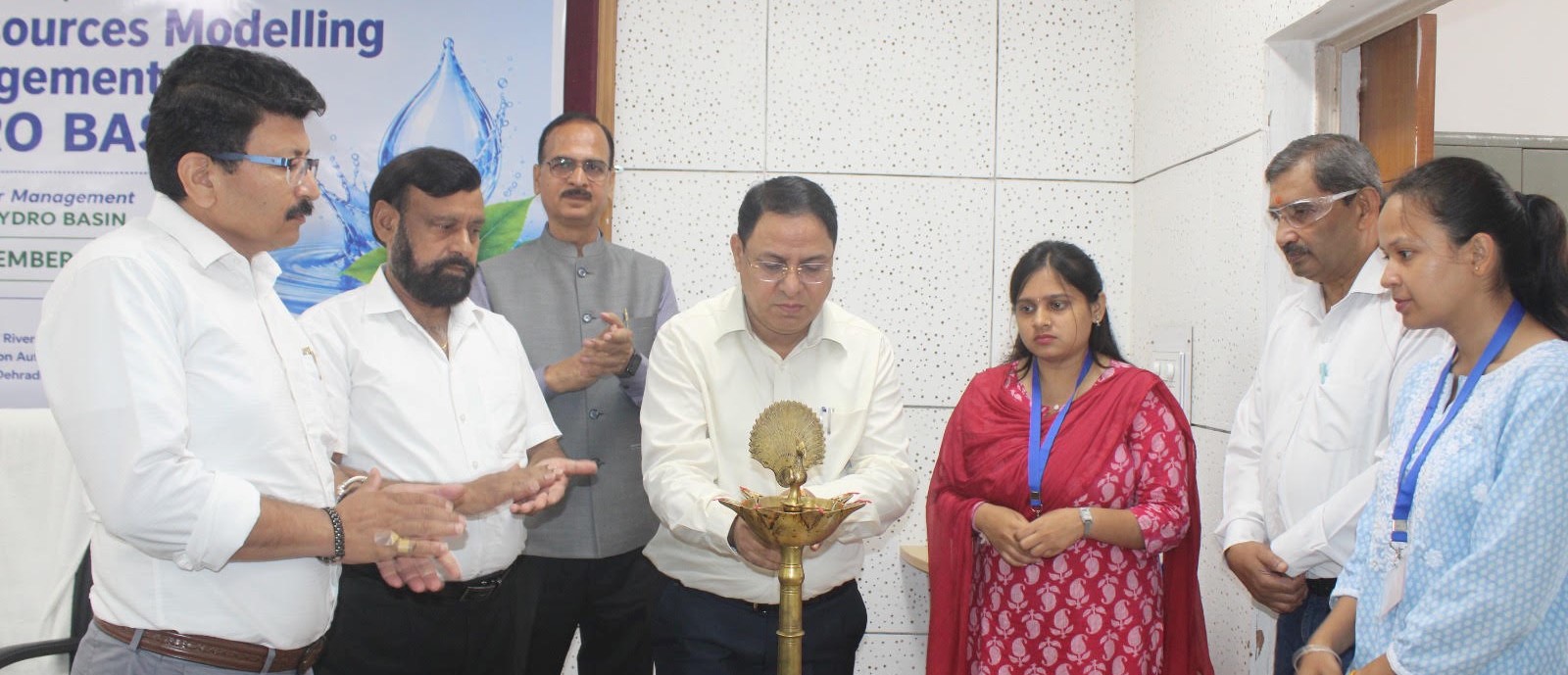
Dehradun, 7 Sep: A two-day National Training Workshop on “Integrated Water Resources Modelling and Basin Management using MIKE HYDRO Basin” was inaugurated today at the ICAR–Indian Institute of Soil and Water Conservation (ICAR–IISWC), here.
The workshop is being organised on 7–8 September in hybrid mode under the project “Impact of Climate Change on Water Resources of Burhi Gandak Basin”, supported by INCCC, Ministry of Jal Shakti, Government of India and the River Rejuvenation project of the Kamal Ganga River funded by Spring and River Rejuvenation Authority (SARRA), Uttarakhand.
The training programme is being jointly organised by ICAR–Indian Institute of Soil and Water Conservation (ICAR–IISWC), Dehradun, Spring and River Rejuvenation Authority (SARRA), Uttarakhand, and DHI India, with the theme “From Basin Data to Water Management Decisions using MIKE HYDRO Basin”.
In the welcome address, Dr Ambrish Kumar, Head and Principal Scientist, ICAR–IISWC, and Program Director of the workshop, underlined the importance of developing scientific and technical capacity in integrated water resources modelling and basin-scale management. He emphasised that the workshop provides an important platform for researchers, scientists, students, and Line Department professionals to understand how basin data and modelling tools can be effectively translated into practical water-management decisions, especially in the context of the One District-one River programme of the SARRA. He added that this topic received an encouraging response, with around 400 participants registered from across India. Senior experts from NIH, Roorkee; CSSRI, Karnal, and DHI are resource persons in the programme. The programme has attracted participation representing 29 States and Union Territories, demonstrating its wide national reach. The registered participants represent 98 districts, universities, research institutions, government departments, research organisations and other agencies across the country. Participants have registered from diverse states including Maharashtra, Uttarakhand, Chhattisgarh, West Bengal, Kerala and Uttar Pradesh, among others.
He further highlighted the need to move beyond fragmented watershed-level interventions towards an integrated basin-scale approach, particularly in view of increasing pressure on water resources and the emerging impacts of climate variability and change.
Dr AK Dimri, Joint Director, Watershed Management, Directorate of Watershed Management, Uttarakhand, addressed the participants as the Chief Guest. He highlighted the recent flash flood and climate change issues associated with watershed development and management activities and emphasised carrying out watershed interventions at the river-basin scale.
Speaking on the occasion, Dr DS Rawat, Guest of Honour, highlighted the importance of institutional collaboration between ICAR–IISWC and SARRA for addressing challenges related to water resources and river systems. He emphasised that river rejuvenation requires a holistic understanding of the river and its catchment, supported by scientific assessment, field interventions and coordinated planning. Charan Singh, I/c Director, ICAR–IISWC, Dehradun, highlighted the institute’s significant contributions to soil and water conservation, watershed development and natural resource management. Dr RP Pandey, former Head and Scientist-G, National Institute of Hydrology (NIH), Roorkee, was the Key Speaker and shared his practical experiences in river rejuvenation, including insights from the rejuvenation work associated with the Rispana River, Dehradun.
Dr Charan Singh, Guest of Honour and Director, ICAR–IISWC, highlighted the institute’s significant contributions to soil and water conservation, watershed development and natural resource management. He emphasised the importance of adopting scientific and technological approaches for sustainable management of natural resources and appreciated the initiative to bring together experts and participants from different parts of the country.
Dr Uday Mandal, Dr Rama Pal, Dr Venkatesh, and Er HS Bhatia were present during the inaugural session.