Garhwal Post Bureau
Dehradun, 26 Nov: Scientists and In-charges of various Dehradun-based units of the Central Silk Board (CSB), Union Ministry of Textiles, participated in the 27th International Congress on Sericulture and Silk Industry (ISCC-2026) at Chennai from 23 to 25 November and presented their research findings on various aspects of sericulture.
Organized under the aegis of the International Sericultural Commission (ISC), Bengaluru, the five-day international Congress, scheduled from 23 to 27 November is being held under the theme “Silk for a Sustainable Future”. The Congress, along with Silk Mark Expo 2026, was inaugurated on 23 November by Union Minister of Textiles Giriraj Singh in the presence of Padmini Singla, IAS, Joint Secretary (Fibre), Ministry of Textiles and Vice-Chairperson, Central Silk Board; P Sivakumar, IFS, Member Secretary, Central Silk Board and Secretary-General, International Sericultural Commission; Jonard Asiimwe Akiiki, Minister for Science, Technology and Innovation, Uganda; and other distinguished international dignitaries.
The Congress brought together around 350 scientists, policymakers, technologists, entrepreneurs and silk industry stakeholders from various countries, including Japan, the USA, Romania, Uganda, Kenya, France, Uzbekistan and Thailand.
Addressing the inaugural session, Minister Giriraj Singh emphasized the urgent need for green energy, sustainability and environmentally responsible practices throughout the global silk value chain. He encouraged researchers to explore the potential of silk-like natural fibres derived from banana, pineapple and lotus alongside conventional silk production. He highlighted the importance of reducing the carbon footprint of the silk industry through technological modernisation, organic farming inputs, natural dyes, improved product traceability and efficient recovery and utilisation of waste materials.
The Union Minister highlighted the significant role of African nations in global development. In this context, strengthening international partnerships, scientific cooperation and technological knowledge exchange among developing nations assumes particular significance. The broader objectives of the Congress also align with India’s efforts to build an innovation-driven, environmentally sustainable and globally competitive silk industry, contributing towards the national vision of Aatmanirbhar Bharat and Viksit Bharat.
The Minister encouraged research into value-added silk products, technological innovations and entrepreneurship. He appreciated the contributions of Indian start-ups, including ReshamMandi, Fibroheal, Loopworm and SeriGreen, towards innovation in the silk sector. He also expressed concern over the growing presence of synthetic silk substitutes in the market and emphasized consumer awareness regarding genuine silk products through Silk Mark certification.
Padmini Singla highlighted India’s progress in silk production and exports. Recognizing the natural and biodegradable characteristics of silk, she emphasized efficient water utilization, automation, scientific disease management protocols, transparent price discovery for farmers and the promotion of women’s entrepreneurship through Self-Help Groups.
P Sivakumar, in his welcome address, highlighted the importance of scientific innovation and international cooperation for sustainable sericulture development. He also conveyed the message of Neelam Shami Rao, Secretary (Textiles), emphasizing the mainstream commercial utilization and value addition of sericulture by-products across the world’s 35 silk-producing nations.
During the inaugural ceremony, the Union Minister conferred the ISC Global Awards 2026 on eight distinguished achievers from India, Japan, Thailand and Uzbekistan in recognition of their outstanding contributions to sericulture science, technological innovation and silk industry development.
The Central Silk Board units located in Dehradun were represented by Dr. Pawan Saini, Scientist-D & In-charge, Regional Sericultural Research Station, Sahaspur; Dr. Vikram Kumar, Scientist-C & In-charge, P3 Basic Seed Farm, Majra; Dr. Abhishek Singh, Scientist-C & In-charge, P2 Basic Seed Farm, Sheeshambara; and Rahul Pal, Scientist-B & In-charge, Silk Technical Service Centre, Premnagar.
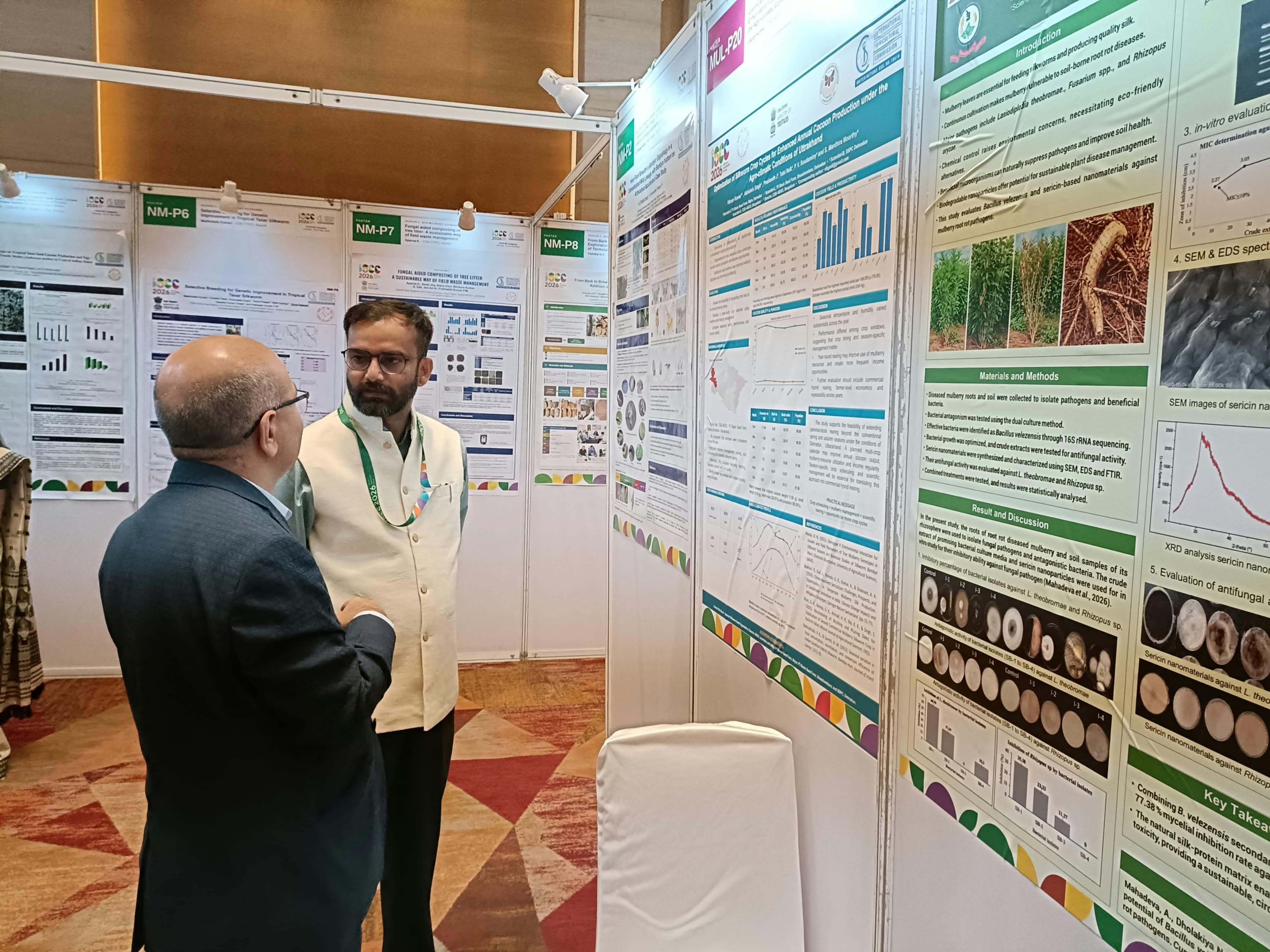
During the scientific and technical sessions held from 23 to 25 November, the scientists presented their research papers on mulberry and silkworm crop protection, possibilities of increasing the number of annual cocoon crops under the agro-climatic conditions of Uttarakhand, prospects of muga sericulture and technological interventions in post-cocoon activities.
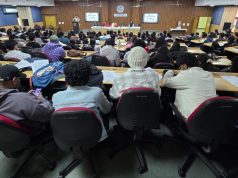
The scientific programme of the Congress comprised 121 oral research presentations and 108 scientific poster presentations across eight specialized technical sections. A plenary session chaired by Padmini Singla was also included in the programme to formulate a roadmap for the future development of global sericulture.
The participating scientists from Dehradun actively interacted with international researchers, academicians and industry experts and gained valuable insights into emerging technologies, innovative research concepts and scientific approaches relevant to the development of sericulture in Uttarakhand.